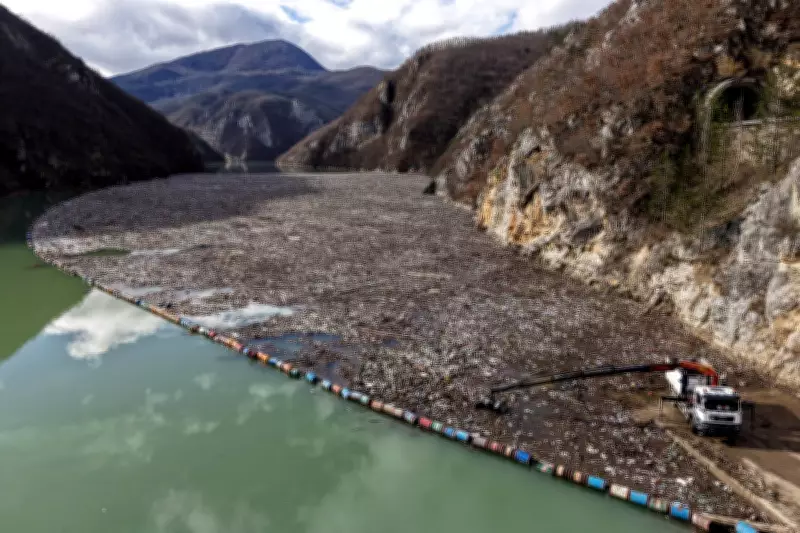
An environmental activist has voiced profound despair as construction machinery operates ceaselessly to clear massive accumulations of rubbish clogging the Drina River near Visegrad in eastern Bosnia. Dejan Furtula, who leads the Eko Centar environmental organisation, expressed deep frustration at the recurring ecological crisis that afflicts this vital waterway each winter season.
Annual Environmental Catastrophe Unfolds
Every year, swollen rivers across the region transport enormous quantities of waste downstream, where it accumulates against barriers established by a local hydropower facility. "This situation represents a stark demonstration of insufficient political determination and the inactivity of all relevant institutions," Mr Furtula declared emphatically. "Officials convene annually and make numerous promises, yet as we witness repeatedly, these distressing scenes continue to recur without meaningful resolution."
A Scene from Environmental Disaster Cinema
The disturbing spectacle resembles imagery from an environmental catastrophe film: the typically emerald-green river surface now lies densely covered with plastic bottles, timber fragments, discarded furniture, corroded barrels, household appliances, and even animal remains. Mr Furtula additionally highlighted the concerning presence of medical waste among the floating debris.

"This constitutes a genuine ecological disaster," he cautioned gravely. "The Drina River possesses abundant fish populations, and one can readily imagine the toxic substances being released here. There exists virtually every contaminant imaginable - it represents a significant catastrophe for our regional ecosystem."
Transboundary Pollution Sources Identified
The accumulating waste originates from illicit dumping sites located upstream within Bosnia, alongside contributions from neighbouring Serbia and Montenegro. Multiple smaller tributaries throughout the region flow into the Drina, each carrying their substantial portion of garbage. During summer months, these rivers attract rafting enthusiasts and nature admirers, while the waste problem reaches its peak during winter when swollen waterways sweep away illegal dump sites positioned along their banks.
Political Promises Without Tangible Solutions
Government representatives from all three nations have repeatedly pledged collaborative efforts to address this pressing issue. One notable gathering involving environment ministers from Bosnia, Serbia and Montenegro occurred at the affected site during 2019, yet years later no substantive solution appears imminent. This persistent situation illustrates how, decades following the devastating conflicts of the 1990s within former Yugoslavia, the region continues to trail behind other European nations both economically and regarding environmental protection standards.
Broader Environmental Challenges in Western Balkans
Beyond river contamination, numerous Western Balkan countries confront additional environmental difficulties. Among the most urgent concerns remains the exceptionally high air pollution levels affecting multiple urban centres throughout the region. Bosnia, Serbia and Montenegro each maintain aspirations to join the European Union, where addressing environmental protection represents a fundamental membership requirement for the twenty-seven nation bloc.
Potential Solutions and Implementation Challenges
Furtula suggested various possible approaches to manage the garbage problem effectively, including comprehensive mapping of illegal dumping locations alongside installation of surveillance cameras and preventive barriers across several municipalities, rather than permitting all waste to converge at Visegrad. When eventually extracted, the collected garbage typically reaches local landfill sites, where it undergoes slow combustion while releasing toxic particulate matter into the atmosphere - a process Furtula characterised as a "vicious cycle" contaminating his community.
"This pollution originates from three distinct nations - Montenegro, Serbia and Bosnia," he observed pointedly. "Yet no responsible party appears willing to acknowledge ownership of this escalating environmental crisis."