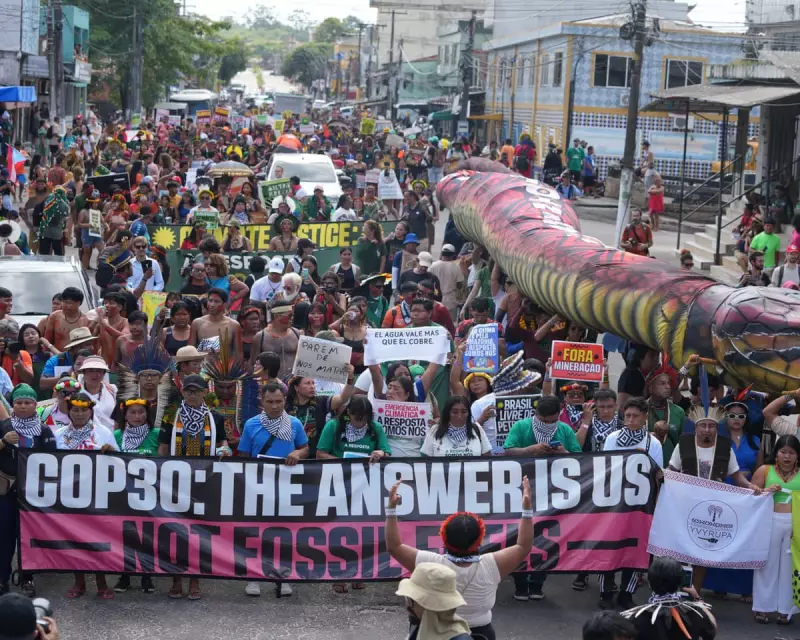
While many headlines have branded the recent Cop30 climate summit in Belém, Brazil, a disappointment, a deeper look reveals several critical, if understated, victories for global climate action. Beyond the stalled negotiations on a fossil fuel phaseout, the conference laid essential groundwork for future progress, particularly on finance for developing nations and a new, pragmatic approach to the energy transition.
The Stumbling Blocks and The Silver Linings
It is true that the summit faced significant setbacks. An attempt to formally include a pathway for the phaseout of fossil fuels into the legal text was ultimately blocked. Furthermore, crucial discussions on improving national emissions-cutting plans, known as Nationally Determined Contributions (NDCs), were postponed until next year's conference.
However, on the critical issue of climate finance, a major demand was met. Developing countries successfully secured a commitment to triple finance for adaptation by 2035. While the delayed full delivery and the fact it will come from already pledged funds are points of contention, the formal recognition of the need for a massive scale-up in adaptation funding marks a hard-won achievement for vulnerable nations.

A New Path Away From Fossil Fuels
The most debated outcome centred on fossil fuels. Although a binding phaseout plan was not adopted, Cop30 president André Corrêa do Lago announced a significant 'Plan B'. Spearheaded by Brazil's President Luiz Inácio Lula da Silva, this initiative will see a major consultation with governments, energy experts, and scientists to develop a viable roadmap for the transition away from fossil fuels.
This non-binding, collaborative approach may prove more effective in the long run than a top-down mandate. Many nations, particularly in the developing world, are wary of externally imposed targets, a legacy of past dealings with international financial institutions. A voluntary plan that allows countries to define their own pathways and timetables stands a greater chance of genuine, widespread adoption.
The Power of Real-World Action Over Legal Text
An overemphasis on what is legally binding can obscure the true engines of climate progress. The Paris Agreement itself demonstrated that non-binding national commitments (NDCs) can drive action, even if they currently fall short of the 1.5C goal. The real measure of success lies not in the words agreed in windowless conference rooms, but in tangible, real-world changes.
Outside the negotiating halls, the transition is already underway. Global investment in renewables is now double that of fossil fuels, a quarter of all new vehicles sold worldwide are electric, and half of the new power-generating capacity in giants like China and India is low-carbon. These trends, driven by economic and technological shifts, are what will ultimately save us.
The true legacy of Cop30 may be its shift in strategy—acknowledging that building a broad, voluntary coalition for change can be more powerful than forcing a fractured consensus on a legally binding text that risks being weak or unratified. The work now continues, with all eyes on the delivery of the adaptation finance pledge and the development of a credible fossil fuel transition plan for Cop31.