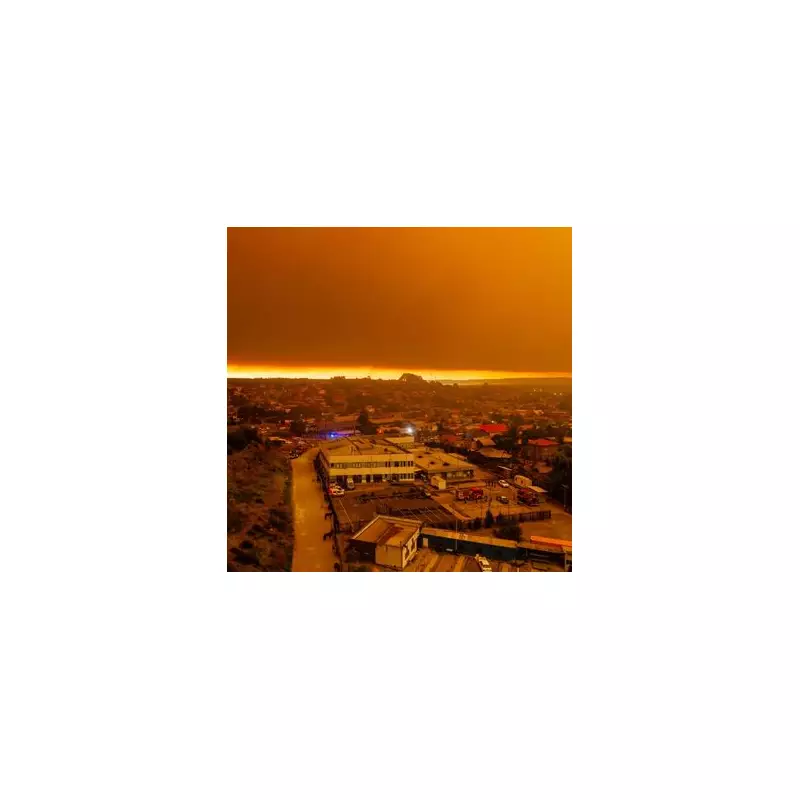
At least eighteen people have been killed and hundreds of homes destroyed as ferocious wildfires, described by residents as 'completely out of control', continue to ravage central and southern Chile.
State of Catastrophe Declared Amid Extreme Conditions
The devastating fires, which erupted on Sunday, 18 January, have already consumed approximately 8,500 hectares (21,000 acres) of land. Chilean President Gabriel Boric has declared a state of catastrophe in the central Biobio and neighbouring Ñuble regions, located roughly 500 kilometres south of the capital, Santiago. This legal measure allows for the suspension of certain constitutional rights and enables greater military coordination to tackle the crisis.
Firefighting efforts have been severely hampered by a blistering heatwave, with temperatures soaring above 38°C on Sunday, and strong winds. Interior Minister Álvaro Elizalde warned that extreme weather conditions were expected to persist, exacerbating the challenge. The country is also grappling with a years-long drought, which has created tinder-dry conditions.

Human Tragedy Unfolds as Communities Burn
The human cost of the disaster is becoming tragically clear. President Boric confirmed in a press conference that the initial death toll of 18 is expected to rise, with more than 300 houses confirmed destroyed and the total number of affected homes in the Biobio region likely exceeding a thousand. Charred bodies have been found in fields, homes, along roads and inside vehicles.
'The first priority... is always to fight and extinguish the fire. But we cannot forget, at any time, that there are human tragedies here, families who are suffering,' Boric stated. 'These are difficult times.'
Local authorities reported that the infernos prompted the evacuation of around 50,000 people. However, there were accounts of a desperate lack of immediate support. Rodrigo Vera, the mayor of the coastal town of Penco, made a passionate plea on local radio, expressing frustration at the absence of government presence as his community burned.
Residents Describe Panic and Loss
Survivors recounted scenes of panic and sudden danger. 'We fled running, with the kids, in the dark,' said Juan Lagos, 52, from Penco. Another resident, John Guzmán, 55, explained that many did not evacuate in time, believing the fire would stop at the forest's edge. 'It was completely out of control. No one expected it,' he said.
The fires have reduced cars, a school, and a church to ashes. Víctor Burboa, 54, sombrely noted that among the dead were people well-known in the community. 'Everyone here knew them,' he said.
A Recurring Summer Nightmare
While wildfires afflict central and southern Chile every summer, typically peaking in February, the intensity and deadly impact of these blazes are a stark reminder of the 2024 fire season. That disaster, Chile's deadliest natural event since a 2010 earthquake, claimed at least 130 lives along the central coastline.
As emergency services continue their battle against the flames, the nation faces a prolonged period of recovery, with the full scale of the destruction yet to be fully realised.