Avalanche Survival Guide: Expert Explains Rising Risks and Rescue Techniques
As winter sports enthusiasts face increasing avalanche threats, understanding survival techniques has never been more critical. Recent incidents, including a tragic avalanche at Lake Tahoe's largest ski resort in January 2024 that claimed one life and injured three others, highlight the growing danger. The following day, a second unplanned avalanche struck the same resort, though fortunately without casualties.
While avalanche deaths remain relatively rare within ski resort boundaries, the risk escalates dramatically in backcountry areas. During the 2022-2023 season alone, the United States reported thirty backcountry avalanche fatalities. Nathalie Vriend, a physicist and skier from the University of Colorado Boulder who specializes in avalanche research, provides essential insights into avalanche mechanics and survival strategies.
Understanding Avalanche Triggers and Conditions
Avalanches occur when multiple factors align dangerously. The snowpack structure serves as just one component; the perfect storm requires all wrong conditions simultaneously. Mountain slopes between twenty-five and forty degrees present the highest avalanche risk, coincidentally matching ideal skiing terrain. Shallower slopes may experience minor snow slips without gaining momentum, while steeper inclines typically prevent snow accumulation, reducing avalanche potential.

The trigger mechanism proves equally crucial. A seemingly stable snowpack can suddenly mobilize when disturbed by skiers, snowmobiles, strong winds, or rock falls. Wind loading can create cornices—overhanging snow formations that may collapse and trigger avalanches below. Temperature fluctuations further complicate snow stability, as melting and refreezing create granular, weaker layers that can shear under new snowfall.
The Physics of Snowpack Collapse
Mountain snowpack represents a historical record of weather conditions, containing both stable and unstable layers. When fresh snow accumulates atop weak, granular layers formed by freeze-thaw cycles, the entire mountainside can detach almost instantaneously. As the avalanche accelerates, it incorporates additional snow and debris, growing increasingly violent.
Through laboratory research using photoelasticity techniques, scientists observe that avalanche particles collide at astonishing speeds—within one-thousandth of a second. These violent collisions generate frictional heat, causing further melting. As the avalanche decelerates, this liquid refreezes rapidly, cementing the snowpack into concrete-like hardness. This phenomenon explains why traditional advice to "swim to the surface" often proves ineffective, as victims frequently lose orientation and mobility.
Essential Survival Strategies for Avalanche Victims
Field observations from intentionally triggered avalanches in Switzerland reveal terrifying speeds exceeding one hundred ten miles per hour. Even small avalanches outpace human escape attempts, with deep snow burials posing the gravest threat. Victims report feeling trapped in solid concrete, completely immobilized under several feet of compacted snow.
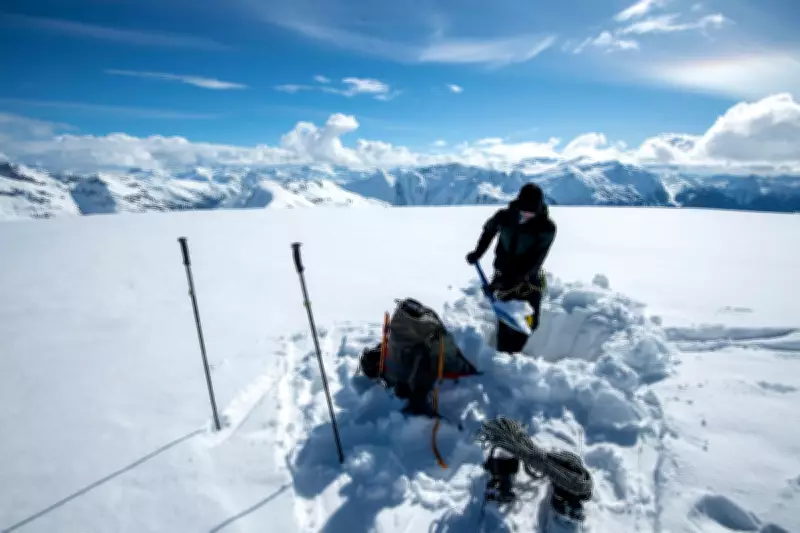
Backcountry enthusiasts must prioritize preparedness through specialized equipment and peer reliance, particularly since emergency response often requires hours in remote areas. Critical survival tools include avalanche transceivers that transmit location signals, probes for victim detection, and shovels for snow extraction. Modern avalanche air bags, activated by a toggle pull, inflate behind the head to increase the wearer's size, helping them remain near the surface where rescue becomes more feasible.
Climate Change and Evolving Avalanche Risks
Rising winter temperatures complicate avalanche prediction rather than simply reducing snow-related hazards. Increased temperature variability creates more frequent melt-refreeze cycles, producing weaker snowpacks compared to historical norms. Communities accustomed to stable conditions face unexpected threats, as demonstrated by a devastating 2017 avalanche in Italy that destroyed an entire hotel in a previously low-risk area.

While computer models help identify potential avalanche zones, changing precipitation patterns and temperature fluctuations challenge our understanding of cause-and-effect relationships in natural snow hazards. As historical data becomes less reliable, continuous research and adaptive safety measures become increasingly vital for winter sports participants and mountain communities alike.