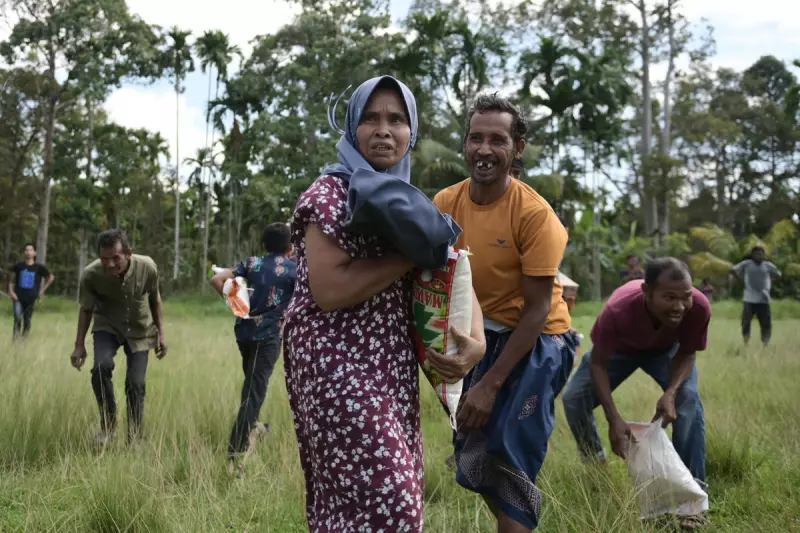
The death toll from last week's catastrophic flooding and landslides across parts of Asia has surged past 1,500, rescue officials confirmed on Thursday, 4 December 2025. Hundreds more remain missing as emergency teams struggle to reach communities isolated by destroyed infrastructure.
Human Cost and Environmental Warnings
Authorities reported 837 confirmed deaths in Indonesia, 479 in Sri Lanka, 185 in Thailand, and three in Malaysia. The scale of the tragedy is immense, with many villages in Indonesia and Sri Lanka still buried under mud and debris. A total of 861 people are unaccounted for across the two nations.
Amid the search for survivors, a stark warning emerged from environmental experts and residents: decades of rampant deforestation likely amplified the devastation. The loss of forests, which naturally absorb rainfall and stabilise soil, left landscapes dangerously vulnerable.

"The disaster was not just nature's fury, it was amplified by decades of deforestation," said Rianda Purba, an activist with the leading Indonesian environmental group WALHI. "Deforestation and unchecked development have stripped Sumatra of its resilience."
Evidence of Logging Amid the Debris
On the ground, evidence pointed directly to human activity. At Parkit Beach and other affected areas, massive piles of neatly cut timber were found scattered among the natural debris, stunning emergency crews.
"From their shape, it was clear these were not just trees torn out naturally by the flood, but timber that had been deliberately cut," stated Neviana, a member of a clean-up crew who uses a single name.
Local resident Ria Wati, 38, from Padang, echoed this observation, noting the logs were cleanly cut, unlike trees uprooted by force, suggesting they were the result of illegal logging.
Calls for Accountability and Policy Reform
Public outrage is growing, with direct calls for government action and corporate accountability. Environment Minister Hanif Faisol Nurofiq announced an investigation into eight companies suspected of worsening the disaster through their operations. He pledged to review environmental permits and factor extreme rainfall into future assessments.
In Batang Toru, North Sumatra, hundreds of hectares had been cleared for gold mining and energy projects, leaving slopes exposed. Lawmakers have demanded the permits of the seven operating companies there be revoked.
Following a visit to flood-hit areas, President Prabowo Subianto promised policy reforms. "We must truly prevent deforestation and forest destruction. Protecting our forests is crucial," he said.
The data underscores the crisis. WALHI recorded over 240,000 hectares of primary forest lost in 2024 alone. According to Global Forest Watch, the flood-inundated Indonesian provinces of Aceh, North Sumatra, and West Sumatra have lost 19,600 square kilometres of forest since 2000—an area larger than New Jersey.
With thousands facing severe food and water shortages in cut-off areas, the immediate focus remains on rescue and relief. However, the long-term demand for sustainable land management and forest protection has become a central, urgent plea from those who survived this preventable tragedy.