A stark new report has laid bare the concentrated nature of global carbon pollution, revealing that a mere 32 fossil fuel corporations were responsible for generating half of the world's carbon dioxide emissions in 2024. This marks a slight consolidation from the previous year, when 36 companies held the same dubious distinction.
The Dominant Polluters: State Control and Corporate Giants
The data, compiled in the latest Carbon Majors report, highlights the overwhelming role of state-owned enterprises in driving the climate crisis. A significant 17 of the top 20 emitters are government-controlled fossil fuel producers. These entities are largely based in nations that actively opposed a proposed fossil fuel phaseout plan at the Cop30 UN climate summit in December, including Saudi Arabia, Russia, China, Iran, the United Arab Emirates, and India. This opposition stands in contrast to the more than 80 other countries that had backed the ambitious phaseout initiative.
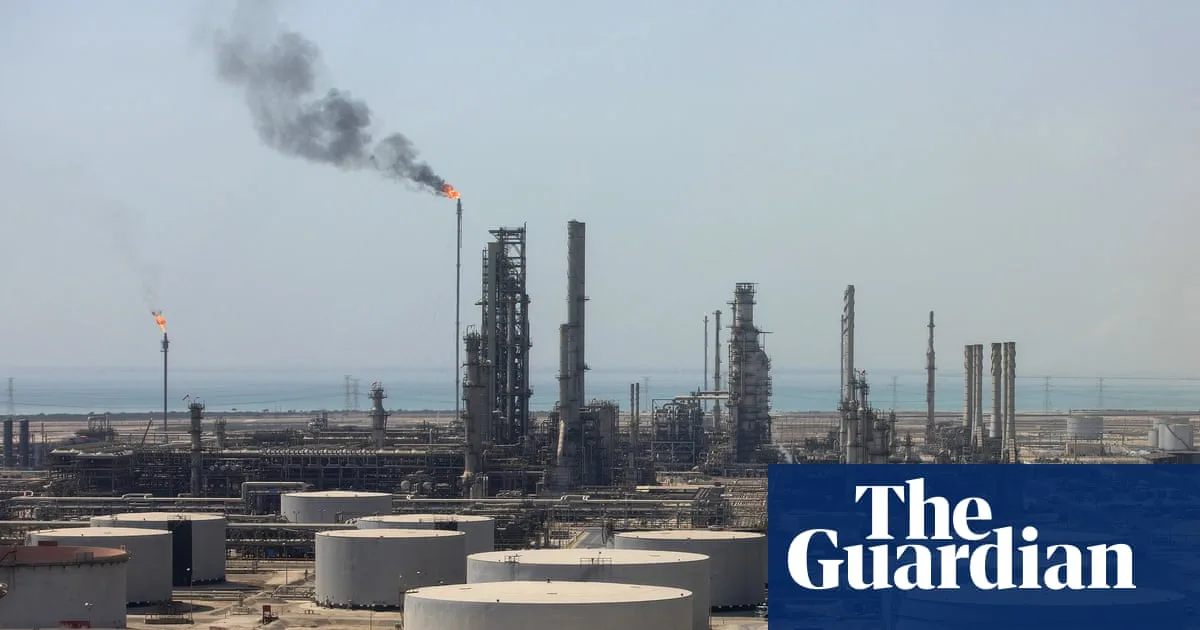
Leading the list of polluters is the state-controlled Saudi Arabian oil giant, Saudi Aramco. Its operations were responsible for a colossal 1.7 billion tonnes of CO2 emissions in 2024, a figure largely stemming from its exported oil. To put this into perspective, if Aramco were a sovereign nation, it would rank as the world's fifth-largest carbon polluter, trailing only behind Russia in terms of national emissions.
On the investor-owned side, ExxonMobil emerged as the largest polluter. The American multinational's fossil fuel production resulted in 610 million tonnes of CO2 emissions, a volume that would place it as the ninth-largest polluting country globally, ahead of nations like South Korea.
Accusations of Sabotage and Calls for Accountability
Climate critics and advocacy groups have levelled serious accusations against these leading fossil fuel firms. They argue that the companies are actively "sabotaging climate action" and positioning themselves "on the wrong side of history." However, there is a growing consensus that the precise emissions data provided by reports like Carbon Majors is becoming an increasingly powerful tool to hold these corporations to account.
Emmett Connaire of the thinktank InfluenceMap, who led the research, noted a concerning trend: "Each year, global emissions become increasingly concentrated among a shrinking group of high-emitting producers, while overall production continues to grow." This concentration is further evidenced by recent mega-mergers in the oil sector, such as ExxonMobil's acquisition of Pioneer Natural Resources and Chevron's purchase of Hess.
Tzeporah Berman of the Fossil Fuel Non-Proliferation Treaty Initiative was unequivocal in her assessment. "This latest analysis reinforces a stark reality: a powerful, concentrated group of fossil fuel corporations are not only dominating global emissions but are actively sabotaging climate action and weakening government ambition," she stated. Her initiative seeks to foster international cooperation to halt fossil fuel expansion and manage a just transition away from coal, oil, and gas.
The Growing Legal and Economic Reckoning
The Carbon Majors database is proving to be more than just a statistical record; it is becoming a foundational piece of evidence in legal and economic battles over climate responsibility. The data has underpinned scientific analyses that directly link emissions from these major companies to specific climate disasters, such as deadly heatwaves that would have been virtually impossible without their contribution.
Furthermore, studies have used the database to attribute trillions of dollars in economic losses from extreme heat events to individual fossil fuel firms. This data is also feeding into landmark legal proceedings. It has provided evidence in cases like Lliuya v RWE in Germany and is informing new "climate superfund" laws in US states like New York and Vermont. These laws aim to force large polluters to fund projects that protect communities from climate impacts like flooding and extreme heat.
Rebecca Brown, head of the Center for International Environmental Law, emphasised the mounting pressure: "The evidence just keeps mounting. The international court of justice and courts around the world are increasingly connecting the dots between fossil fuel production and climate destruction, making clear that big polluters must phase out fossil fuels and pay up."
The Daunting Climate Challenge
The report arrives against a backdrop of a relentless rise in global carbon emissions. After a brief dip during the Covid-19 pandemic, emissions have resumed their annual climb, reaching record levels each year. Experts warn that to meet the Paris Agreement's goal of limiting warming to 1.5°C, emissions would need to plummet by 45% by 2030—a target now widely viewed as unattainable.
Despite this, climate scientists stress that every fraction of a degree of avoided heating is critical, as each increment exacerbates the devastating impacts on communities worldwide. Christiana Figueres, a former UN climate chief, commented on the corporate inertia, noting that while clean energy investment now dwarfs that of fossil fuels globally, "carbon majors are clinging on to outdated, polluting products." She added, "But data provides a tool for the growing majority who are coming together to champion science-backed solutions and accountability."
When approached for comment on the report's findings, Saudi Aramco declined to respond, and ExxonMobil did not reply to requests for a statement.




