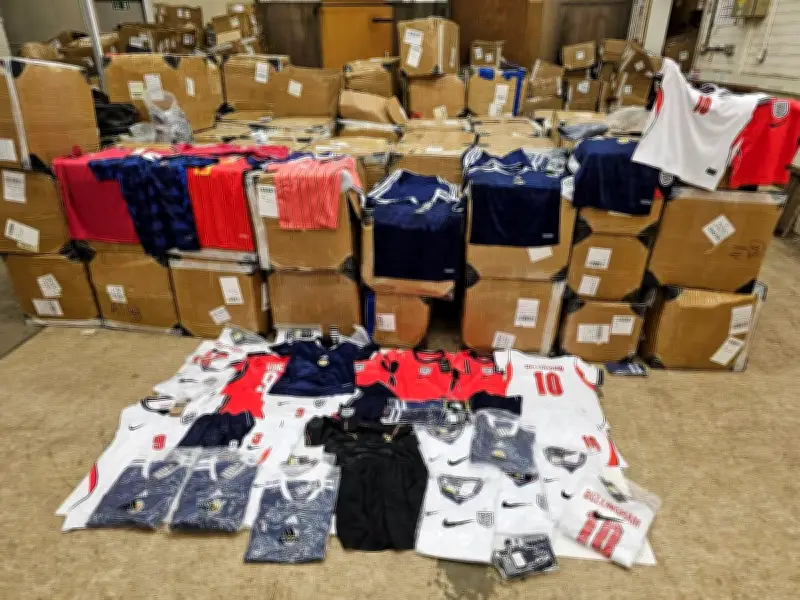
Researchers from the Revolution Plastics Institute at the University of Portsmouth are launching the first study to investigate the environmental impacts of counterfeit football shirts. The research, funded by the UK Intellectual Property Office, will compare the environmental impacts of counterfeit and genuine football shirts, addressing what experts call a 'major evidence gap surrounding the hidden environmental consequences of counterfeit products'.
Scope of the Study
The project will examine microplastic shedding from counterfeit kits, how they are disposed of, and their contribution to textile waste. A spokesman for the team said: 'Although the social harms of counterfeit markets, including the exploitation of workers by organised criminal networks, are increasingly well documented, their environmental impacts remain poorly understood. Researchers say that claims counterfeit goods are more harmful to the environment have rarely been supported by robust scientific evidence.'
Integrated Environmental Assessment
The university team will carry out an integrated environmental assessment measuring the energy and carbon impact of each product throughout its life cycle, and investigate whether counterfeit shirts release higher levels of microplastic fibres during use than genuine kits. Alongside this, researchers will investigate which messages are most effective at discouraging consumers from buying counterfeit products.
The findings will provide policymakers, environmental organisations and brands with evidence to help shape future enforcement, public awareness campaigns and strategies to reduce demand for counterfeit goods.
Independent Scientific Evidence
Dr Kate Whitman from the institute said: 'The public can be sceptical of claims about the harms of counterfeiting because they often come from organisations with a commercial interest in selling authentic products. Our goal is to generate independent, scientific evidence that is credible and trusted by both industry and the public.'
Research associate Felicity Webster noted that microplastics from the kits 'accumulate in the environment, posing risks to wildlife and human health'.
Record Seizure of Fake Shirts
The study comes after Trading Standards investigators made a record seizure of 58,000 fake World Cup football shirts worth £5.5 million at a distribution warehouse in Edinburgh. Undercover officers placed an order to an online ad and followed a trail to the centre packed with bogus gear weighing nine tonnes. All the Chinese-made kits—largely England and Scotland—were sneaked into the UK past border patrol officers.