Record Beef Prices Persist as Ranchers Face Complex Challenges in Expanding Herds
Record Beef Prices Persist as Ranchers Face Complex Challenges

Record Beef Prices Persist as Ranchers Face Complex Challenges in Expanding Herds

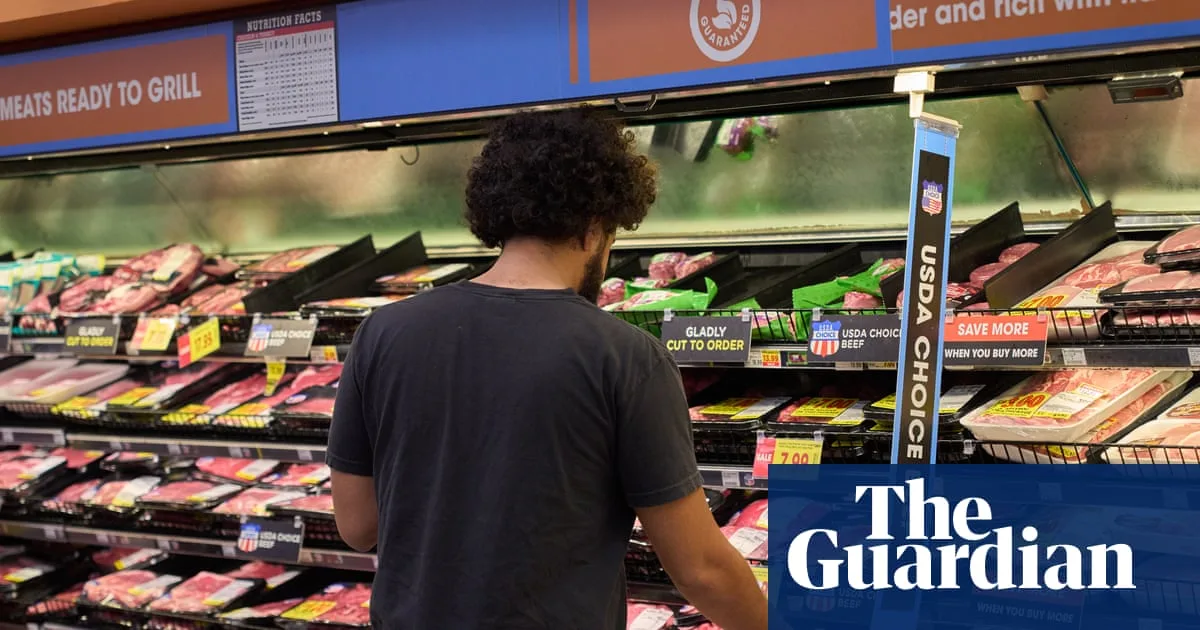
It has never been more expensive for American consumers to purchase steak or hamburger, with prices reaching unprecedented levels. While increasing the national cattle herd seems a logical solution to reduce costs, ranchers across the United States explain that the situation is far from straightforward.

The Dilemma of Herd Expansion

Stephanie Hatzenbuhler, a rancher from North Dakota, exemplifies the difficult choices facing the industry. On her family's Diamond J Angus ranch near Mandan, approximately 700 calves are expected this spring across more than 2,000 acres. She must decide whether to retain these animals to grow her herd or sell an equivalent number for slaughter to maintain current operations.

"They're good times, and they're bad times," Hatzenbuhler remarked. "It's a combination of both." This sentiment reflects the broader reluctance among ranchers to expand the national herd, which currently stands at its smallest size in over seventy-five years.

Wide Pickt banner — collaborative shopping lists app for Telegram, phone mockup with grocery list

Shrinking Herds and Soaring Prices

The U.S. cattle herd has dramatically declined from a peak of 132 million head in 1975 to just 86 million this year, according to Department of Agriculture statistics. While improved genetics and feeding techniques have increased production efficiency—with beef output reaching a record 28.4 billion pounds in 2022—supply remains constrained.

Federal data shows the average price for uncooked ground beef reached $6.86 per pound in March, just three cents below February's record high. This represents a staggering 48% increase compared to March 2021 prices. With approximately 2.5 billion pounds of beef exported in 2025, domestic supply remains tight against sustained consumer demand.

Environmental and Economic Barriers

Drought conditions present one of the most significant obstacles to herd expansion. Approximately 63% of the U.S. cattle herd resides in drought-affected areas, limiting grazing land and forcing ranchers to undertake costly measures like trucking in feed and water from distant regions.

"You've got to have rain. You've got to have grass to keep cows on," explained Tim Petry, a livestock marketing specialist at North Dakota State University. "We had forced liquidation of cows due to these conditions."

Bernt Nelson, an economist with the American Farm Bureau Federation, noted that feed represents the highest cost for ranchers. When pasture conditions deteriorate, additional expenses for transporting supplies make herd expansion financially challenging.

Market Complexities and Processing Dynamics

The relationship between ranchers and meat processors adds another layer of complexity to pricing dynamics. While some ranchers point to concentration among four major processing companies as contributing to high consumer prices, the Meat Institute trade group argues that retailers and food service companies ultimately set consumer prices.

"Rhetoric about beef industry concentration implies that consolidation in the beef packing sector is ongoing and that market power is becoming increasingly concentrated. That is not the case," the organization stated.

John Robinson of the National Cattlemen's Beef Association acknowledged that meat processors bear some responsibility but emphasized that "it's far more complicated than most people will give it credit for."

Additional Factors Influencing Supply

Border closures between the United States and Mexico have further constrained supply. Implemented in late 2024 to prevent the spread of the New World screwworm parasite, these restrictions have halted approximately one million cattle imports from Mexico.

Warren Rusche, a feedlot specialist at South Dakota State University, noted this particularly affects cattle feedlots and ranchers in southern plains regions. While former President Donald Trump has advocated for increased beef imports from Argentina, such measures would represent only a tiny percentage of U.S. production.

The Reality for Ranchers

Despite record prices, Hatzenbuhler clarified that she isn't getting rich. For established ranchers with owned land and equipment, current conditions are favorable, but entering the business presents substantial challenges due to high costs for equipment, fertilizer, and labor.

Pickt after-article banner — collaborative shopping lists app with family illustration

"If you're a young guy and want to get in, it's probably not the time to do it," she advised. "But if you're kind of established and been doing this for a while, you're doing good."

California rancher Mike Williams echoed this perspective, noting that while he wouldn't discourage newcomers, he would caution them against overextending financially. "I would say that we're finally maybe getting a fair price," Williams observed. "People are starting to realize the value of beef and are willing to pay more for quality."

The timeline for any potential herd expansion remains lengthy, requiring fifteen to twenty-four months for calves to mature before slaughter. Until ranchers overcome the multiple barriers to growth—from environmental challenges to market complexities—beef prices are likely to remain elevated for American consumers.