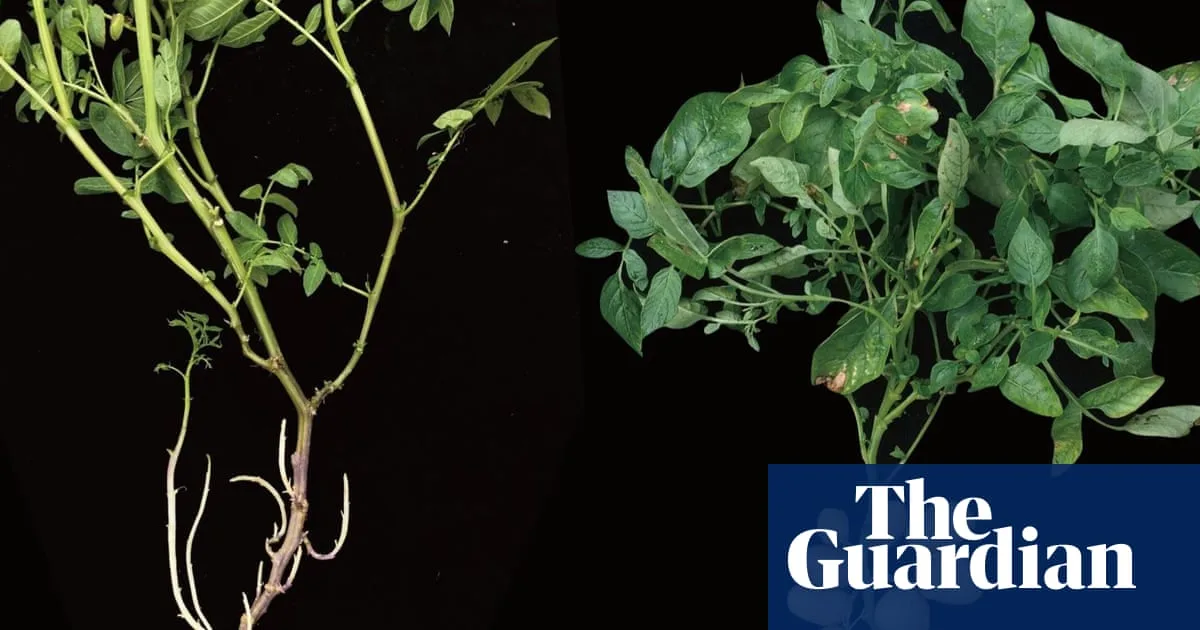
Scientists have discovered that the potato evolved from a tomato ancestor nearly 9 million years ago. The landmark research, published in the journal Cell, reveals that a hybridisation event between wild tomatoes and a plant called Etuberosum led to the creation of an entirely new lineage.
“Tomato is the mother and Etuberosum is the father,” said Professor Sanwen Huang of the Agricultural Genomics Institute in Shenzhen, China, who led the research team. “But this wasn’t obvious at first.” Above ground, potato plants closely resemble Etuberosum, but the latter lacks the starchy tubers that make potatoes a global food staple.
The team analysed 450 genomes from cultivated potatoes and 56 wild species. They identified two crucial genes: SP6A from the tomato and IT1 from Etuberosum. Neither gene alone produces tubers, but when combined, they interact to transform underground stems into tubers. “This is one of the largest genomic collections of wild potatoes ever analysed,” said first author Zhiyang Zhang.

James Mallet, a professor at Harvard University, described the study as “groundbreaking”, showing how hybridisation can spark the emergence of a new organ. The potato’s tubers store energy, helping it survive harsh conditions and reproduce without seeds or pollinators. This adaptation allowed potatoes to thrive in the high-altitude Andes, leading to a diversity of species later domesticated by humans.
“The Indigenous people in the Andes have hundreds of varieties of potatoes,” said Dr Sandra Knapp of the Natural History Museum in London. “In Europe, we have maybe five – all from one species: Solanum tuberosum.” The potato spread globally after Spanish ships transported it from the Andes in the 16th century, eventually becoming a staple worldwide.
Researchers are now exploring artificial hybridisation to create new varieties, including a project to help potatoes reproduce by seeds and to introduce tuber-producing genes into tomatoes. “We’re putting the IT1 and other necessary genes from potato into tomato, so it can grow tubers,” said Professor Huang. While still experimental, the work could link the tomato not only to the potato’s past but also to its future.