Northeast Farmers Battle Whiplash Weather as Crops Face Frost Threat
An abrupt and dramatic swing from unseasonably warm temperatures to freezing cold across the Northeast is causing significant disruption for flower and fruit farmers. Many are now forced into early harvests or face the potential of losing entire crops due to the sudden climatic shift.
Unpredictable Frost Patterns Challenge Agricultural Norms
While frosty nights are not uncommon during this period, the intensity and timing of this year's weather event are particularly problematic. According to data from the Northeast Regional Climate Center at Cornell University, the average last frost date across the region typically falls between mid-April and early June. However, the first half of April brought unusually warm conditions to much of the Northeast, followed by a rapid and severe temperature drop.
This meteorological whiplash has created a perfect storm for agricultural distress. Some areas of New England experienced temperatures soaring into the 80s Fahrenheit (approximately 27 degrees Celsius) last week, only to be blanketed by snow mere days later. The cold spell has persisted, with the National Weather Service issuing a freeze warning for Monday night and Tuesday morning across parts of Ohio, Pennsylvania, Virginia, Maryland, and North Carolina.

Orchard Owners Grapple with Budding and Freezing Cycles
In Ohio, the early warmth prompted peach and apple trees at Apple Hill Orchards to begin budding prematurely. The orchard spans approximately 80 acres in Mansfield and 110 acres in Fredericktown. Owner Anne Joudrey reported that the subsequent plunge into low 20s Fahrenheit (around minus 5 degrees Celsius) has already destroyed one variety of peach.
"Farming is inherently unpredictable, but we had a promising bloom and were anticipating a strong crop," Joudrey remarked on Monday. She noted that the apple trees are currently faring better, partly due to their strategic planting on higher ground, which allows cold air to drain away more effectively. "We remain hopeful for a reasonable outcome, but uncertainty is always part of the equation," she added.
Flower Farmers Adapt to Accelerated Blooms and Storage Demands
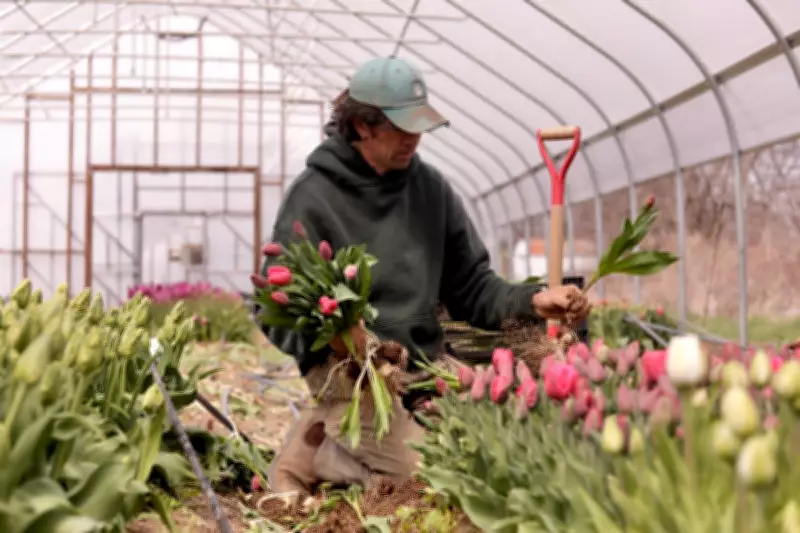
In Vermont, the temperature volatility has directly impacted operations at Understory Farm in Bridport, a specialist in cut flowers. Owner Gregory Witscher explained that tulips intended for Mother's Day in mid-May have already bloomed inside the farm's greenhouses.
"This forces us to harvest all the tulips simultaneously and store them with bulbs intact in crates within walk-in coolers for an extended period," Witscher stated. He cultivates around 50 varieties of flowers for wholesale markets and emphasized that such weather fluctuations demand considerable flexibility.
Witscher highlighted that it is increasingly common for small-scale vegetable and flower farms to employ protective measures like row covers, heaters for cold snaps, or shade cloth for extreme heat. "The transition from hot to cold weather is intense and presents real challenges. With experience, I've learned the importance of having multiple options and resources to remain agile," he concluded.
The situation underscores the broader vulnerabilities faced by Northeast agricultural sectors as they navigate increasingly erratic weather patterns, with farmers relying on both traditional knowledge and adaptive technologies to safeguard their livelihoods.