Monty Don's Essential Spring Lawn Care Advice
As winter recedes, many gardeners across the UK are confronted with lawns that appear overgrown, patchy, and increasingly dominated by moss. This common issue often signals underlying problems with soil conditions rather than being a standalone nuisance. Renowned gardening authority Monty Don has highlighted a straightforward yet highly effective task that homeowners should prioritise this season to transform their turf.
The Root Cause of Moss Infestation
Moss proliferation in lawns is typically a symptom of environmental factors that favour its growth over robust grass. According to Monty Don, writing on his official website, "The best grass likes very well-drained soil. Moss, for example, is always a symptom of poor drainage, made worse by shade." Compacted soil, resulting from factors such as matted roots, persistent rainfall, and regular foot traffic, exacerbates drainage issues. This compression prevents essential nutrients, air, and sunlight from adequately reaching grass roots, leading to deterioration and increased susceptibility to disease.
The Simple Aeration Solution
Monty Don advocates for a fundamental gardening technique to counteract soil compaction: annual aeration. He instructs, "The answer is to work on it at least once a year by sticking a fork in the ground and wiggling it about and repeating the process every six inches or so." This process involves piercing the soil with a garden fork at regular intervals, which creates vital channels. These channels significantly improve the circulation of air and water through the root system, addressing the core drainage problems that allow moss to thrive.
Enhancing Aeration with Natural Amendments
Following thorough aeration, Monty Don recommends applying a nourishing top dressing to further stimulate lawn health. He advises, "Mix up equal portions of sieved topsoil, sharp sand and sieved leaf mould or compost. If you do not have these things to hand, then just sharp or silver sand will do the job." This mixture should be spread across the aerated area and brushed into the holes using a stiff broom. This step not only improves drainage but also provides essential nutrients to the grass, strengthening it to naturally outcompete moss and weeds.
Final Steps for a Lush Lawn
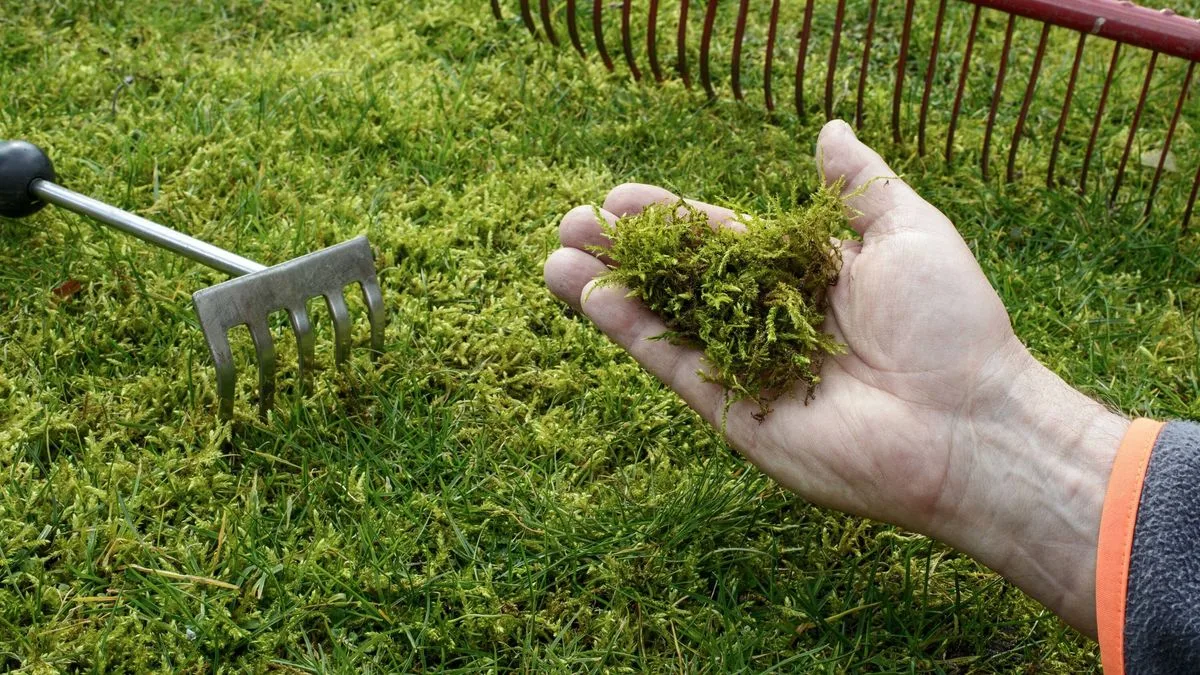
To complete the moss-clearing process, Monty Don suggests using a wire rake to remove accumulated thatch and moss from the lawn surface. He notes, "It is also worth giving the lawn a good scratch with a wire rake. This will remove all the overwintering thatch and moss, letting light and water reach the soil and the grass roots." The debris can be added to compost, and the lawn should then be mowed. While it may appear sparse initially, the grass is expected to regenerate thicker and more vigorous than before.
Alternative Treatment for Persistent Moss
In cases where aeration and natural amendments prove insufficient, experts from Lawn Pack propose using Iron Sulphate (Ferrous Sulphate) as an effective moss treatment. They explain, "The most effective moss treatment in UK lawns is Iron Sulphate. When applied correctly, it treats moss quickly, turns moss black within days, and makes removal easier." Application should follow product instructions, typically using a sprayer, with visible results expected within a few days as the moss darkens and dies.
By dedicating time to these manageable spring tasks, gardeners can effectively eliminate moss, enhance soil health, and cultivate a resilient, verdant lawn that thrives throughout the season.






