India's Farmers Fear Food Crisis as Iran War Triggers Fertiliser Shortages
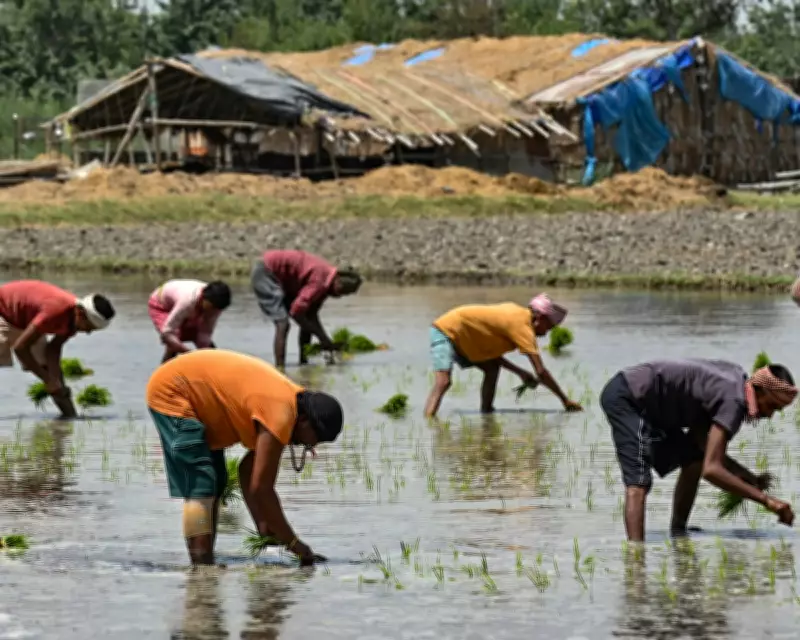
Farmers planting rice saplings in the fields on the outskirts of Amritsar, Punjab, are gripped by a panic that stretches far beyond their quiet corners of India's breadbasket. The ripple effects of the war in Iran, particularly the blockade of the Strait of Hormuz, are now threatening agricultural livelihoods and food security across South Asia.
Crippling Anxiety in the Fields
Gurvinder Singh, a 52-year-old farmer from Punjab, exemplifies the growing dread. "We are already struggling with profits," Singh said, gazing over his smallholding where he alternates wheat and rice crops. "If we don't get fertilisers, there will be less yield. That will affect my entire family and the entire region, because we are completely dependent on agriculture." His anxiety over a conflict thousands of miles away is palpable, as he fears for this season's rice crop.
The blockade has sent global markets into a tailspin, impacting oil and gas supplies from the Gulf states. However, analysts warn the devastation will extend far beyond energy, crippling global food security. The World Food Programme estimates an extra 45 million people could be pushed into acute food insecurity if the conflict persists beyond June.

Vulnerable Supply Chains and Heavy Reliance
India, the world's second-largest fertiliser consumer after China, uses over 60 million tonnes annually. Most of its imports, including finished products and raw materials, traditionally come from Gulf countries via the Strait of Hormuz. This heavy reliance makes South Asian nations like India and Sri Lanka particularly vulnerable.
Devinder Sharma, an agricultural economist, highlighted the sensitivity: "Indian agriculture remains heavily dependent on chemical fertilisers. Any disruption quickly creates anxiety." Early signals already point to tightening supplies and rising costs being passed directly to farmers.
The strain is evident in key inputs like urea, a nitrogen-based fertiliser central to Indian farming. While much is produced domestically, production relies on imported natural gas, supplies of which have been cut by 30% to factories. With the kharif season—which typically produces about 100 million tonnes of rice—approaching, the narrow window for procurement has sparked unprecedented panic.
"In my 35 years in this business, I have not seen such panic," said Prakash Limbuyya Swami, a fertiliser retailer in Hubballi, Karnataka. Many farmers are stocking up in advance, despite limited shelf life, driven by fear of shortages affecting productivity.
Government Assurances Amid Growing Despair
Officials insist fertiliser plants are operating normally and buffer stocks are higher than last year. Aparna S Sharma, a senior official in the department of fertilisers, stated: "Currently, we have higher stocks compared to last year, indicating a healthy supply position," adding that sourcing is being diversified beyond traditional Gulf suppliers.
Yet, anxiety persists. Tejveer Singh, a farmer from Ambala in Punjab, noted: "Because of the panic, farmers around me have started hoarding fertilisers. Any shortage will affect our productivity. Farmers are already under stress due to rising costs. This will be a big blow." Many small-scale farmers operate with heavy losses and crushing debt, making them acutely sensitive to any shock.
Sri Lanka's Haunting Fears and National Security Threats
In Sri Lanka, the fears are particularly haunting, given the country's recent economic crisis that left farmers unable to buy imported fertiliser, resulting in devastating losses. A UN report highlighted Sri Lanka as one of the most vulnerable countries, after Sudan, if the Gulf conflict drags on.
P Amila, a farmer from Bibila, has decided not to sow next season's rice crop over fears of greater debt. "This is the most volatile situation I have faced in 30 years of farming," he said. "I worry, what will people do when they don't have rice to buy?"

While the Sri Lankan government claims to control prices and ration fertiliser fairly, Anuradha Tennakoon, chairman of the National Agrarian Unity, warned: "The government and officials keep saying there is enough fertilisers. That is a big lie. There are no stocks. If this yala season is affected, there is a serious food security issue. The disruption of food security poses a threat to national security."
In Polonnaruwa, farmer Ranjit Hulugalle described fertiliser stocks running low and prices almost doubling. "We, as farmers, are going to face a massive crisis in a month," he said in despair. "Then the country is going to face a food crisis."
The ability to water, harvest, process, store, and transport crops is also threatened by oil and diesel shortages and surging electricity prices, compounding worries over shortages. As farmers block roads demanding support, the spectre of a broader crisis looms, with the Iran war's ripple effects threatening to destabilise food security across the region.