In a significant policy reversal, the Government has announced it will substantially increase the inheritance tax relief threshold for farmers following months of fierce protest from the agricultural community.
A Major Concession After Farmer Anger
The Department for Environment, Food and Rural Affairs (Defra) confirmed on Tuesday 23 December 2025 that the threshold for Agriculture Property Relief (APR) and Business Property Relief (BPR) will be raised from the previously planned £1 million to £2.5 million per individual. This change, a direct response to widespread outcry, will take effect from 6 April 2026.
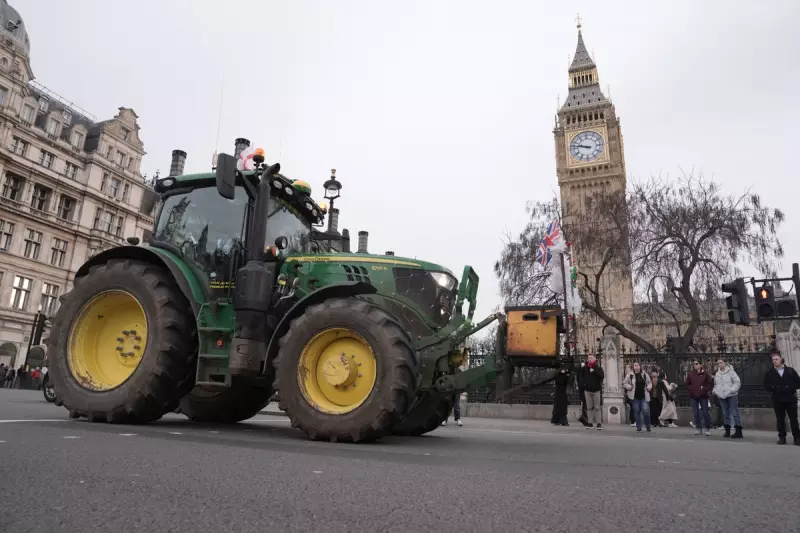
The original proposal, unveiled in Labour's first Budget last year, would have restricted full 100% relief to the first £1 million of agricultural and business property passed on. This sparked consternation, leading to tractor protests outside Parliament and criticism from Labour MPs representing rural constituencies.

Environment Secretary Emma Reynolds stated the Government had "listened closely to farmers" and was making changes to "protect more ordinary family farms." She emphasised that couples could now pass on estates worth up to £5 million tax-free, while larger estates would "contribute more."
Reduced Burden But Continued Criticism
Under the revised plans, spouses or civil partners can pass on up to £5 million in qualifying assets between them before facing inheritance tax. For values above that, farmers will receive 50% relief on qualifying assets, leading to a reduced effective tax rate of up to 20%, rather than the standard 40%.
The Government estimates this climbdown will reduce the number of estates facing higher tax from around 2,000 to roughly 1,100, impacting only the largest farm businesses. Prior to Labour's initial proposal, farmers enjoyed full relief on agricultural and business assets passed to the next generation.
The severity of the reaction was highlighted by Baroness Minette Batters, the former National Farmers' Union (NFU) president who led a government review. She warned the original plans had led some farmers to contemplate suicide to avoid the tax changes.
Political Fallout and Industry Response
The policy shift represents another U-turn for Prime Minister Sir Keir Starmer's government, following reversals on winter fuel payments and welfare reforms. While Sir Keir had previously defended the tax as a "sensible reform," the political pressure proved overwhelming.
NFU president Tom Bradshaw welcomed the announcement as a "huge relief to many," stating it would greatly reduce the tax burden for family farms. He thanked the government for listening after what he called a "pernicious and cruel" initial proposal.
However, opposition parties argued the change does not go far enough. Tory leader Kemi Badenoch labelled it a "huge U-turn" on "cruel, immoral" plans. Liberal Democrat Tim Farron and Reform UK's Richard Tice both called for the tax to be scrapped entirely, arguing many family farms would still face crippling bills.
The internal Labour rift was also exposed, with Penrith and Solway MP Markus Campbell-Savours having lost the party whip earlier in December for voting against the original finance bill.