Companion Planting: A Simple Guide to Growing Vegetable Combinations
Many allotment holders and vegetable gardeners strongly advocate for companion planting, which involves cultivating specific crops alongside others to significantly enhance harvest outcomes. This method leverages natural synergies between plants to improve growth, deter pests, and maximize garden space efficiently.
The Science and Skepticism Behind Plant Partnerships
Charles Dowding, a renowned gardener, teacher, author, and social media influencer known for his 'no dig' philosophy, emphasizes that plants which taste good together often thrive when grown together. Examples include basil and tomatoes, beetroot and onions, dill and cucumbers, and lettuce with salad rocket. Based at his garden in Homeacres, Somerset, Dowding offers courses and has authored a new book, Grow Together, which details 50 effective planting partnerships to boost harvests.
Dowding believes that optimizing available space and timing crops so that one emerges as another is harvested can substantially increase crop production. Techniques such as multi-sowing, succession planning, overlapping plantings, and interplanting are all recommended strategies for enhancing yields.

In contrast, gardening broadcaster and author Pippa Greenwood, who operates a business selling plants and biological controls, highlights the pest-deterrent benefits of certain companion plantings. For instance, growing onions in alternate rows with carrots can confuse carrot flies and onion flies due to conflicting scents, making it harder for pests to locate their target plants. Additionally, planting marigolds with tomatoes and cucumbers may repel or confuse pests like greenhouse whitefly, while attracting beneficial insects such as hoverflies, which prey on aphids. Greenwood also notes that pollinating insects attracted by flowers can improve crop pollination.
However, Dowding expresses skepticism about scent-based pest deterrence, stating that he has not found combinations like onions and carrots effective against carrot root fly. He argues that successful companion planting is more about spatial and temporal planning rather than relying on aromatic defenses. Similarly, he doubts the efficacy of sacrificial crops like nasturtiums in luring pests away from brassicas, suggesting they might instead increase pest populations by providing additional food sources.
Five Proven Planting Companions to Enhance Your Harvest
Dowding recommends five specific plant partnerships that can help boost garden productivity through careful timing and spatial arrangement.
- Celeriac and Garlic: This combination focuses on timing. Plant garlic in October in lines across a bed, leaving space for celeriac rows between them. By May, when garlic has a month left to grow, transplant celeriac seedlings into these spaces. After garlic harvest, the celeriac can grow rapidly without competition.
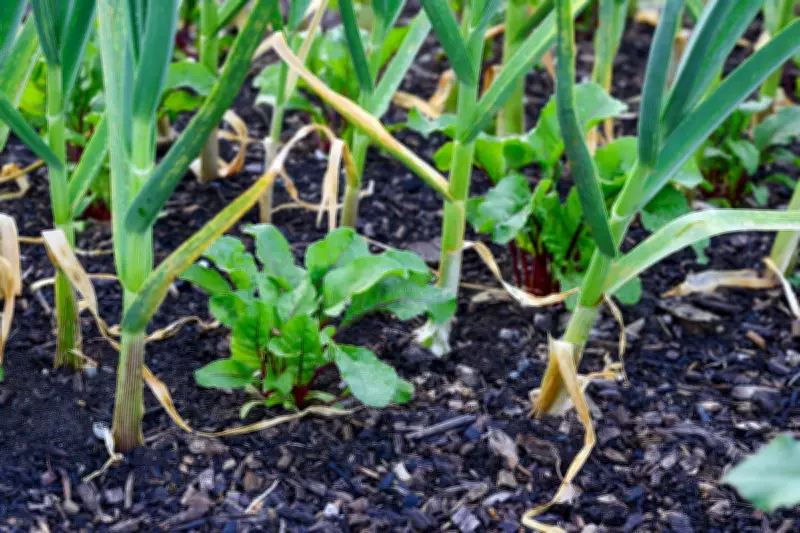
- Spring Onions and Beetroot: Overlap these vegetables by planting multi-sown clumps of both in April, May, or June, with beetroot spaced 30cm apart. Spring onions, with their upright growth, do not overshadow beetroot. Harvest spring onions by early July, followed by beetroot later, yielding two harvests from one bed.
- Chard and Dwarf French Beans: Transplant French beans while direct-sowing chard in early July. Interplant rows of beans with chard; after beans are harvested, chard takes over, benefiting from nitrogen nodules left by the beans.
- French Marigolds with Tomatoes: Dot compact French marigolds around tomato plants. They secrete limonene, which helps deter aphids, providing a natural pest control method.
- Florence Fennel Between Ridge Cucumbers: Contrary to the belief that fennel does not coexist well with other plants, Dowding finds it thrives near ridge cucumbers. Sow fennel in late July, plant it amid cucumber foliage in mid-August, and harvest in October after cucumbers finish, with fennel plants growing robustly in the interim.
Charles Dowding's book, Grow Together, published by DK and priced at £14.99, is available now, offering further insights into these and other planting partnerships.