
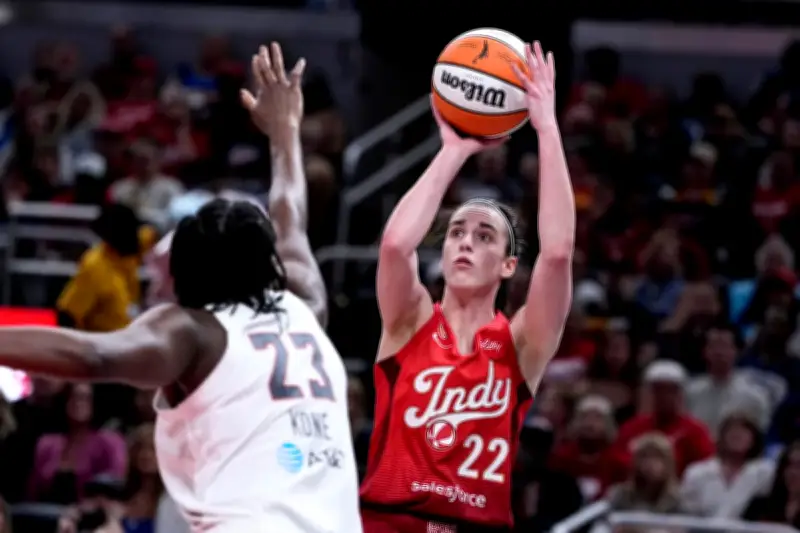
Indiana Fever guard Caitlin Clark has been thrust into the center of America's latest sports culture war after a group of Republican lawmakers threatened to bring the Department of Justice into the WNBA over hard fouls against her. The move, led by Texas Representative August Pfluger, alleges that physical play against Clark 'may be racially motivated' and hints at a possible civil rights lawsuit against the league on her behalf. This intervention marks the third time in less than a month that the Trump administration and its allies have used sports as a front in their culture war, following investigations into MLB's Pride Night and a call to FIFA over a US player's suspension.
Political Symbolism Forced Upon Clark
Clark, who has spent her five-year national career deftly avoiding direct links between her personal politics and the anti-Black factions of her fan base, now faces increased pressure to speak out. The government's implication that she needs federal protection from Black opponents forces her hand to address being positioned as a target by her sport. 'Caitlin Clark never asked to become a political symbol,' notes Howard Bryant, author of 'The Heritage: Black Athletes, A Divided America, and the Politics of Patriotism.' 'Trump's allies have chosen her anyway.'
WNBA's Physical Play and Racial Dynamics
The narrative that Clark faces racially motivated fouls overlooks the physical nature of the WNBA. Dallas star Paige Bueckers thrives without controversy, and Clark herself gives and receives physical play as all players must. The league is inherently physical, and Clark has yet to prove she can handle it consistently. However, the Republican intervention amplifies the racial undertones, pitting Clark against her teammates and the league's predominantly Black and queer culture.
Financial Impact and Cultural Shift
Clark's arrival has brought unprecedented financial attention to women's basketball, opening doors to new dollars and a new demographic of viewers. Yet, it also threatens the league's existing identity. Unlike the horizontal, below-the-rim women's game that was once ridiculed, Clark's long-range shooting—reminiscent of Stephen Curry—made the game accessible to men who previously derided it. This shift has muted the league's political voice, which was strong in 2020 with players like Maya Moore and Sue Bird. Today, the activist league has gone silent, even as a Black woman runs for president.
Historical Parallels to Larry Bird
Bryant draws a parallel to Larry Bird, who similarly became a 'Great White Hope' in the NBA during the racially charged 1980s. Bird rejected the white savior narrative and earned respect from Black players and culture. 'Clark is in an even more perilous position,' Bryant writes, 'for today's culture is far more invasive and demanding—people want to know where you stand. Silence is a tacit agreement.' The greatest risk Clark faces is her right to political privacy, sacrificed by a government that either mistakenly acts in her interest or willingly uses her to further divide the country.
What Will Clark Do?
As the most recognizable and polarizing star in a time of catastrophic division, Clark must decide whether to denounce the government's actions, earning peer respect but risking fan ire, or remain silent. Bird's example shows it is possible to reject the mantle without becoming a political activist. Whether Clark can navigate this path remains to be seen.




