Playwright David Eldridge has brought his acclaimed trilogy to a poignant conclusion with 'End' at the National Theatre, featuring a compelling performance from Clive Owen that captures the complexities of facing mortality.
A Trilogy Reaches Its Emotional Conclusion
Following 2017's 'Beginning' and 2022's 'Middle', David Eldridge completes his theatrical exploration of ordinary Essex life with this final instalment. While novelists frequently embrace multi-part series, playwrights face greater risks in asking audiences to return over multiple years. Eldridge's trilogy now stands complete, offering a quiet yet moving examination of how we choose to die and be remembered.
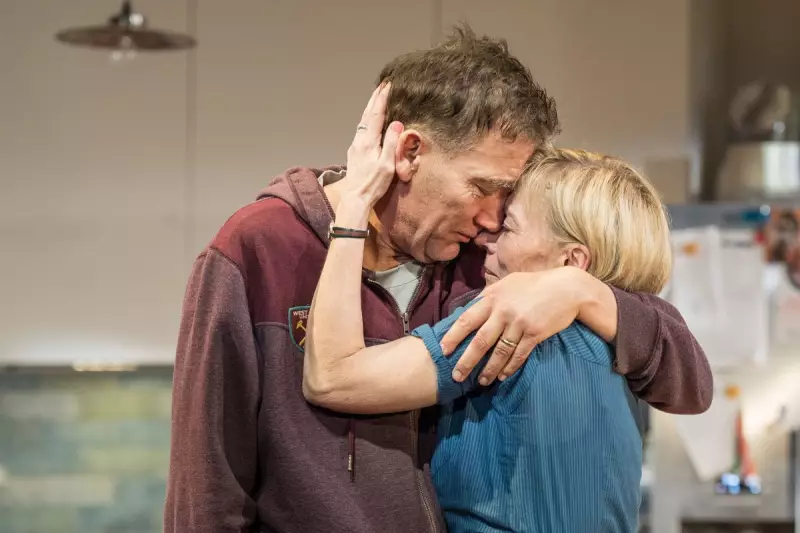
The action shifts to north London, where two Essex transplants confront death in their bourgeois kitchen. Clive Owen, known for his role in 'Closer', appears in rumpled good form as Alfie, a middle-aged DJ weary of battling cancer and determined to exit with flair. His vision for his final send-off involves raving to Modjo's 'Lady (Hear Me Tonight)' rather than traditional solemnity.

Conflicting Visions of Mortality
Alfie's long-term partner Julie, portrayed by Saskia Reeves, embodies a more romantic perspective. As a successful novelist, she imagines a Shakespearean inscription for their shared gravestone, while Alfie prefers adding a disco ball to the arrangement.
Eldridge's dialogue expertly observes how people use humour, sentimentality, avoidance and fatalism to reconcile themselves with death. One particularly moving passage sees Alfie reflecting on his father's drawn-out passing, beautifully delivered by Owen. Reeves brings convincingly frenetic energy to Julie, though her character frequently escapes difficult emotional realities by making endless cups of tea she never drinks.
Authentic Setting and Emotional Realities
Gary McCann's realistic kitchen set design perfectly captures the luxuries and idiosyncrasies of an artsy north London home - minimalist design cluttered with lifetime collections of treasured records and kitschy wall art. The space feels genuinely lived-in, with Reeves and Owen capturing the awkward realities of devoted yet mutually exasperated life partners.
Despite director Rachel O'Riordan's careful use of silences and pace changes, the story's structure occasionally feels slight and faltering. Darker themes surface intermittently - a buried infidelity, troubling mentions of cancer clinics preying on hope, suggestions that Julie might be mining their pain for her next novel. However, Eldridge consistently returns to safer emotional territory of bickering and reminiscing rather than exploring these complex ideas fully.
Unlike novelists who need killer stories to anchor their trilogies, Eldridge's mission remains deliberately different. His first two parts captured normal Essex couples falling in love then nearly falling apart in real time. This conclusion breaks new ground by showing a couple who've moved from their home county and now contemplate the ultimate departure from this world.
While 'End' stands capably on its own, it ultimately feels like it's building toward something bigger that never arrives - a pay-off perpetually postponed in favour of yet another cup of tea.