The Rat Trap Review: Noël Coward's Early Marital Drama Reimagined
Hell is other people – especially if you happen to be married to them. This sentiment, explored with characteristic wit and cynicism by Noël Coward throughout his career, finds its early, raw expression in The Rat Trap, a rarely performed work written when the playwright was just eighteen years old. Now, a century after its completion, playwright Bill Rosenfield and the enterprising Troupe theatre company have undertaken a bold reimagining of this jaundiced marital portrait at London's Park Theatre.
A Youthful Exploration of Artistic Ambition
Completed at the end of the First World War in 1918, though not first staged until 1926, The Rat Trap offers a fascinating glimpse into the nascent themes that would come to define Coward's later, more polished works. The play centres on two young writers – the novelist Sheila and the budding playwright Keld – who embark on marriage with dreams of both domestic bliss and artistic success. As the narrative unfolds, it becomes painfully clear that something has to give. Despite Sheila being portrayed as the intellectual powerhouse of the pair, it is she who ultimately relinquishes her own ambitions to allow Keld's career to flourish, a sacrifice that forms the emotional core of this compelling drama.
Streamlined Production and Powerful Performances
Rosenfield's adaptation streamlines the original plot and florid dialogue, creating a more accessible contemporary version while retaining the play's essential spirit. Director Kirsty Patrick Ward's production navigates the challenging tonal balance between comedy and tragedy with considerable skill, though the play's bickering comedy elements sometimes struggle to lift the prevailing atmosphere of marital misery.

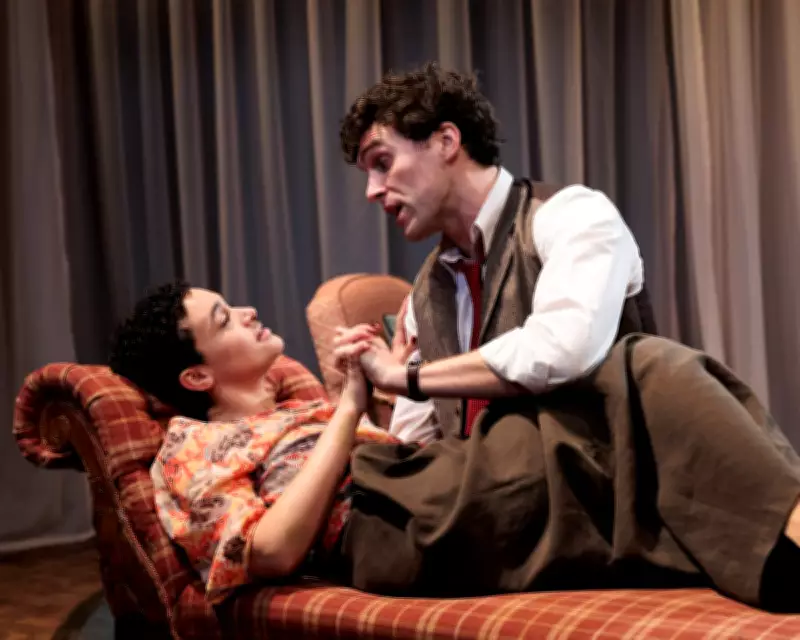
Lily Nichol delivers a nuanced performance as Sheila, beginning in eye-rolling splendour with art deco curves emphasised by Libby Watson's spiffy costume design – all boho prints and flappy trousers. As paradise turns to trouble, Nichol masterfully portrays Sheila's gradual diminishment, her physical presence shrinking, stilling, and ultimately taking up less space, mirrored in her transition to subdued, politely pressed pleats. It's a dismaying yet compelling transformation to witness.
Ewan Miller brings complexity to the role of Keld, never disguising the character's profound self-regard. While appearing ruffle-haired and boyish on the surface, Miller reveals Keld's capacity for bridling, bullying, and outright foul behaviour, particularly towards the shrewd housekeeper played with excellence by Angela Sims. Miller portrays Keld as a second-rate talent who remains insufferable even in his moments of abjection.
Supporting Characters and Thematic Depth
The central couple's struggles are reflected and questioned by the surrounding characters. Gina Bramhill brings shrewd intelligence to her portrayal of a singleton observing the marital drama, while Zoe Goriely arrives as a minx in a cloud of scent and spite, adding further complexity to the exploration of relationships among artists. The production suggests there exists no clear template for love within artistic circles, and even the unexpected ending provides little in the way of lifted spirits.
Rosenfield has drawn connections between Coward's early work and the sombre marital dramas of Ibsen and Strindberg, positioning The Rat Trap as more serious drama than outright comedy. Indeed, the play lacks the chrome-plated twists of phrase and predatory banter that would become Coward's trademark in later years, instead offering a more straightforward, though no less powerful, examination of intractable desires and artistic compromise.
A Staunch Case for Coward's Youthful Effort
Troupe theatre company makes a compelling case for this early Coward work, which the playwright himself once suggested would "only be interesting as a play to ardent students of my work." While Coward would undoubtedly go on to write more piercingly about the conflicts between romantic and creative ambitions, The Rat Trap represents the sharpening of claws that would define his later masterpieces. The production runs at Park Theatre, London, until 14th March, offering theatregoers a rare opportunity to witness this formative work in Coward's extraordinary career.