The Great Arch Review: A Visionary Architect Crushed by Politics of Prestige
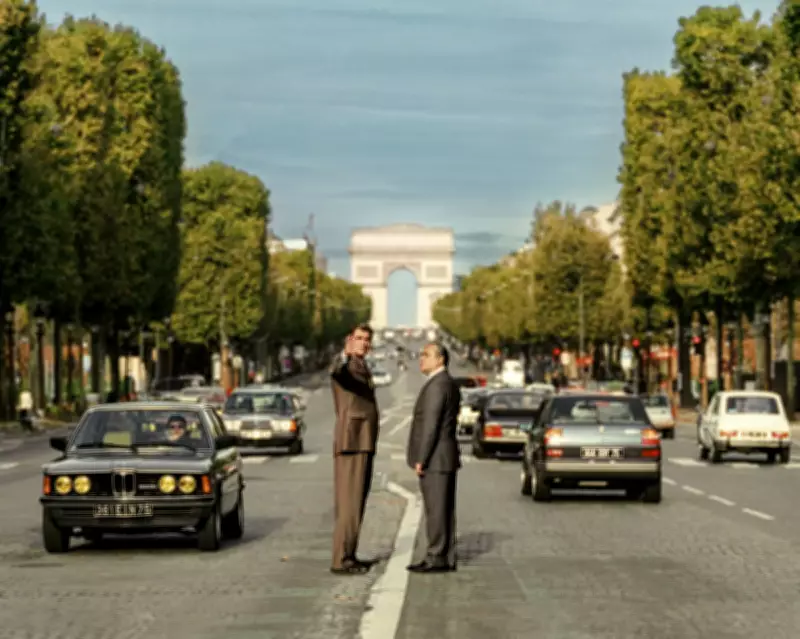
In Stéphane Demoustier's new drama, The Great Arch, the construction of Paris's Arche de la Défense is not portrayed as a cultural triumph but as a testimony of failure. This meticulous film, starring Claes Bang as Danish architect Johan Otto von Spreckelsen, delves into the collision between artistic purity and the bureaucratic ego and national vanity that defined the project.
A Monumental Botch-Job
Adapted from Laurence Cossé's 2016 novel La Grande Arche, the film diverges from recent French brand-heritage pictures like Eiffel or Widow Clicquot. Instead, it focuses on the spiritual crushing of Von Spreckelsen, who won an international competition in 1983 to design the statement building for Paris's western business district. His obscurity is such that the Danish embassy is unaware of him, leading President Mitterrand's adviser, Jean-Louis Subilon (played by Xavier Dolan), to track him down while fishing in a Danish lake.
Upon arrival in France, Von Spreckelsen, a purist, refuses to deviate from the perfect dimensions of his "Cube," viewing it as the culmination of his life's work. However, he is immediately ensnared between the capricious demands of the premier (Michel Fau) and the cost-cutting maneuvers of technocrat Subilon.

Artistic Battles and Compromises
Von Spreckelsen hires Paul Andreu (Swann Arlaud), designer of Terminal 1 at Charles de Gaulle airport, as his site manager, while insisting on retaining artistic credit. Demoustier frames this retro piece in a boxy 4:3 ratio, fastidiously detailing the architect's battles, compromises, and perceived betrayals. Key conflicts include the glass facade, the suspended cloud form under the canopy, and the Carrara marble, for which he enlists Mitterrand's support.
Even with the backing of his wife, Liv (Sidse Babett Knudsen), in politicking, Von Spreckelsen succumbs to paranoia and rage in the face of relentless interference. The film is exact in depicting the construction process but less so on the man himself, leaving his emotional reasons and egotism vague, as highlighted by a Carrara quarry owner's remark that even Michelangelo never invented anything.
Performance and Themes
Claes Bang anchors this depiction of Tormented Architectural Genius with airy disdain rather than firebrand creativity, which sometimes leaves him unmoored from the heavyweight cast, including the shrewd Swann Arlaud. The crushingly downbeat ending serves as a sobering exposé of the supposed Gallic cult of the artist, making The Great Arch an intriguing exploration of prestige politics.
The film is showing at the Cine Lumière in London from 11 March, offering a poignant look at how visionary ideals can be undermined by bureaucratic and nationalistic forces.