Sirāt: A Cinematic Journey into the Heart of Rave Culture
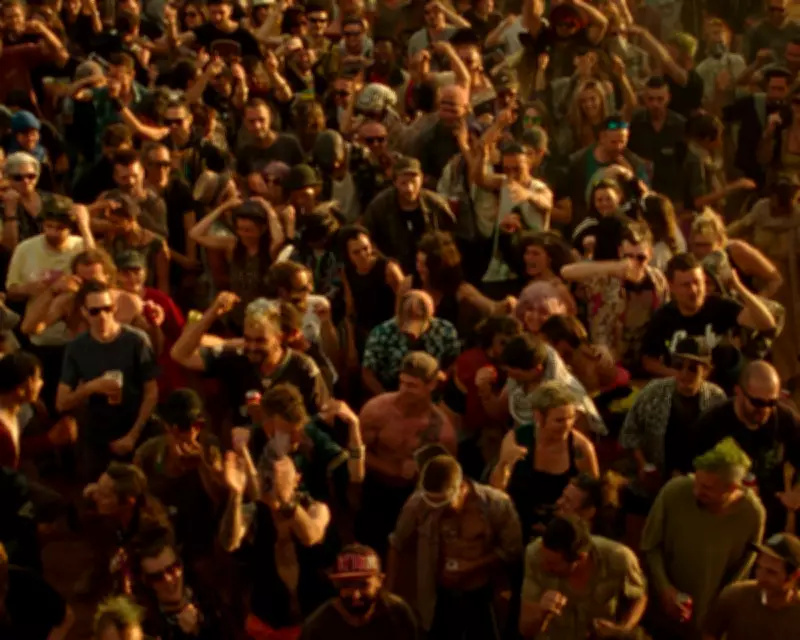
In the arresting opening sequence of Oliver Laxe's existential mystery thriller Sirāt, a dedicated group of partygoers assembles a formidable sound system amidst the stark beauty of the southern Moroccan desert. This is no ordinary film set; the revellers are genuine, lifelong ravers who journeyed from across Europe specifically for this makeshift festival. Among them is Sebastian Vaughan, known as 69db, a core member of the pioneering 1990s British "free party" collective Spiral Tribe.
"In conventional cinema, reality is typically forced to conform to cinematic rules," explains the French-born Spanish director during an interview in Berlin. "Our approach is the inverse: we adapt the filmmaking process to honour reality." This philosophy was paramount when collaborating with the ravers. Laxe recalls their non-negotiable stipulation: "They insisted the music could not stop for three days. We were genuinely thrilled by that demand."
From Cannes to Oscar Buzz: Sirāt's Critical Acclaim
Positioned as a significant arthouse crossover success this year, Sirāt has garnered substantial acclaim. After securing the Jury Prize at the Cannes Film Festival in May, the film is scheduled for release in UK cinemas in February. It stands a strong chance of Oscar recognition, having been shortlisted in five categories, including Best International Feature Film.

On its surface, the narrative follows a modest family unit—patriarch Luis, his son Esteban, and their dog Pipa—on a road trip to locate a missing daughter named Mar. Their quest becomes entangled with external chaos as radio broadcasts announce an armed conflict with a neighbouring country, leading to military intervention at the desert festival.
Transcending Plot: Rave Culture as Metaphysical Exploration
However, over the film's nearly two-hour runtime, the search-mission plot gradually recedes. Rave culture and its profound metaphysical implications emerge not as mere backdrop but as the central subject. While numerous films have attempted to capture dance music culture—from British drama Beats to Mia Hansen-Løve's Eden—Sirāt distinguishes itself by framing raving and its associated ego dissolution as a direct confrontation with mortality.
"If you die on a dancefloor, it's considered a mythological death," states Laxe, who draws inspiration from Sufism and his studies in gestalt psychotherapy. The film's unconventional portrayal of character deaths has fueled its cult status. Laxe clarifies his intent is not cruel but spiritual, alluding to shedding worldly attachments to achieve liberation. "This concept exists at the core of all cultures, where the hero transcends the idea of his own death," he says, referencing scholar Joseph Campbell. "It's a triumphant death, a door to eternity."
Inspirations from Rumi to Non-Professional Casting
The poetry of the 13th-century Sufi mystic Rumi profoundly influenced Laxe, particularly verses urging dance "when you're broken open." This informed the film's depiction of raving and psychedelic use as ecstatic rites amidst suffering. "As a filmmaker, I aim to evoke transcendence," Laxe explains. "Even the worst disasters can be gifts—painful, yet leading to serenity."
To externalise emotional imperfections, Laxe intentionally cast non-professional actors with disabilities, including Tonin Janvier, who has a prosthetic leg, and Richard Bellamy, who has a missing hand. "Raves permit uninhibited, extreme expression," Laxe notes. "You can scream, cry, or fall. In that moment, you see the construction of your ego, your fake personality. The music's beat pushes you up, celebrating your wounds when you land."
The Sonic Architecture of Kangding Ray
The film's spiritual themes are inextricably linked to its powerful score, crafted by Berlin-based electronic producer David Letellier, known as Kangding Ray. A veteran of the experimental label Raster-Noton and a regular DJ at iconic venues like Berghain, Letellier observes that contemporary electronic music has often been co-opted by corporations, losing its DIY, queer, and anti-authoritarian roots.

Laxe contacted Letellier after hearing his 2014 track Amber Decay. They spent five days in Berlin exploring influences from Steve Reich to Detroit techno. For the score, Letellier adopted a sculptural approach. "I carve, polish, cut, destroy, or explode sounds," he describes. The resulting soundtrack evolves from visceral electronics into dark, skeletal ambient noise, mirroring the narrative's disintegration.
Dance as Solace and Memory
In the film's latter half, the character Luis confronts sudden devastation. As a low techno heartbeat drones, he surrenders, lifting his hands in a moment of crisis, finding solace in dance. "The body remembers pain—personal trauma, familial lineage, the world's suffering," Laxe reflects. Sirāt ultimately presents raving as a heroic journey, a path to transcendence through rhythmic ecstasy and communal ritual in the vast, unforgiving desert.