Brontë Experts Support Fennell's Controversial 'Wuthering Heights' Interpretation
Emerald Fennell's new cinematic adaptation of Emily Brontë's classic novel "Wuthering Heights" has ignited familiar debates about literary fidelity in film, yet several prominent Brontë scholars have surprisingly endorsed the director's creative liberties. The movie, which led the North American box office with over $34 million in its opening weekend despite mixed reviews, has drawn criticism for numerous departures from the 1847 source material.
Scholarly Perspective on Adaptation Freedom
Lucasta Miller, a respected British author and Brontë specialist who penned the preface for the Penguin Classics edition of "Wuthering Heights," argues against judging adaptations solely by their faithfulness to original texts. "It would be meaningless to criticize it for that, just as it would be to criticize a grand opera that plays fast and loose with the plot," Miller states. Her assessment focuses instead on whether Fennell's vision succeeds independently: "I wasn't asking for a faithful adaptation of 'Wuthering Heights,' but whether it works on its own terms. And my sense is that it does."
Controversial Creative Choices Under Scrutiny
The film has attracted particular attention for several bold decisions that diverge significantly from Brontë's novel. Jacob Elordi's casting as Heathcliff has raised eyebrows among purists who note the character was originally described as dark-skinned. Meanwhile, Margot Robbie's portrayal of the famously dark-haired Cathy represents another striking departure, though Brontë scholar Claire O'Callaghan of Loughborough University acknowledges Robbie's performance effectively captures Cathy's "spoiled and selfish nature" in ways previous adaptations have overlooked.

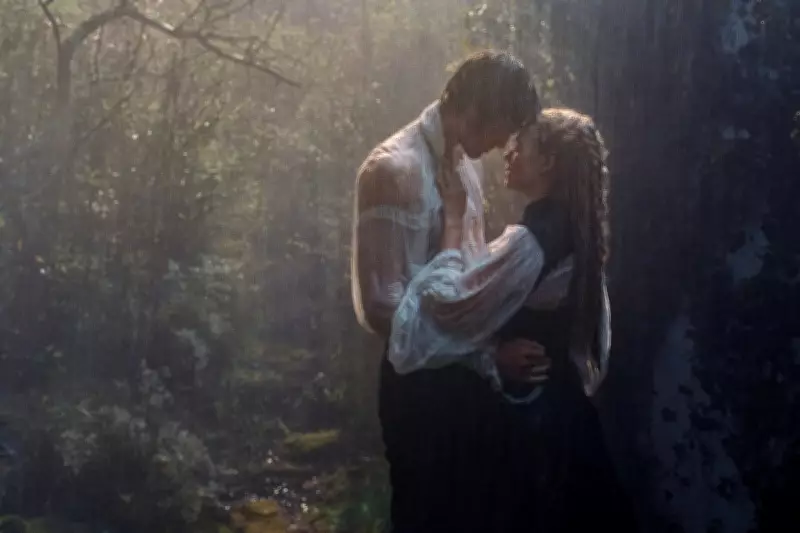
Fennell also makes explicit the sexual tension between Heathcliff and Cathy that remains largely suppressed in the novel, while adopting what O'Callaghan describes as a "Tim Burton-esque surreal perspective" that Miller likens to a stylized fairy tale.
The Historical Context of Literary Adaptations
This debate about fidelity versus creative license echoes throughout cinematic history. Numerous celebrated adaptations have diverged substantially from their source materials while achieving artistic success. Francis Ford Coppola's "The Godfather" films are widely considered superior to Mario Puzo's original novel, despite notable differences even with Puzo contributing to the screenplays. Similarly, Billy Wilder's film version of James M. Cain's "Double Indemnity" introduced narrative innovations that Cain himself admired.
Contemporary examples continue this tradition, with Paul Thomas Anderson's Oscar-contending "One Battle After Another" taking liberal inspiration from Thomas Pynchon's "Vineland," and Chloé Zhao's "Hamnet" adapting Maggie O'Farrell's novel through significant structural compression. O'Farrell, who collaborated on the screenplay, describes the adaptation process as creating "a kind of niece or nephew" rather than a direct offspring of the original work.
The Practical Challenges of Adapting Complex Literature
O'Callaghan notes that completely faithful adaptation of "Wuthering Heights" presents inherent practical challenges. The novel's 400-page length and multi-generational timeline extending beyond Cathy and Heathcliff's lives would require "a multi-hour streaming series" for comprehensive treatment. Most film versions, including Fennell's and the acclaimed 1939 adaptation starring Laurence Olivier, essentially eliminate the book's second half to maintain narrative focus.
"Film and TV tend to focus on one of those for clarity and to focus dramatic tension," O'Callaghan observes, referring to the novel's complex blending of tragic romance, revenge narrative, and gothic tragedy. This necessary simplification means adaptations inevitably sacrifice some of Brontë's deliberate ambiguity.
Director's Personal Connection to the Source Material
Fennell herself acknowledges her interpretive approach stems from personal engagement with the novel. "There are things I have added for my own needs, because I loved the book so much and I always desperately needed some kind of sense for it to go a little further," the director explained, describing how her teenage reading experience influenced her cinematic interpretation.

Despite the radical departures, O'Callaghan concedes the film remains "entertaining" even as she questions whether she personally likes it—a nuanced response that captures the complex relationship between scholarly appreciation and personal taste in adaptation criticism.