Hamlet Review – Riz Ahmed’s Tortured Prince Drives Chilling Modern Take Through London’s Streets
Screenwriter Michael Lesslie and director Aneil Karia have crafted a stark and severe new interpretation of Shakespeare’s timeless tragedy, Hamlet. This intelligent retelling features transpositions, cuts, and light modernisations, with the text stripped down significantly. It presents an austerely challenging reading that stands in stark contrast to more empathetic approaches, such as Chloé Zhao’s Hamnet, which explores the play’s imagined origins.
A Modern Setting of Shady Business and Dysfunction
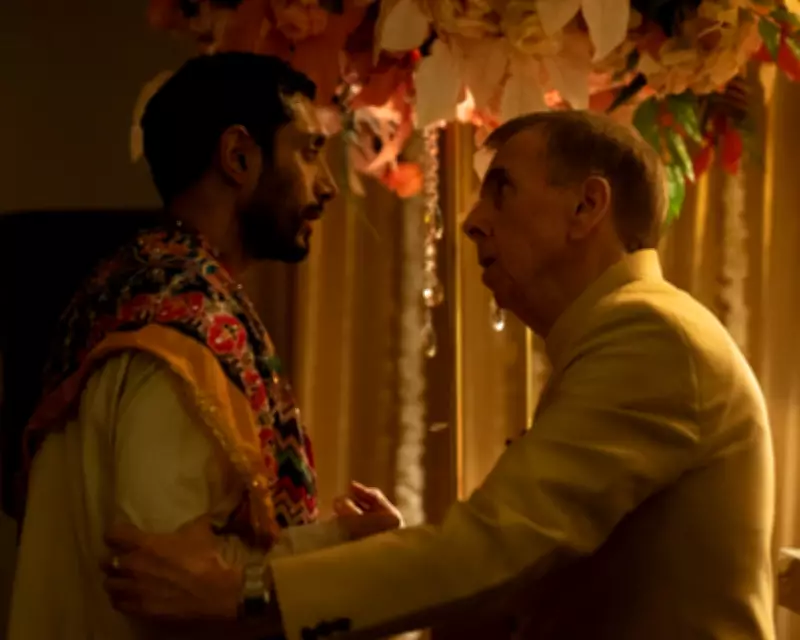
The film is set in contemporary London, delving into the world of shady family business and deep-seated dysfunction. It portrays wedding parties, blandly scheming associates, and SUVs speeding through night-time streets. In this version, Hamlet bears a striking resemblance to Kendall Roy from the television series Succession, adding a layer of modern relevance to the classic character.
Riz Ahmed takes on the role of the prince, who is horrified by a ghostly vision of his dead father, played by Avijit Dutt. In a chilling scene, the father summons Hamlet to a bleak urban rooftop to reveal he was murdered by his brother Claudius, portrayed by Art Malik. Claudius is depicted as a hard-faced property speculator who has evicted a tented community led by Fortinbras from prime real estate and now intends to marry Hamlet’s mother, Gertrude, played by Sheeba Chaddha.

Performances That Drive the Narrative
Ahmed carries the production with a performance that captures someone convulsed with weakness and self-hate. His Hamlet retreats into shocked, enraged indecision and a confrontational madness aimed at embarrassing the wrongdoers while avoiding actual punitive action. This creates a growing miasma of authentic tension that permeates the film.
Timothy Spall delivers an ingratiating yet menacing portrayal of Polonius, whose murder is brutally explicit and violent, presented with a deliberate intensity not found in the original play. Morfydd Clark plays Polonius’s daughter Ophelia, deeply hurt by Hamlet’s sudden and fanatical coldness towards her. Joe Alwyn co-stars as her brother Laertes, adding to the ensemble’s depth.
Innovative Adaptations and Critical Choices
This adaptation loses most of the soliloquies, including “Alas, poor Yorick” and the iconic skull scene, which traditionally help audiences sympathise with Hamlet. However, “To be, or not to be” remains, with Hamlet virtually screaming it from behind the wheel of his car, emphasising his inner turmoil in a modern context.
Ophelia’s importance is slightly increased by rerouting some of Hamlet’s dialogue with Horatio to her, though the film omits Ophelia’s mad scene, a choice that may be seen as a misjudgment by some viewers. Overall, this is an intelligent and focused account that invites audiences to ponder provocative questions, such as whether Claudius might be innocent of murder, with the ghost’s accusation potentially being a hallucinatory delusion or psychosexual projection of Hamlet’s own disgust.
There is a rigorous chill to this Hamlet, making it a compelling watch for those interested in bold reinterpretations of classic works. The film is set for release on 6 February in the UK and 10 April in the US.