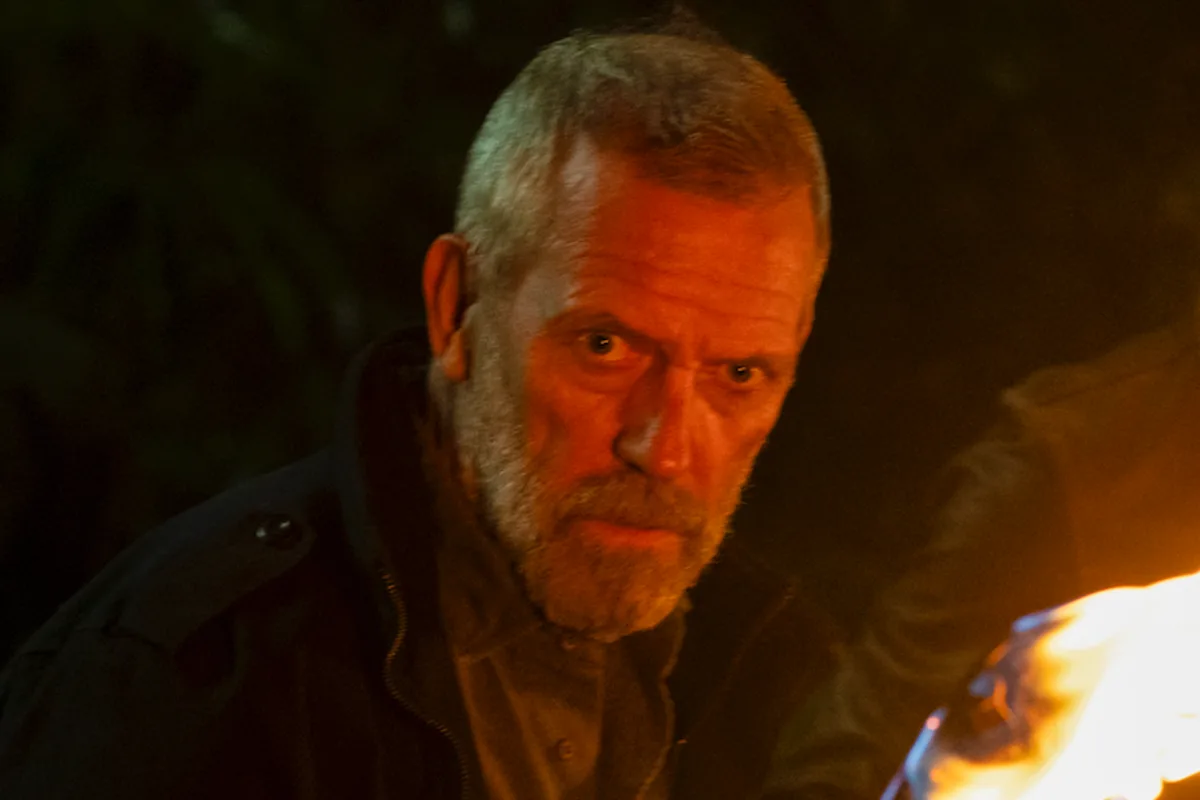
The Night Manager's second series concluded with a brutal, merciless finale that represents a substantial departure from the nuanced style of John le Carré's original novel. As the credits rolled on Tuesday evening, viewers witnessed a dramatic inversion of expectations that left the show's villain triumphant and its hero battered and running for his life.
A Ruthless Conclusion Defies Expectations
There's something in the British cultural water currently that has transformed television audiences into gluttons for sophisticated subterfuge. The descriptors of deception, betrayal, and fragile alliances apply equally to both of 2026's biggest television phenomena: the reality competition The Traitors and the BBC's prestige spy drama The Night Manager, which concluded its second series this week. The burning question remained: would Tom Hiddleston's enigmatic operative Jonathan Pine manage to turn the tables on his treacherous opponent, or would he face banishment from the narrative jungle?
Richard Roper's Triumphant Return
With Hugh Laurie's magnificently malevolent Richard Roper on the verge of completing an arms deal that threatens to destabilise Colombia's fragile peace process while simultaneously repaying his Syrian creditors, the narrative focus shifted decisively toward the seductive powers of Jonathan Pine. Pine's successful manipulation of Roper's illegitimate son Teddy, played with compelling vulnerability by Diego Calva, allowed the spy to infiltrate the Colombian rebels' operation. "You can be free," Pine implored Teddy in a pivotal scene. "But not with him alive."
Tragically for Teddy, it was Roper who emerged victorious from their confrontation. In a chilling moment of paternal betrayal, Roper whispered "I forgive your immortal soul" to his son before executing him with a bullet to the forehead, adding with cold finality: "But not your mortal one." This merciless approach extended to Olivia Colman's Angela Burr, whose protracted power struggle with MI5 Chief Mayra Cavendish, portrayed with steely authority by Indira Varma, concluded with Burr bleeding out in the French snow.
A Complete Narrative Inversion
The series, which had appeared to be building toward some form of retribution or justice, concluded instead with Roper restored to power, rolling through the Cotswolds countryside in a blacked-out Range Rover. Meanwhile, Pine ended the season bruised, bloodied, and running for his life—a complete inversion of the first series' conclusion. This deliberate lack of resolution stands in stark contrast to the ending of the show's inaugural season, where the combined forces of Burr and Pine delivered Roper into the merciless hands of his enemies.
That original conclusion felt satisfyingly definitive, particularly when compared to the more ambiguous ending of le Carré's source novel, and remained the established status quo for ten years and three episodes. However, just as iconic rivalries require both hunter and hunted, The Night Manager fundamentally requires the dynamic tension between Pine and Roper. Hugh Laurie's return for the second half of this series injected the narrative with renewed energy and dramatic potency.
Character Dynamics and Narrative Implausibilities
Laurie possesses a weight of charisma that Hiddleston's more restrained performance lacks; Roper chews the scenery with delicious malevolence while Pine remains, true to his arboreal name, somewhat immovably wooden. "I pride myself on being an adaptable man," Roper purred sinisterly at one point. "When circumstances demand it, I shed a skin and pick up a new one." This adaptability proved to be his greatest asset, allowing him to regain narrative primacy.
The restoration of Roper to centre stage meant that previously significant characters like Camila Morrone's Roxy, Paul Chahidi's Basil, and Hayley Squires's Sally were relegated to peripheral roles during the denouement. At its emotional core, this series transformed into a story about fathers and sons—exploring both Roper's relationship with the child he fathered in the Colombian mountains and his complex dynamic with the superspy he essentially created during the first season's rough apprenticeship.
Questionable Character Development
"You're a real big game hunter, aren't you Jonathan," Roper observed with mocking admiration at one juncture. "First my American sweetheart, now my very own son." However, Pine's relationship with Teddy felt considerably less plausible than his earlier intrigue with Jed, Roper's willowy consort played with ethereal grace by Elizabeth Debicki. Teddy's damascene conversion came across as rushed and psychologically improbable, as he regressed from hardened guerrilla leader to a blubbering daddy's boy within a few episodes.
Pine's sympathy for Teddy also seemed to conveniently forget the events of earlier instalments, where Teddy had blown Pine's beloved colleagues to smithereens. These twisting loyalties and narrative inconsistencies reveal a certain lack of integrity when compared to le Carré's meticulously crafted source material. Above all else, le Carré was a ferociously plausible writer whose situations could have been lifted directly from redacted intelligence files, with characters always motivated by distinctly human foibles: pride, fear, envy, anger, and revenge.
Divergence from Le Carré's Realism
In this second series, Pine has transformed into something of a dead-eyed monomaniac, while Roper's desire to return home to England feels emotionally tangible even as his actual plan—brokering continental chaos in South America—veers toward the wild and narratively unruly. Despite the enormous decade-long gap between the first and second series, this run of episodes has ultimately functioned as a narrative bridge to the show's inevitable third season, where Roper will once again occupy a position of power with Pine resuming his role as the outsider nipping at his heels.
None of this is to suggest that these six episodes have been without their considerable charms. Hiddleston remains a suave cypher at the drama's centre, and in a media landscape where Amazon has acquired the James Bond franchise, it's refreshing to witness the BBC investing substantial resources into a distinctly British spy narrative. However, the simple pleasure of the original The Night Manager—the fundamental suspense of whether the protagonist would be discovered—has been somewhat diluted by an increasingly messy, high-stakes plot.
Looking Toward Future Developments
For all the Medellin MacGuffins (the "state-of-the-art electromagnetic pulse weapon" feels borrowed directly from Mission: Impossible), this series ultimately served as the redemption arc of Richard Roper. Somehow, with the viewing public thoroughly enthralled by Laurie's magnificent performance, it seems unlikely that audiences will need to wait another decade to witness his eventual downfall. The stage has been meticulously set for a third confrontation, with both hunter and hunted having established their respective territories in this expanding televisual universe.