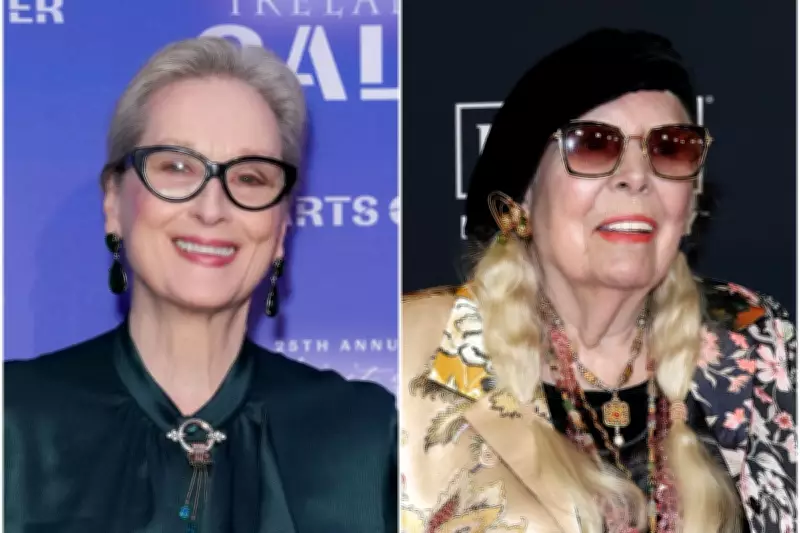
The announcement of yet another musical biopic would typically be met with weary sighs from film critics and audiences alike. With the genre having become increasingly formulaic since the success of films like Walk the Line and Ray in the mid-2000s, the prospect of another artist's life story being filtered through Hollywood's predictable narrative template often feels unnecessary. However, the recent revelation that Meryl Streep will portray legendary singer-songwriter Joni Mitchell in a new film directed by Cameron Crowe has managed to cut through the cynicism, sparking genuine intrigue and anticipation.
The Tired Formula of Music Biopics
For nearly two decades, the music biopic has followed a remarkably rigid blueprint. Established by Oscar-winning films about Johnny Cash and Ray Charles, the pattern is now deeply familiar: a troubled childhood, early signs of genius, rapid rise to fame, struggles with personal demons, and ultimately a redemptive finale. This structure became so entrenched that it was effectively parodied by the 2007 comedy Walk Hard: The Dewey Cox Story.
Despite this, Hollywood continues to mine the genre, with recent years bringing us Bohemian Rhapsody, A Complete Unknown (about Bob Dylan), and Springsteen: Deliver Me from Nowhere. Sam Mendes's ambitious four-film project about The Beatles is scheduled for 2028. The market appears saturated, making the announcement of a Joni Mitchell biopic seem, on the surface, like another exercise in creative repetition.

Why Streep's Casting Changes Everything
The crucial difference lies in the casting of Meryl Streep, an actor whose unparalleled ability to inhabit complex characters is legendary. As writer Nora Ephron once noted, Streep "plays all of us better than we play ourselves." Her previous Oscar-nominated performances as musicians—including a violin teacher in Music of the Heart and the socially ambitious Florence Foster Jenkins—demonstrate a unique capacity to capture the essence of artistic figures who exist outside conventional boundaries.
A Meeting of Singular Minds
Streep's talents seem peculiarly well-suited to portraying Joni Mitchell. Mitchell's work is characterised by its cerebral quality, intellectual rigour, and a distinct lack of sentimentality. Even in her most vulnerable songs, there is a clear-eyed refusal to indulge in self-pity. She was known for being exacting, prickly, and entirely uninterested in conforming to traditional feminine stereotypes or playing the ingenue.
Streep has repeatedly excelled at portraying women who defy easy categorisation and insist on their complexity. Furthermore, her proven vocal abilities—from the tremulous "God Bless America" in The Deer Hunter to the country heartbreak of "You Don't Know Me" in Postcards from the Edge—suggest she possesses the technical skill to approach Mitchell's distinctive and emotionally resonant singing style.
Cameron Crowe's Intimate Connection
The project is further elevated by the involvement of director Cameron Crowe. His Oscar-winning film Almost Famous stands as a poignant love letter to the rock scene of the early 1970s, capturing the tension between Sixties idealism and the encroaching commercialisation of the music industry. Having begun his career writing for Rolling Stone as a teenager, Crowe was immersed in the very milieu in which Joni Mitchell reached her imperial peak.
Perhaps most significantly, Crowe has spent the last four years in regular consultation with Mitchell herself, working directly from her personal recollections rather than relying on secondary biographies. "It's through her prism," Crowe has stated, suggesting a level of intimacy and authenticity rarely seen in authorised biopics. This direct involvement is crucial, given Mitchell's famously protective attitude toward her legacy; she previously vetoed a proposed biopic that would have starred Taylor Swift.

Narrative Structure and Casting Rumours
Reports indicate the film will employ a dual-timeline structure, with rumours suggesting Anya Taylor-Joy may portray a younger Joni Mitchell. This approach would allow the narrative to move between Mitchell's formative years in the sun-dappled bohemianism of Laurel Canyon—and her famous relationship with Graham Nash—and her later periods of reinvention and survival, refusing to settle into the role of a mere heritage act.
A Genre at a Crossroads
The music biopic genre currently finds itself at a curious juncture. Much as Hollywood became obsessed with comic-book franchises and remakes in previous years, it now seems equally besotted with musical hagiographies. This raises questions about whether the industry is struggling for original ideas or simply capitalising on our enduring fascination with iconic artists from a bygone era.
The commercial and critical track record is mixed. While Springsteen: Deliver Me from Nowhere received largely positive reviews, it underperformed at the box office. Furthermore, these projects now face intense scrutiny over casting choices long before filming begins, as evidenced by the recent public reaction to the first images of the actors portraying The Beatles in Mendes's forthcoming films.
Given this landscape, the combination of Joni Mitchell's direct involvement, Cameron Crowe's deep understanding of the era, and Meryl Streep's transformative abilities represents a potent formula. It suggests a project that might transcend the genre's well-worn clichés. While the history of music biopics advises caution, this particular casting announcement hints that someone involved has finally understood the depth and complexity of the artist in question—that you could, as the song says, drink a case of Joni Mitchell and still not reach the bottom.