Maggots Review: A Poignant Examination of Community Responsibility in London
Farah Najib's compelling new drama Maggots, currently running at the Bush theatre in London, opens with a telling quotation that sets the tone for the entire production. The statement that "living well and dying well is a community affair" serves as the foundation for a haunting exploration of what happens when this social contract breaks down completely. The play confronts audiences with a disturbing yet increasingly relevant question: what are the implications for a community when a woman lies dead in her home for more than a full year without anyone discovering her?
A Tragedy Rooted in Reality
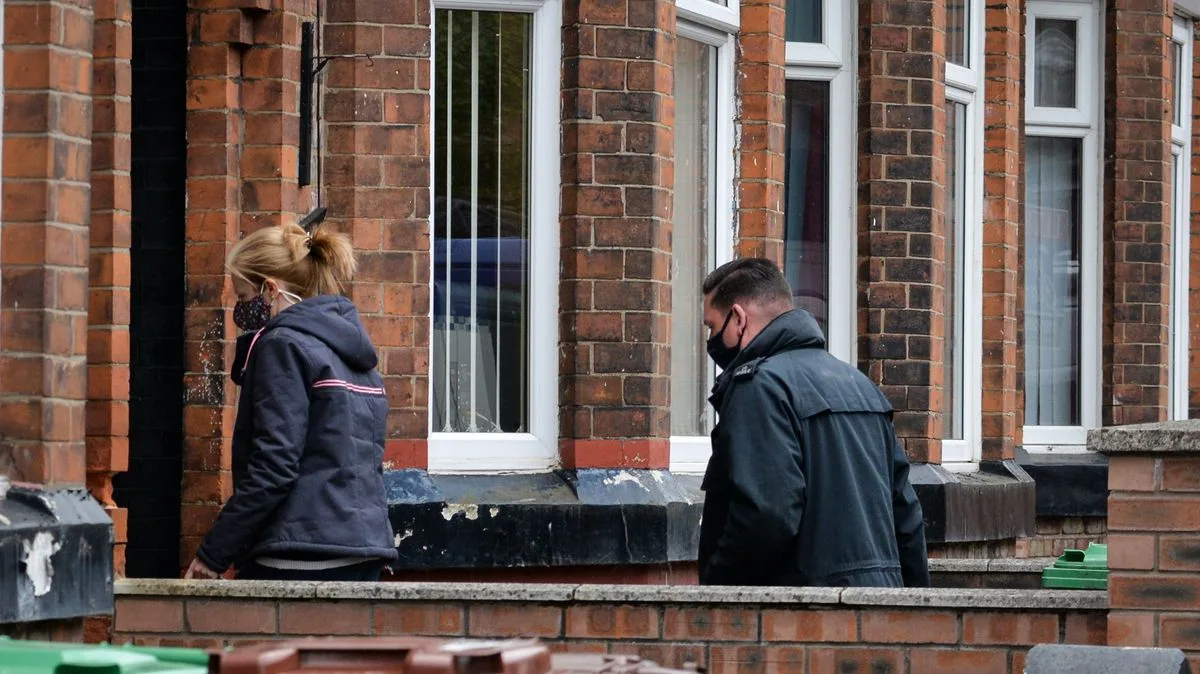
The central scenario of Maggots might sound like extreme fiction, but Najib has grounded her work in painful reality. While the deceased character Shirley is fictional, the playwright draws direct inspiration from several real cases of lonely deaths, including that of Sheila Seleoane who remained undiscovered for over two years. This connection to actual events lends the production an additional layer of poignancy and urgency, transforming what could be mere theatrical speculation into a meaningful commentary on contemporary urban life.
All the signs of Shirley's demise are present for her neighbours to notice, from the gradually worsening odour permeating the hallway to the unsettling appearance of maggots in adjacent homes. Yet somehow, these indicators go unheeded or uninvestigated, raising profound questions about individual responsibility versus systemic failure in modern communities.
Storytelling Through Multiple Perspectives
Three accomplished performers—Marcia Lecky, Sam Baker Jones, and Safiyya Ingar—bring Shirley's story to life through the perspectives of her neighbours. These characters include a single mother struggling with her own challenges, a cleaner navigating economic pressures, a middle-aged widower, and his grieving daughter. Together, they create a mosaic of urban life that feels both specific and universally recognizable.
The production, directed with sensitivity by Jess Barton, employs various theatrical devices to enhance the storytelling. A strategically used spotlight creates moments of focus and stillness, courtesy of Peter Small's thoughtful lighting design. Meanwhile, Caitlin Mawhinney's set design provides striking visual contrasts, with beautiful dried flowers suspended overhead even as characters describe maggots and skeletal remains below—a powerful ironic juxtaposition that underscores the play's central themes.
Intimate Storytelling with Political Ambition
There is undeniable intimacy and richness in the stories these actors tell, with Najib demonstrating a particular talent for creating detailed interior lives for her characters despite the technical distance created by third-person narration. The performers occasionally remind us of their artifice by acknowledging they are actors, though this meta-theatrical device sometimes feels redundant given the strength of the storytelling itself.
Humour is skillfully woven into the narrative of death and desolation, providing necessary levity while never diminishing the gravity of the central tragedy. The play explores the fundamental human need for connection against the backdrop of increasing urban isolation, themes that echo in the works of contemporary playwrights like Alexander Zeldin and Kae Tempest.
Areas of Unfulfilled Potential
Where Maggots occasionally falters is in its treatment of broader systemic failures. The play raises crucial questions about societal structures that enable such profound isolation, but sometimes lacks the forensic detail needed to make these critiques truly devastating. Similarly, the central motif of maggots—which initially promises to develop into a surreal exploration of insect invasion horror—ultimately serves more as atmospheric backdrop than transformative metaphor.
The production's tendency to leaven its darkness with tones of goodness and warmth, while undoubtedly well-intentioned, sometimes creates an anticlimactic effect. Najib clearly possesses a remarkable ability to draw audiences into her created world, but some viewers might wish she pushed her explorations further once she has our attention.
Maggots continues at the Bush theatre in London until 28 February, offering London theatregoers a thought-provoking examination of community, responsibility, and the quiet tragedies unfolding in our midst. While not without its limitations, the production represents a meaningful contribution to contemporary British theatre's ongoing conversation about social connection in an increasingly fragmented world.