Frederick Wiseman, Master of Direct Cinema, Passes Away at 96
Frederick Wiseman, the acclaimed documentary filmmaker whose pioneering work defined the direct cinema movement, has died at the age of 96. His films, characterised by an unflinching and intimate look at institutions, left an indelible mark on postwar American cinema.
The Essence of Direct Cinema
Emerging in the 1960s, the direct cinema movement sought to capture reality with immediacy and authenticity. Wiseman, though arriving slightly later, became its quintessential exponent. He eschewed planned narratives and voiceovers, instead using lightweight, portable cameras to record events as they unfolded naturally. This technique, which he humorously dubbed "wobblyscope," allowed subjects to speak freely without interruption, fostering a profound sense of intimacy.
When asked how he prevented people from looking at the camera, Wiseman joked about his appearance, but in truth, his benevolent, gnome-like presence enabled him to operate as a discreet observer—a "fly on the wall," though he rejected that term. His method involved immersing himself in institutions for extended periods, shooting over 100 hours of footage, which he then edited with meticulous dispassion to avoid subjective bias.

A Legacy of Institutional Exploration
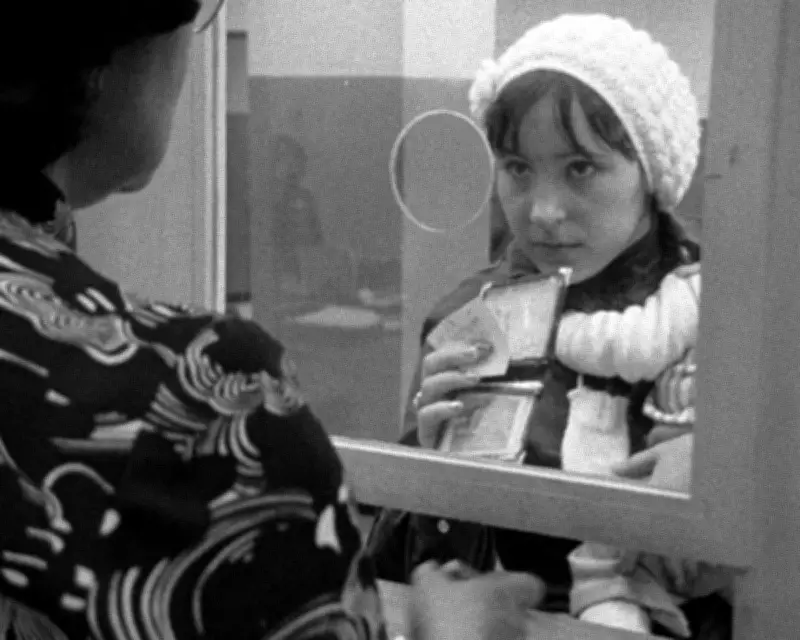
Wiseman's career began with a law degree from Yale, but he soon turned to film as a social tool. His first documentary, Titicut Follies (1967), filmed at the Bridgewater State Hospital for the Criminally Insane, was a harrowing expose that faced a 22-year distribution ban due to privacy concerns. Despite this, critics argued that the film highlighted institutional abuses more than any invasion of privacy.
Subsequent works like High School (1968) and Basic Training (1971) further showcased his ability to reveal the conformity and indoctrination within educational and military systems. The latter notably influenced Stanley Kubrick's Full Metal Jacket. Wiseman's films often sparked controversy, with institutions threatening lawsuits, yet he persisted in his objective yet critical examinations.
Recognition and Later Works
Throughout his career, Wiseman produced documentaries through his company, Zipporah Films, named after his wife, Zipporah Batshaw, who passed away in 2021. His work earned numerous accolades, including two Emmys for Law and Order (1969) and Hospital (1970), a Golden Lion for lifetime achievement from the Venice Film Festival in 2014, and an honorary Oscar in 2016.
His filmography spanned diverse subjects, from the creative processes in La Danse (2009) about the Paris Opera Ballet to the harsh realities in Public Housing (1997). In later years, he continued to scrutinise institutions like the National Gallery in London and the New York Public Library, emphasising that these settings were merely backdrops for observing human behaviour.
Personal Life and Final Projects
Born in Boston in 1930, Wiseman was the son of a lawyer and developed an early interest in literature and poetry. He is survived by his two sons, David and Eric, and three grandchildren. His final film, Menus-Plaisirs – Les Troisgros (2023), explored the world of a Michelin-starred restaurant in France, capping a career dedicated to uncovering complexity and ambiguity in every subject he tackled.
Frederick Wiseman's legacy endures as one of the most admired documentary filmmakers, whose work continues to inspire and challenge audiences worldwide.