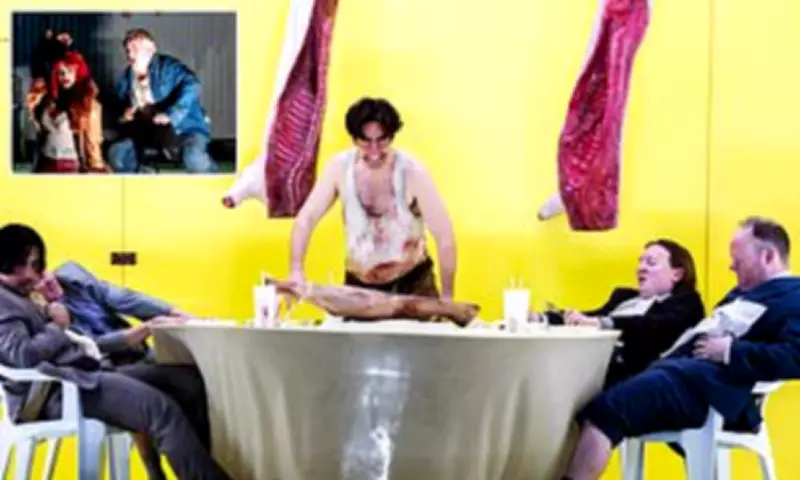
ENO's Revival of Mahagonny Criticised as Dated and Cynical
The English National Opera's production of Rise and Fall of the City of Mahagonny, the collaboration between Bertolt Brecht and Kurt Weill, has been met with a lukewarm reception, described as an overlong and underwhelming experience that fails to capture contemporary relevance.
Originally premiering in Leipzig in 1930, this opera was once considered cutting-edge in music theatre. However, today it is likened to a blunt, rusty kitchen knife found at the bottom of a compost heap—a metaphor for its perceived dullness and lack of sharpness in modern times.
Characters and Satire Fall Flat
By the two-thirds mark of Act 1, it becomes evident that the characters on stage inspire little empathy or interest. Brecht's intended satire is reduced to a deeply cynical view of life, with only a fleeting moment about humanity ruining the earth hitting a peripheral target. The residents of Mahagonny, founded by three criminals who attract urban excesses, are portrayed as nasty and unworthy of care.

The narrative is fragmented by a narrator with a megaphone and employs 1920s alienation techniques, such as posters and cast members painting obvious words on walls, which feel contrived and outdated.
Setting and Translation Issues
The opera's American setting does not aid its cause. Brecht's heavy-handed German interpretations of American frontier colloquialisms are rendered even more ludicrous by Jeremy Sams's English translation, which adds a layer of banality to the already peculiar original text.
Musically, Weill manages one hit song, 'Moon of Alabama', with its quaint lyrics, but its repetition three times in the production feels excessive. Danielle de Niese, as Jenny, delivers a commendable performance with this number, yet even her considerable talent cannot salvage her other main piece.
Performance Highlights Amidst Shortcomings
Under music director designate Andre de Ridder, the performance earns three stars for its musical execution. Weill achieves striking effects by setting the male chorus against an interestingly varied orchestra, though these effects are noted as not necessarily emotionally affecting. The production is best described as semi-staged.
The solo singing is uniformly excellent. Alongside de Niese, New Zealand dramatic tenor Simon O'Neill shows tremendous stamina in the difficult role of Jimmy, and mezzo-soprano Rosie Aldridge makes a positive impression as Begbick.
Overall Impression and Final Thoughts
While the opera holds interest as a period piece, witnessing scenes such as a man killed in a boxing match and Jimmy executed in the electric chair leaves a lingering sense of nihilism. By the end, the mere mention of 'Mahagonny' evokes a desire to scream, highlighting the production's failure to engage meaningfully.
Exiting the London Coliseum, a gesture of giving a quid to a beggar serves as a poignant reassertion of humanity in contrast to the opera's cynical outlook. The run continues until Friday, February 10, but this revival struggles to find its place in today's theatrical landscape.