The fifth season of Netflix's Emily in Paris has arrived, providing its customary backdrop for festive season viewing. As the show inevitably rolls out, our indefatigable American marketer, Emily, trades the Parisian boulevards for the cobbled streets of Rome in a continued voyage of self-discovery that feels increasingly hollow.
A Roman Holiday Without the Holiday
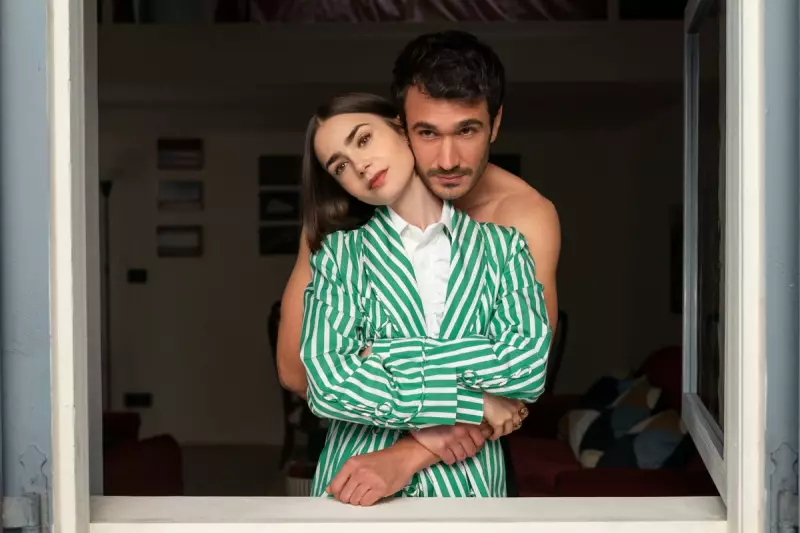
Lily Collins returns as the immaculately coiffed and outrageously dressed Emily, now tasked with heading up the Italian branch of her boss Sylvie's firm, Agence Grateau. The reason for her relocation is, thanks to the show's amnesiac storytelling, initially hard to recall. The exposition-heavy dialogue does all the heavy lifting, ensuring viewers distracted by their phones can keep up. "It's my first day running the Rome office," Emily chirps to her newest romantic prospect, Marcello (Eugenio Franceschini), a walking stereotype of a tall, dark, and handsome mamma's boy from a cashmere dynasty.
Emily's uncanny ability to attract men who embody national clichés remains undimmed. Meanwhile, her exes, French chef Gabriel (Lucas Bravo) and English banker Alfie (Lucien Laviscount), appear to be forming a pan-European support group for the romantically discarded. The show continues to operate in a consequence-free, paper-doll universe where character development is signified by a new haircut and plotlines exist primarily to showcase brand names.

Camp Energy and Cringe-Worthy Literalism
Subplots are flung at the audience with frantic abandon. One episode sees Emily navigate "intimacy issues" while managing a campaign for the lingerie brand Intimissimi. Another features the groan-inducing punchline, "You offendi'd Fendi!" The show flirts with more interesting territory, like the dynamics of Sylvie's (Philippine Leroy-Beaulieu) open marriage, only to abandon it for a speedboat chase straight out of a perfume advert.
The literalism reaches new heights when Emily's best friend Mindy (Ashley Park) performs Sabrina Carpenter's "Espresso" from inside a giant martini glass at a coffee-vodla launch. Park's effervescence is a consistent bright spot. The season's true saving grace, however, is the addition of Minnie Driver as a glamorous, cash-poor influencer who has married into Italian royalty. Driver's pitch-perfect performance as a self-aware "princess without a portfolio" delivers a much-needed injection of camp energy.
The Verdict: A Pretty, Empty Spectacle
Ultimately, watching Emily in Paris feels like allowing your brain to regress in real time. It evokes the dream logic of childhood games where outfits were fabulous and narrative coherence was optional. There is a moment of painful relatability, though. During a disastrous video pitch, Emily's Parisian clients simply give up and switch off their screen—a metaphor many viewers may empathise with. Despite Minnie Driver's best efforts, the series remains a sterile, brand-saturated confection that is as insubstantial as it is visually polished.