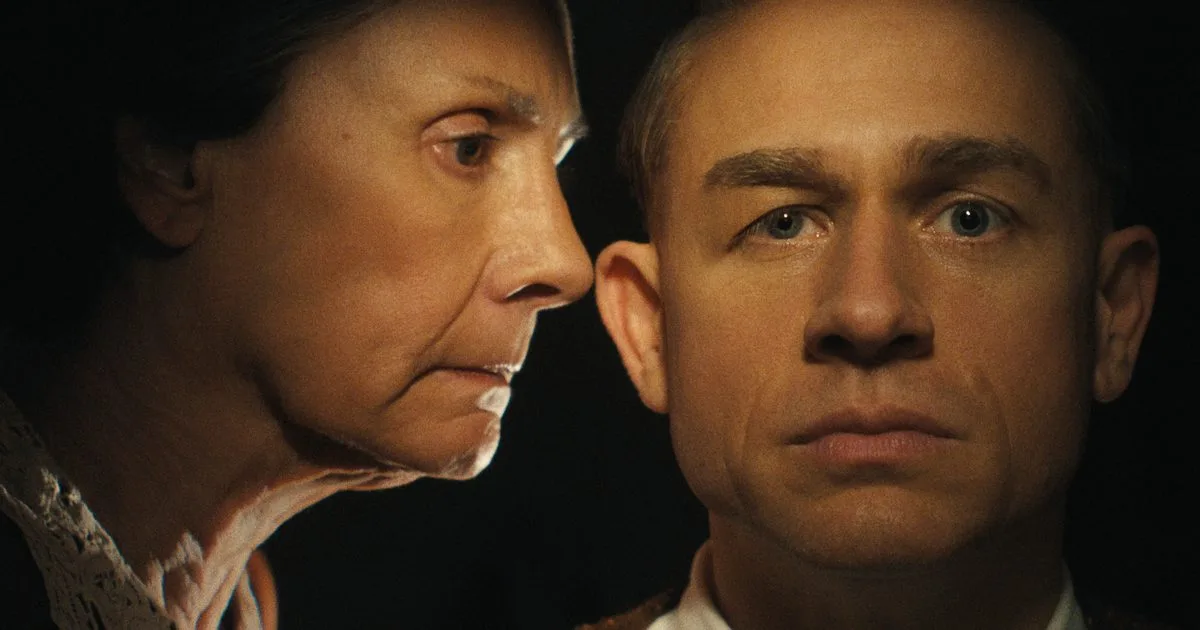
Netflix's Monster: The Ed Gein Story, the third instalment of Ryan Murphy's anthology series, has arrived, sparking criticism for its blend of fact and fiction. The show follows the life of serial killer Ed Gein, who robbed graves and skinned corpses, and has been accused of taking creative liberties, particularly in its portrayal of Gein's connection to Ted Bundy and other characters.
Charlie Hunnam, who plays Gein, defended the series, telling The Hollywood Reporter: 'I never felt like we were sensationalising it. It was all in order to try to tell this story as honestly as we could.' He questioned whether the real monster is Gein or the audience, given the sensationalisation of his crimes in popular culture.
The real Ed Gein was born in 1906 in Wisconsin and grew up on a farm with a domineering, religious mother, Augusta. After her death in 1945, Gein became a hermit, preserving her room as a shrine. He worked as a handyman and developed an interest in anatomy books. In 1957, police investigating the disappearance of hardware store owner Bernice Worden discovered her decapitated body at Gein's home, along with masks and clothing made from human skin and skulls used as household items.

Gein admitted to killing Worden and Mary Hogan, another missing woman, but was deemed unfit for trial due to schizophrenia. He was institutionalised until 1968, when he was found guilty of Worden's murder and returned to a psychiatric hospital, where he died in 1984 at age 77. His crimes inspired characters in films like Psycho and The Texas Chain Saw Massacre.