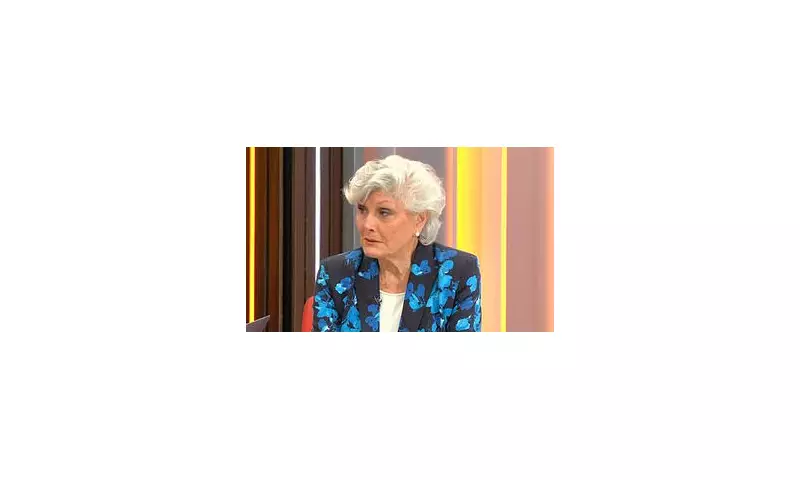
Legendary television presenter Angela Rippon has launched a pointed critique against modern broadcasters, accusing them of 'going woke' and contributing to a perceived decline in the industry since the 'magical' 1970s. The 81-year-old broadcasting icon, known for fronting shows such as Top Gear, Come Dancing, and Antiques Roadshow, shared her candid views during a recent appearance on GB News.
A Nostalgic Look Back at Television's Golden Age
On Monday, January 26, Angela Rippon joined presenters Eamonn Holmes and Ellie Costello on their GB News breakfast programme for a wide-ranging discussion. Reflecting on her illustrious career, she fondly recalled working with the iconic comedy duo Morecambe & Wise, whom she described as 'two of the greatest comics this country has ever produced.' This set the stage for a deeper conversation about how television has evolved over the decades.
The Heyday of the 1970s
Eamonn Holmes, 66, echoed Angela's sentiments, opining that television began to 'dip off slightly after the 70s,' which he considered his personal heyday. He attributed this to the 'magical' quality of that era, where viewers lived in a world 'divorced from the world of TV,' making it a special and attainable form of entertainment. Angela expanded on this by highlighting the stark contrast in how audiences consume content today compared to the past.

She noted, 'I think the difference was that today we have a plethora of television stations. We have an incredible variety to an incredible access of different kinds of television programmes being proved by how many channels? I don’t know, it runs into hundreds now, doesn’t it?' Angela reminisced about the 1970s, when there were only a handful of channels, creating a unified viewing experience.
The Loss of Shared Cultural Moments
Angela emphasised that television used to foster 'watercooler moments,' where people would eagerly discuss programmes like, 'Hey, did you see that on the telly last night?' She explained, 'It was just that everybody watched the same programmes.' This sense of communal engagement, she argued, has diminished in today's fragmented media landscape, where endless choices dilute shared cultural touchstones.
Critiquing Modern 'Wokeism' in Broadcasting
Turning to contemporary issues, Angela did not hold back in her criticism of current trends. She stated, 'I think the difference these days is, I hate the word, but we now all think there's too much examples of wokeism on television.' She pointed to classic shows from the 1970s, such as the much-loved sitcom Fawlty Towers, as examples of content that would likely not be produced today due to changing sensibilities.
Angela observed, 'We laugh. But there’s a lot of stuff that we were laughing at then that no television producer would put out now.' This comment underscores her belief that increased political correctness and 'woke' attitudes have stifled creativity and humour, leading to a decline in the quality and appeal of television programming.
Audience Reactions and Broader Context
This discussion comes amid broader audience frustrations with modern television coverage. Earlier in January, viewers of the GB News breakfast programme expressed anger over segments focusing on Brooklyn Beckham and his family feud, with some vowing to switch off. Comments ranged from 'I can’t stand all this Brooklyn stuff, goodbye' to criticisms about prioritising celebrity gossip over more pressing global issues.
Angela Rippon's insights add to a growing debate about the direction of broadcasting, balancing nostalgia for past eras with critiques of current practices. Her perspective, shaped by decades in the industry, highlights concerns about cultural shifts and their impact on entertainment.
In 2023, Angela demonstrated her enduring versatility by competing in Strictly Come Dancing, where she made it to Blackpool Week alongside her dance partner Kai Widdrington. This recent venture shows her continued engagement with television, even as she critiques its evolution.