A Prayer for the Dying Review: A Pestilent Western That Overstays Its Welcome
John C Reilly and Johnny Flynn bring considerable acting heft to A Prayer for the Dying, the debut feature from Norway-based director Dara Van Dusen. Adapted from Stewart O'Nan's novel, this sombre tale set in 1870s Wisconsin follows a frontier community grappling with a terrifying diphtheria outbreak. Despite its technical accomplishments and striking visual style, the film ultimately feels like a short story stretched uncomfortably to feature length, lacking the emotional substance needed to sustain its grim narrative.
A Frontier Town Facing Dual Catastrophes
The story unfolds in a Wisconsin frontier town in 1870, where Jacob (Johnny Flynn) serves as both sheriff and pastor, though he wears neither badge nor religious garments. Haunted by traumatic experiences from the Civil War, where he achieved high rank, Jacob faces suspicion from some townsfolk due to his Norwegian heritage. He lives with his wife Marta (Kristine Kujath Thorp) and their young child, trying to maintain normalcy in a community still recovering from wartime nightmares.
The discovery of a dead drifter's body on the town outskirts—still wearing his Civil War uniform—triggers a cascade of events that will test the community's resilience. The town's weary doctor, played with sympathy and gravitas by John C Reilly, makes the horrifying discovery that the man died of diphtheria after examining the reeking corpse in his own parlour. Soon after, a woman from a neighbouring religious community exhibits identical symptoms, confirming the worst fears: a catastrophic epidemic is imminent.

Moral Dilemmas and Unfolding Horror
The men of the town find themselves divided on how to respond to the growing crisis. Should they declare an unenforceable lockdown and quarantine that might trigger a panicked exodus, potentially spreading the disease far beyond their borders? Or should they adopt a secretive policy of non-acknowledgment, attempting to maintain public order while quietly managing the outbreak? This ethical dilemma becomes increasingly academic as the disease spreads relentlessly through the community.
Jacob struggles to enforce necessary strictures, his leadership undermined by his inability to be sufficiently tough with the townspeople. The horror of the epidemic is compounded by news of a spreading wildfire—a separate pestilence that creates an eerie red glow in the atmosphere. This atmospheric phenomenon serves as both literal environmental threat and ambiguous psychological projection, possibly representing Jacob's post-traumatic stress disorder or dramatising his already deeply troubled mind.
Technical Accomplishment Versus Emotional Truth
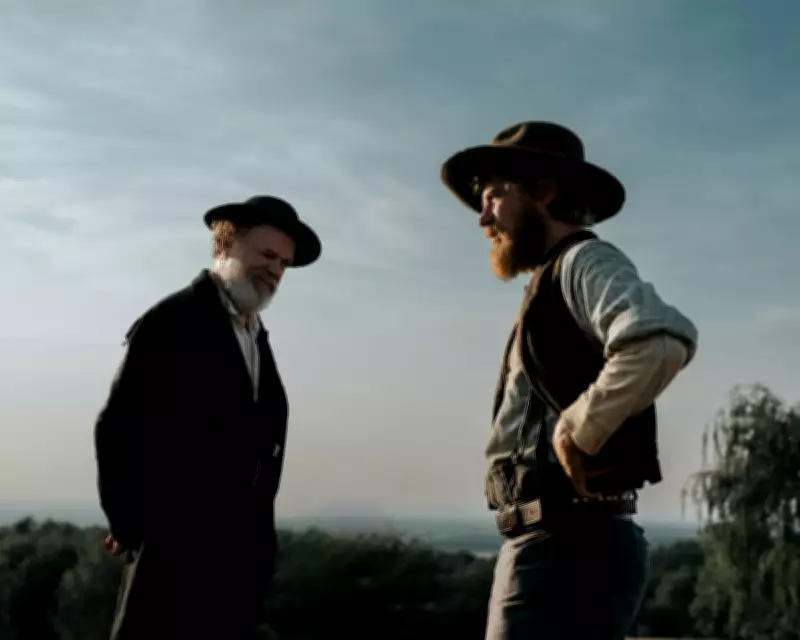
Director Dara Van Dusen demonstrates considerable technical skill in crafting the film's visual language. The cinematography creates striking, often shocking set pieces that effectively convey the period setting and mounting tension. However, these visual gestures frequently feel disconnected from any deeper emotional truth—a connection that more sustained, developed storytelling might have provided.
John C Reilly delivers his role with the expected sympathy and weight, bringing depth to the careworn doctor character. Johnny Flynn, while always a watchable screen presence, seems under-directed in crucial moments, failing to fully convey the wrenching anguish his character should experience. The film raises intriguing questions about Jacob's relationship to the disease—his apparent immunity suggests he might be a carrier, a potential Typhoid Mary figure—but these narrative threads remain underdeveloped.
A Controlled Artefact That Underdelivers
A Prayer for the Dying presents itself as a highly controlled cinematic artefact, meticulously crafted in its visual approach and period detail. Yet for all its technical accomplishments, the film ultimately delivers less than it promises. The mood-making feels concerted rather than organic, the image-making impressive but emotionally distant. What could have been a powerful exploration of community, faith, and survival during crisis instead becomes an exercise in style over substance.

The film premiered at the Berlin Film Festival, where it showcased Van Dusen's potential as a visual storyteller while highlighting the narrative shortcomings that often accompany first features. While certainly not without merit, A Prayer for the Dying serves as a reminder that technical proficiency alone cannot compensate for emotional resonance in storytelling.