A Knight's Tale Returns to Cinemas as a Millennial Classic
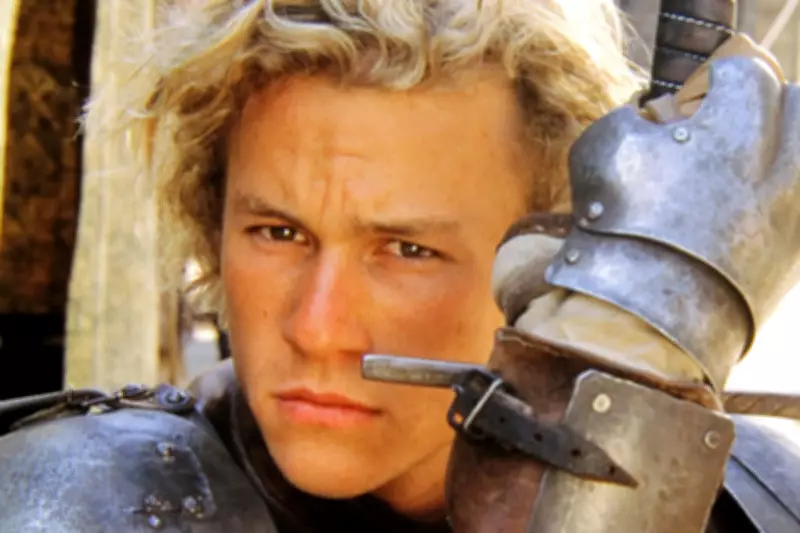
Did anyone truly require a medieval jousting movie accompanied by the iconic sounds of Queen and David Bowie? The answer is no. Yet, millennial audiences in 2001 instantly recognised that Brian Helgeland's A Knight's Tale – which is back in cinemas this week – was precisely what they desired. This film, starring the late Heath Ledger, boldly merges fourteenth-century tournaments with classic rock anthems, creating a cinematic experience that remains joyously relevant today.
The Anachronistic Brilliance of Sound and Story
Following Baz Luhrmann's demonstration in Romeo + Juliet that modern soundtracks could electrify period narratives, Helgeland applied the same innovative approach to the Middle Ages. The result is a film so exuberant and devoid of pretension that queries about historical accuracy simply shatter upon impact. Its charm lies in the gleeful flaunting of bizarre, lurid anachronisms: peasants constructing wooden stands to the rhythm of We Will Rock You, courtly balls transforming into seventies disco parties, and an overall atmosphere pulsating with classic-rock confidence.
Adding a layer of poignant bittersweetness is Heath Ledger's magnificent lead performance, captured seven years before his tragic passing in 2008. The film immortalises his beauty in perpetual youth, serving as a heartfelt tribute to his talent. In numerous respects, A Knight's Tale functions as a time capsule from a distinct cultural era, arriving when Pop Idol simplified stardom to telephone votes and The Strokes inspired a generation with their nonchalant style.

Reinvention Through Unwavering Performance
The narrative follows William Thatcher, a peasant squire who seizes his destiny by embracing knighthood. What the film intuitively captures – and what millennials immediately grasped – is that reinvention is not about deception. It is about embodying a role so thoroughly that the performance evolves into reality. William does not merely pretend to be a knight; he decides he is one and commits fully. Beneath his surfer-style hair, he moves and speaks with noble grace.
This concept of confidence morphing into truth echoes the transformative journeys of characters like Jay Gatsby, Don Draper from Mad Men, and Julien Sorel in The Red and the Black. Helgeland applies this philosophy to the rigid hierarchies of fourteenth-century feudalism, suggesting that anything is achievable. If a peasant can ascend to knighthood through self-belief, why cannot a medieval film feature synthesizers and guitar riffs?
Charismatic Performances and Unforgettable Moments
Ledger and Paul Bettany serve as the film's dual engines, both radiating maximum charisma. Ledger portrays William with courtly elegance despite his beach-blond locks, delivering lines such as Perhaps angels have no names, only beautiful faces with genuine conviction. Shannyn Sossamon, discovered DJing at Gwyneth Paltrow's birthday party, plays Jocelyn, the hipster pinup who captivates William.
Bettany's portrayal of Chaucer is equally memorable, first appearing naked after gambling away his clothes and then striding through the film as a boastful raconteur brimming with mischief. Before William's inaugural joust, Chaucer declares, I got their attention, you go win their hearts. While the baroque pre-tournament hype secures attention, the Golden Years scene truly ignites the film.
At a formal ball, William is requested to demonstrate Gelderland's noble dances, his invented homeland. What begins as traditional footwork abruptly shifts when David Bowie's melody commences, transforming the room into a swirling medieval rave. The young lovers bounce and flail joyfully, while Rufus Sewell's villainous Count Adhemar scowls from the sidelines. This sequence evokes the prom scene from the millennial classic She's All That, albeit adorned in doublets and wimples.

A Legacy of Whimsy and Warmth
Renowned film critic Roger Ebert described A Knight's Tale as whimsical, silly and romantic, observing that it recalled the days before films got so cynical and unrelentingly violent. The supporting cast enhances this sentiment: Mark Addy's Roland crafts tunics from tents, Alan Tudyk's Wat threatens to fong his enemies, and Laura Fraser's Kate embellishes her armour with a Nike swoosh.
In one particularly touching scene, the characters assemble a love letter from the fragments of their broken hearts, managing to avoid excessive sentimentality. Ultimately, this is a film propelled by innocence and unadulterated charm. Like its star, it perpetually radiates warmth, reminding audiences of the pure delight found in cinematic sincerity and audacious creativity.