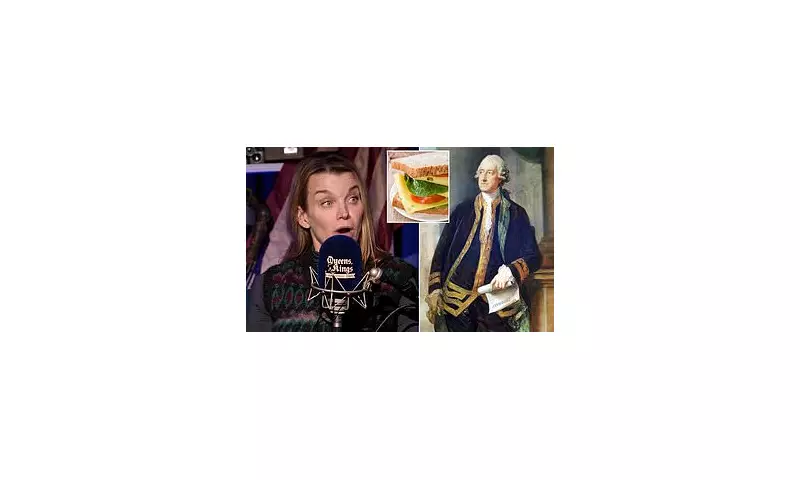
The Countess of Sandwich has publicly corrected a historical myth that has surrounded her famous ancestor and his culinary invention for over two centuries. Speaking on the Daily Mail's podcast Queens, Kings and Dastardly Things, historian Julie Montagu labelled the popular story about the sandwich's creation a "cruel lie" designed to tarnish the 4th Earl of Sandwich's reputation.
The Man Behind the Myth
John Montagu became the 4th Earl of Sandwich in 1729 at just ten years old. He later served as First Lord of the Admiralty during the American Revolutionary War, a role for which he was widely blamed for Britain's loss of its American colonies. Despite this political stain, his legacy is overwhelmingly defined by the convenient food item he is credited with inventing in 1762.
Julie Montagu, an American who married into the family in 2004 by wedding Luke Montagu, the 12th Earl, has a personal stake in defending the name. She told podcast hosts Robert Hardman and Kate Williams that history has unfairly maligned the Earl, and the true story of his innovation is far more respectable than the tale known to most.

Debunking the Gambling Tale
The enduring myth originates from 18th-century gossip, notably in a 1772 London guide by French writer Pierre-Jean Grosley. He claimed the Earl, absorbed in a 24-hour gambling marathon, ordered slices of bread with beef so he could eat without leaving the card table, avoiding greasy fingers.
"The rumour has always been that Sandwich was a big gambler," Julie stated. "The myth states that, not wanting to get his playing cards greasy, he asked for a piece of meat to be placed between two slices of bread." She insists this is pure fiction spread by his political enemies to damage his character, which was further attacked by rumours of debauchery after his wife, Dorothy Fane, was declared legally insane in 1767.
The True Story of a Working Lunch
The Countess presented the family's version as the correct one. She described the 4th Earl as a dedicated public servant, often working late at his desk. A famous portrait even shows him seated with papers in hand.
"As First Lord of the Admiralty and a great politician, the Earl often worked late at his desk," Julie explained. "He wanted to eat while he worked, like many of us do in this day and age, but he didn't want to get his political papers greasy. So he asked for a piece of meat to be put between two slices of bread."
She argued that, apart from the "little reputational dent" from the Revolutionary War, he was a respected figure in his time. "He was really well respected, not only by the monarchy, but by his subordinates," the Countess affirmed.
The revelation comes as part of the podcast The Last King of America - Part 2, which is available now on YouTube and all major podcast platforms.