The Enduring Mystery of Queen Victoria and John Brown
For over a century, one question has dominated discussions about Queen Victoria and her Scottish ghillie John Brown: did they or didn't they? This enduring mystery has captivated historians and the public alike, with new evidence now suggesting their relationship was far more intimate than previously acknowledged.
The Unlikely Companion
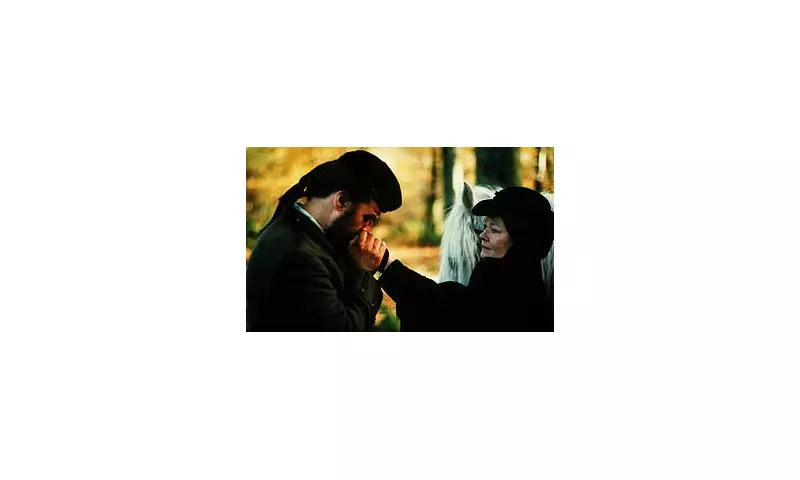
John Brown entered Queen Victoria's life following the devastating loss of her beloved Prince Albert in 1861. The rugged, blue-eyed Highlander, famously portrayed by Billy Connolly opposite Judi Dench's Victoria in the 1997 film, brought unexpected comfort to the grieving monarch. Victorian wags nicknamed him 'the Queen's stallion' while referring to Victoria herself as 'Mrs Brown', highlighting the unconventional nature of their bond.
From the moment Brown joined the royal household in 1866 until his death in 1883, the pair were virtually inseparable. The Queen insisted he occupy the bedroom adjacent to hers for seventeen consecutive years, fueling speculation about their private relationship. Contemporary accounts describe their interactions as remarkably intimate, with Victoria's physician recording flirtatious exchanges involving skirt-lifting, while the monarch herself wrote of regarding Brown with 'an everlasting love'.

Courtly Resistance and Royal Devotion
The intensity of Victoria's attachment to her Scottish servant caused significant consternation within royal circles. Senior courtiers, many from aristocratic families with generations of royal service, resented Brown's influence as the Queen's gatekeeper. They particularly disliked his lack of polish and his tendency to correct Victoria's posture, which they believed undermined royal dignity.
Victoria's own children, especially her son Bertie (the future King Edward VIII), openly despised Brown's presence at court. Historical accounts suggest the prince even hired a boxer to provoke a confrontation with the ghillie. The Lord Chamberlain reportedly described Brown as a 'coarse animal', while household staff found him 'bossy and arrogant'. Multiple plots emerged to have him dismissed, yet Brown remained untouchable, protected by the Queen's obvious adoration.
New Historical Revelations
Recent scholarship has brought compelling new evidence to light about the true nature of this relationship. Historian Dr Fern Riddell, author of 'Victoria's Secret', presents a convincing case that the pair not only had a sexual relationship but may have been secretly married. According to Riddell's research, Victoria's private chaplain made a deathbed confession that he had performed an 'irregular marriage' ceremony for the couple.
Such unions, legally binding under Scottish law, were apparently commonplace in Aberdeenshire where Brown originated. This revelation adds substantial weight to long-standing rumours about their intimacy and provides context for Victoria's extraordinary grief following Brown's death from a skin infection in 1883 at age 56.
The Queen's Final Tribute
Victoria's profound mourning manifested in remarkable ways following Brown's passing. She initially commissioned distinguished writer Sir Theodore Martin to produce Brown's biography, but when he hesitated, overwhelmed by the task, she determined to write it herself. Concerned advisors eventually persuaded her to abandon the project, fearing emotional revelations might compromise both the crown and the empire.
The Queen's final instructions provide perhaps the most telling evidence of their bond. When Victoria died eighteen years after Brown, she requested specific items be placed in her coffin: her wedding veil, family photographs, a plaster cast of Albert's hand, and his dressing gown. More significantly, she arranged for a lock of Brown's hair and his photograph to be secretly concealed in her left hand, hidden behind flowers. She was also buried wearing the wedding ring of Brown's mother, which he had gifted her in 1883.

These intimate burial arrangements, combined with new historical evidence, suggest that Queen Victoria's relationship with John Brown was far more significant than previously acknowledged. While definitive proof may remain elusive, the weight of evidence points toward a deep, emotionally intimate bond that transcended conventional royal boundaries and continues to fascinate over a century later.