Historian Podcast Explores the Parallel Lives of Queen Elizabeth II and Sir David Attenborough
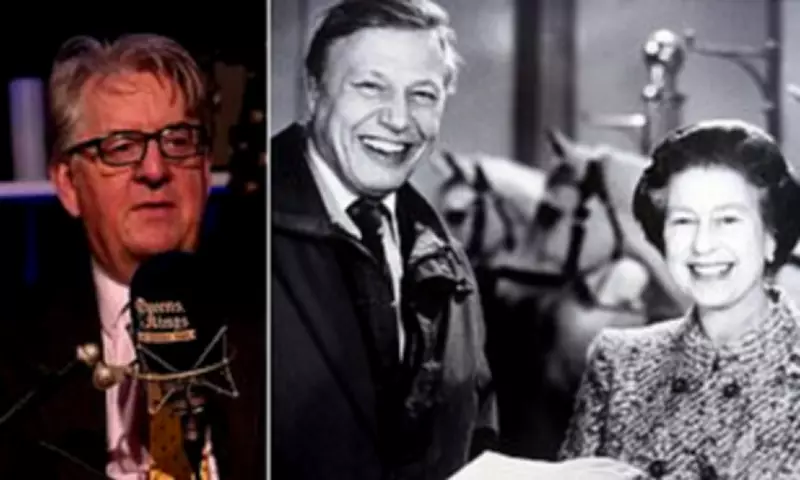
In a fascinating new episode of the Daily Mail's Queens, Kings and Dastardly Things podcast, esteemed historians Robert Hardman and Kate Williams delve into the remarkably parallel lives of two British icons: Queen Elizabeth II and Sir David Attenborough. Both born in 1926, the nation's longest-reigning monarch and its most beloved broadcaster shared a century of history, with their paths crossing numerous times throughout their illustrious careers.
A Royal Collaboration and Professional Trust
The late Queen clearly held Sir David in exceptionally high regard, a trust demonstrated by her decision to entrust him with producing her cherished Christmas broadcast for six consecutive years between 1986 and 1991. This professional relationship underscored a deep mutual respect between the monarch and the broadcaster, highlighting Sir David's unique position within royal circles.
Sir David's influence on the Royal Family's engagement with television was profound and pivotal. As Controller of BBC Two from 1965 to 1969, he oversaw the monarchy's first significant foray into the new medium. This culminated in the landmark 1969 documentary, Royal Family, which offered the British public an unprecedented intimate glimpse behind Palace doors for the very first time.

Fierce Opposition and Palace Debates
Despite his instrumental role, Sir David was fiercely opposed to the Royal Family documentary, as Robert Hardman revealed on the podcast. 'Sir David did not feel the documentary was a good idea,' Hardman explained. 'Quite boldly, he had a row with the Royal family about it.' Sir David's memorable phrase captured his concern: 'You do not want to let the village see inside the chief's house.'
Hardman elaborated that Sir David believed the documentary would strip the monarchy of its essential mystery and authority, potentially drawing inspiration from Victorian essayist Walter Bagehot's writings about preserving the magic of the monarchy. However, Sir David was overruled by Prince Philip, who chaired the advisory committee approving every scene. Prince Philip was a staunch advocate for television's power, convinced the Palace needed to engage with the medium proactively to shape its own image.
Extraordinary Success and Lasting Consequences
In many respects, Prince Philip's instincts proved correct. The documentary attracted a staggering audience of over 30 million British viewers, surpassing even the viewership for the moon landing that same summer. Yet this extraordinary success masked deeper unease within the Palace. Hardman explained there had been intense debate from the outset about whether allowing cameras inside represented a risk the monarchy could afford.
'I spoke to Bill Heseltine, a great man and former Press Secretary at the Palace at the time,' Hardman said. 'He was very much in favour of the idea. Heseltine had to fight against the old establishment who, rather like Sir David, were saying - this is a bad idea. Let's keep the mystery.' Critics argued that the documentary would invite paparazzi intrusion, though Hardman personally disagreed, believing television's arrival was inevitable and required adaptation.
The Documentary's Controversial Legacy
The film has not been broadcast on British television since 1977. Using Crown copyright, Queen Elizabeth effectively banned it, later deeming the documentary too revealing and potentially damaging to the monarchy's mystique. Historian Kate Williams sided with Sir David's original position, arguing the Royal Family made a costly error by initially opening their doors to cameras.
'I think it's a risk for any monarchy to allow the public to see them as ordinary people,' Williams contended, citing an unfortunate scene where a foreign dignitary was compared to a gorilla as an example of the documentary's problematic content. This perspective highlights the enduring tension between royal transparency and maintaining regal authority.

The podcast episode provides a comprehensive exploration of how these two national treasures, born in the same year, navigated their intersecting paths through British history, from professional collaborations to fundamental disagreements about monarchy and media.