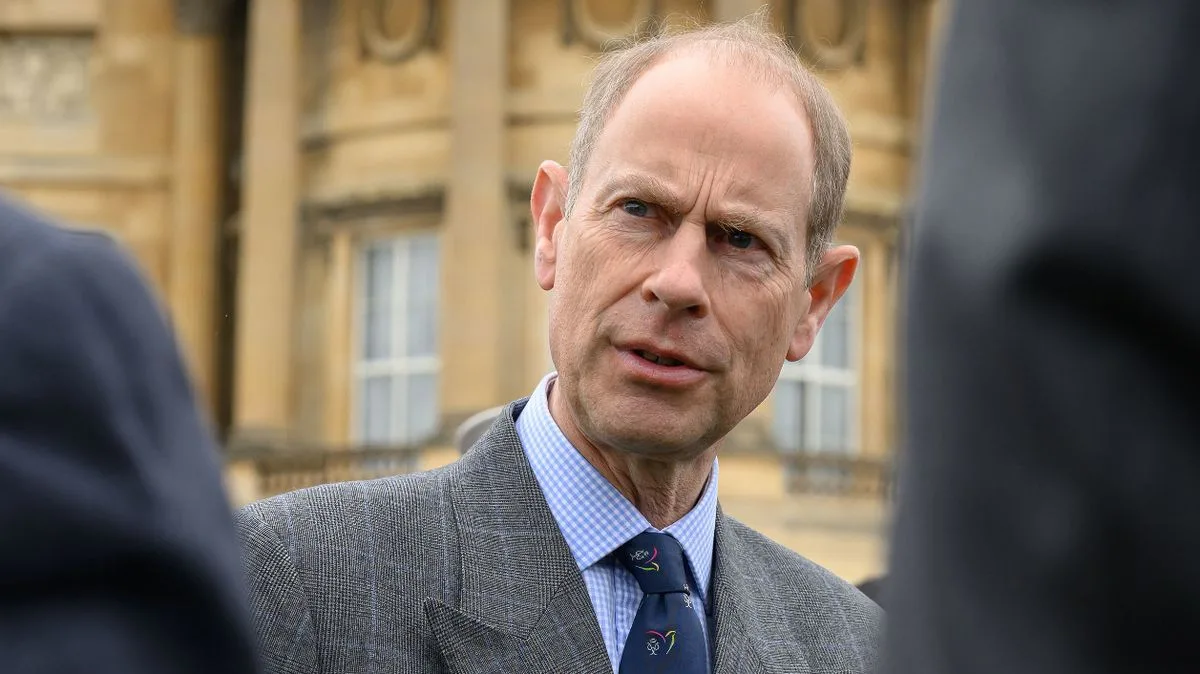
Prince Edward, the Duke of Edinburgh, celebrates his 62nd birthday today, but his royal path has taken an unexpected turn beyond the British monarchy. As the youngest brother of King Charles and the youngest son of the late Queen Elizabeth, he stands 15th in line to the throne, making his ascension in the United Kingdom virtually impossible. However, in a peculiar twist of history, Edward was once offered the opportunity to become a king—just not of Britain.
The Estonian Royal Proposal
Back in 1994, following the dissolution of the Soviet Union, a wave of new nations emerged in Eastern Europe, including Estonia. In the country's first post-USSR elections, a political party known as the Independent Royalist Party of Estonia secured eight seats in parliament. While largely viewed as a protest group, this party advocated for Estonia to become a monarchy, similar to Sweden or Norway.
According to reports from the Sunday Telegraph at the time, the party's leader reached out to the British royals with a direct request: would Prince Edward consider becoming their king? A letter described Edward as "perfect" for the role and expressed that the party admired him "enormously." The offer highlighted the global fascination with the British royal family during a period of political upheaval.
Buckingham Palace's Response
Unsurprisingly, Buckingham Palace responded to the proposal with polite dismissal, calling it "a charming idea but a rather unlikely one." This rejection underscored the firm boundaries of royal protocol and the unlikelihood of a British royal assuming a foreign throne. The incident remains a curious footnote in Edward's life, contrasting sharply with his eventual inheritance of the Duke of Edinburgh title.
Edward's Royal Journey and Titles
Prince Edward is married to Sophie, the Duchess of Edinburgh, and they have two children: Lady Louise Windsor and James, the Earl of Wessex. On his 59th birthday three years ago, King Charles honored a commitment made by the late Queen Elizabeth by bestowing the Duke and Duchess of Edinburgh titles upon Edward and Sophie.
It had been widely understood that Edward would inherit the Duke of Edinburgh title, a promise made by the late Queen on his wedding day in June 1999. Initially, questions arose when he was granted an Earldom instead of a Dukedom, but the palace clarified that he would succeed his father, Prince Philip, with approval from the Queen, Philip, and the Prince of Wales.
Legacy of the Duke of Edinburgh's Award
Prince Philip's wish for Edward to receive the title acknowledged his son's decades-long dedication to the Duke of Edinburgh's Award, a youth programme that represents one of Philip's greatest legacies. Sophie once revealed to the Telegraph the moment she and Edward learned of Philip's desire, recalling, "We sat there slightly stunned. He literally came straight in and said, 'Right. I'd like it very much if you would consider that.'"
Future of the Dukedom
Interestingly, the dukedom—historically hereditary—will not be inherited by Edward's son James when Edward passes away. Instead, it is set to revert to the Crown, potentially paving the way for one of the Prince and Princess of Wales's children to receive the title in the future, with Prince Louis being the most probable contender. This decision reflects ongoing adjustments within the royal family's structure and titles.
As Prince Edward marks his 62nd birthday, his story intertwines royal duty, unexpected offers, and familial legacy, showcasing a life that, while not leading to the British throne, has been filled with unique moments and responsibilities.