Kate's Jewellery Journey: From Halo Tiara to Royal Heirlooms
Throughout history, jewellery has served as a potent symbol of royal authority, weaving individuals into the rich tapestry of monarchy. This narrative has unfolded vividly through the former Kate Middleton's transformation from ingenue princess to future Queen Consort. Her sixteen-year tenure within Britain's royal family has been articulated through jewels, with each passing year bringing more significant and spectacular heirlooms reserved for those at the heart of the succession line.
The Beginning: A Princess-in-Training
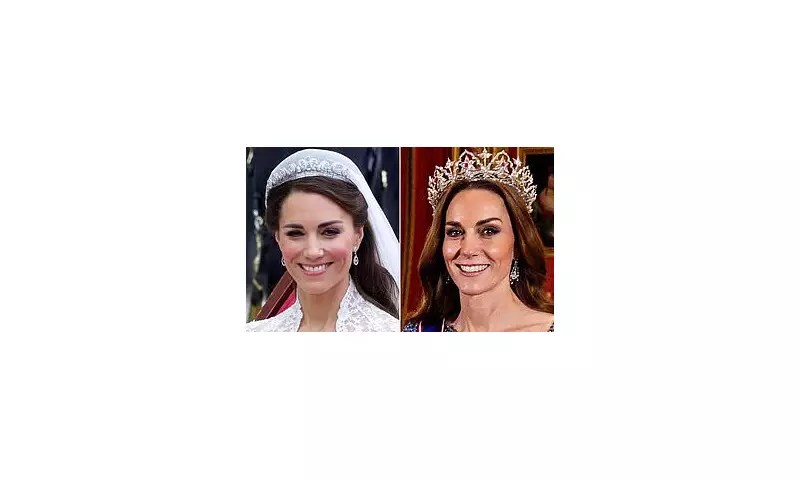
The ethos of a princess-in-training undoubtedly guided her first appearance in one of the Queen's treasured pieces. For her metamorphosis from Miss Middleton to Her Royal Highness The Duchess of Cambridge on 29 April 2011, the institution selected the exquisite yet noticeably petite Cartier Halo tiara. This choice was deemed most suitable for what was anticipated to be a long and illustrious jewellery-wearing career.
Created in 1936 by the legendary French jeweller, the piece was perfectly proportioned for a younger royal. Although gifted to Queen Elizabeth II for her eighteenth birthday in 1944, it became a signature item for both Princess Margaret and Princess Anne during their pre-marital years. For a woman embarking on her royal path, this tiara—which Kate has never worn since—represented an ideal commencement.

Gradual Ascension and Symbolic Statements
It took over eighteen months for Kate to grace a second tiara. At the Annual Diplomatic Reception in November 2013, she turned again to the legacy of a 'starter princess,' opting for the Lotus Flower Tiara. Originally created for the Queen Mother, this piece was most frequently associated with Princess Margaret's early life.
While the Cartier Halo had been somewhat obscured by her wedding veil, the Lotus Flower sat prominently atop her flowing brown locks. Its diamond arches, crowned with pearls, delivered a confident statement. This positioned the then-Duchess of Cambridge, in jewellery terms, within the direct lineage of the family's most significant royal predecessors.
A Defining Moment of Endorsement
However, when she wore the Lotus Flower tiara again two years later at a state banquet for President Xi of China, its reappearance was entirely eclipsed. Photographs revealed that on her wrist rested one of the most important and personal jewels in Queen Elizabeth II's collection: a platinum and diamond bracelet by Philip Antrobus, crafted in 1947.
This piece was Prince Philip's engagement gift to his future wife, fashioned from a tiara that had belonged to his mother, Princess Alice of Battenberg—a gift from her uncle, Tsar Nicholas II of Russia. Previously worn only by Elizabeth, its emergence on Kate's wrist was a coup of the highest order, signalling the Queen's unequivocal endorsement. The addition of a choker-turned-bracelet once owned by Queen Mary on her opposite arm merely perfected this jewel-laden statement.
Accessing the Royal Vaults
In subsequent years, a succession of magnificent pieces have emerged from the royal vaults, worn with splendour by the Duchess of Cambridge, now Princess of Wales. In 2014, the Cartier-made Nizam of Hyderabad Necklace—a wedding gift to Queen Elizabeth II valued at approximately $85 million—accessorised her midnight blue Jenny Packham gown at the National Portrait Gallery.
The year 2015 saw the appearance of the Cambridge Lover's Knot tiara, a piece immortalised by Princess Diana. This was a clear indication that, from a jewellery perspective, Kate was the heir to this aspect of her mother-in-law's legacy. In 2017, she resurrected a diamond and ruby floral necklace by Boucheron from the legendary Greville Collection, inherited by the Queen Mother. A wedding gift to the then-Princess Elizabeth, it dazzled on the low neckline of her pink Marchesa gown at a state banquet for the King and Queen of Spain.

Connecting to Matriarchal Lineage
A year later, she delved deeper into royal history, wearing not only the Royal Family Order of Queen Elizabeth II but also Queen Alexandra's Wedding Necklace. This festooned-style necklace, featuring eight sumptuous pearls connected by diamonds, was a favourite of the Queen Mother. It had been gifted to Princess Alexandra of Denmark upon her arrival to marry the future King Edward VII. Paired with the Cambridge Lover's Knot tiara, its appearance forcefully reminded observers that Kate was now positioned in direct succession to the family's most important female matriarchs.
A Sparse Field and Historic Crown
Unlike her mother-in-law, whose royal career coincided with the Queen Mother and Princess Margaret actively using the jewellery collection, Kate has ascended to her role as the nation's second lady when the field is far sparser. At a recent event, shimmering in a bespoke Jenny Packham sequined gown with a dramatic cape, she crowned her look with one of the collection's treasures: the Oriental Circlet Tiara.
This headpiece, containing 2,678 diamonds, was made for Queen Victoria in 1853 by Garrard for £2,200. Prince Albert led its design, drawing inspiration from Indian motifs like lotus flowers and Mughal arches. The tiara's Germanic origins also served as a diplomatic nod to the evening's guest of honour.
A Carefully Choreographed Evolution
Princess Anne, the Duchess of Edinburgh, and the Duchess of Gloucester all rely on personal reserves built over time. For Kate, who will one day possess all available royal heirlooms, her gradual induction has mirrored her carefully choreographed public life. It is a slow but steady evolution designed to build her stature in the eyes of both the public and the palace as the woman destined to sit beside her husband on the throne.
We stand on the cusp of a new royal era, undoubtedly to be led by a future Queen Catherine. Her jewellery journey, from the delicate Halo tiara to the majestic Oriental Circlet, charts this inevitable ascent with dazzling clarity.