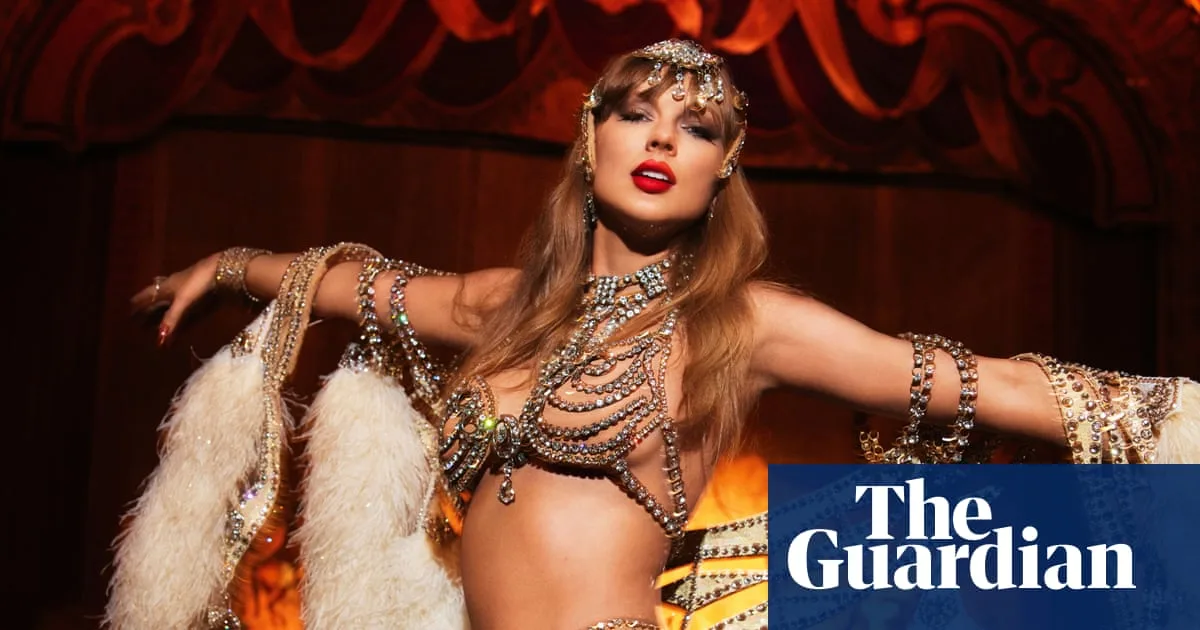
Taylor Swift has adopted the persona of a showgirl for her 12th album, 'The Life of a Showgirl', marking the latest evolution in her two-decade career. The album, produced with Swedish duo Max Martin and Shellback during her European tour last year, is described as a tribute to her 'joyful, wild, dramatic' life as an entertainer and a behind-the-scenes look at the Eras tour spectacle. Promotional images by fashion photographers Mert Alas and Marcus Piggott depict Swift adorned with diamantes, fishnet tights, fur and feathered headdresses.
According to Drew Nobile, an associate professor of music theory at the University of Oregon, Swift's shift to a showgirl persona is consistent with her history of crafting different personas for each album. He suggests that Swift is 'leaning into the idea that her public image is a gilded fantasy', allowing her to present herself as both a billionaire pop star and the same relatable figure beneath the costumes. Nobile adds that a return to a down-to-earth album after the Eras tour would have felt hollow.
Swift joins a lineage of pop stars who have drawn from the 19th-century showgirl tradition, including Shania Twain, Kylie Minogue, Lady Gaga, Sabrina Carpenter and Addison Rae. Alison J Carr, author of 'Viewing Pleasure and Being a Showgirl', notes that the showgirl has always been more than mere spectacle, reflecting the 'pleasures and anxieties' of her time. The iconic showgirl emerged from 19th-century social changes such as industrialisation and urbanisation, and later became part of Americana through figures like Florenz Ziegfeld Jr.

Despite being spurned by second-wave feminism in the 1970s as creations of the male gaze, showgirls were skilled professionals, often classically trained dancers performing in high heels and heavy costumes. Carr emphasises the physical demands of the role, including running and dancing in 2-3in heels and costumes weighing up to 22lbs.