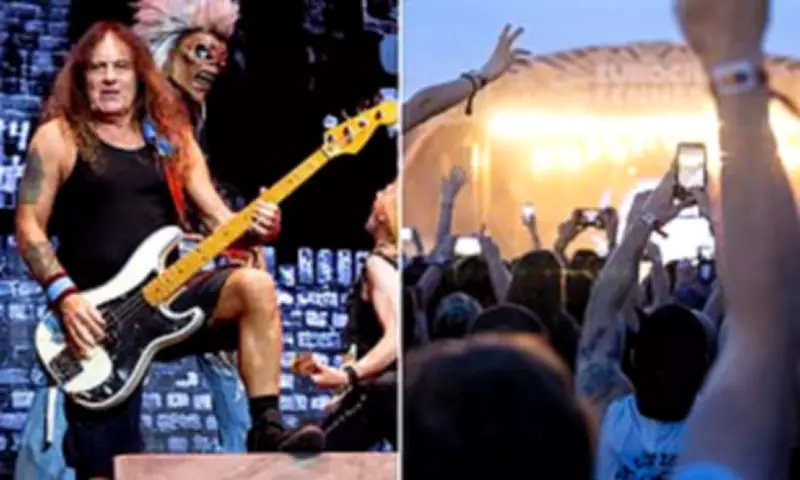
Iron Maiden, the legendary English heavy metal band, is set to tour Australia later this year with a strict new policy: fans must leave their mobile phones at home. This move follows a similar initiative the band successfully implemented during their European concerts last year, aiming to enhance the live music experience by encouraging audience immersion.
Manager Advocates for "In the Moment" Enjoyment
Rod Smallwood, the band's manager, explained the rationale behind the phone ban on Iron Maiden's official website. He highlighted that the vast majority of fans during the European dates appreciated and respected the request to limit phone use, which significantly improved the atmosphere at every show.
"Our fans' understanding and cooperation made a colossal difference to the atmosphere of every show and increased the enjoyment enormously for the band and fans alike," Smallwood stated. He urged concertgoers to "enjoy the show 'in the moment' rather than film on their phones" and to keep devices in their pockets during performances.

Run For Your Lives World Tour 2026 Details
The Iron Maiden Run For Your Lives World Tour 2026 will arrive in Australia in November, bringing the band's iconic sound to audiences under the new phone-free conditions. This policy is not merely a one-off experiment but a continuation of a strategy that proved effective in fostering a more engaging and authentic concert environment.
Other Major Artists Embracing Phone Bans
Iron Maiden is not alone in adopting this approach. Last year, music icon Bob Dylan performed 13 gigs across the UK and Ireland as part of his Rough and Rowdy Ways tour, imposing a strict phone ban to ensure a tech-free experience. Dylan's previous tours in 2022 and 2024 also prohibited the use of video cameras and mobile phones, setting a precedent for artist-led initiatives to curb digital distractions.
Pop star Sabrina Carpenter is also considering implementing phone bans at her concerts, despite acknowledging that the rule might "piss off" her dedicated fans. In an interview with Rolling Stone, Carpenter revealed she is "absolutely" thinking about introducing phone-free gigs, even if the decision proves unpopular initially.
Inspiration from Silk Sonic Experience
Carpenter's inspiration came after attending a Silk Sonic show featuring Bruno Mars in Las Vegas, where phones were locked away. She described the experience as transformative, noting it felt "like I was back in the '70s," a time when fans were fully immersed in live music without screens.
"I've never had a better experience at a concert," she admitted. "Genuinely felt like I was there. Everyone's singing, dancing, looking at each other, and laughing. It really, really just felt so beautiful." Carpenter, who grew up in the age of iPhones at shows, finds it "super normal" to view performances through a camera lens but sees value in disconnecting for a more authentic experience.
Long-Term Benefits and Fan Reactions
The trend towards phone-free concerts reflects a broader shift in the music industry, with artists prioritizing atmosphere and connection over digital documentation. For Iron Maiden, the policy has already demonstrated positive results in Europe, with fans reportedly embracing the chance to engage more deeply with the music.
Sabrina Carpenter humorously added that banning phones could have practical benefits as she ages, joking, "You cannot zoom in on my face. Right now, my skin is soft and supple. It's fine. Do not zoom in on me when I'm 80 years old up there." This lighthearted comment underscores a serious point: artists are seeking to control their live performance environments to preserve quality and intimacy.
As Iron Maiden prepares for their Australian tour, the phone ban is expected to spark discussions among fans about the balance between capturing memories and living in the moment. With other major acts like Bob Dylan and Sabrina Carpenter exploring similar policies, the movement towards tech-free concerts may continue to grow, reshaping live music experiences for audiences worldwide.