Gustavo Dudamel's New York Philharmonic Era Begins with Modern Ambition
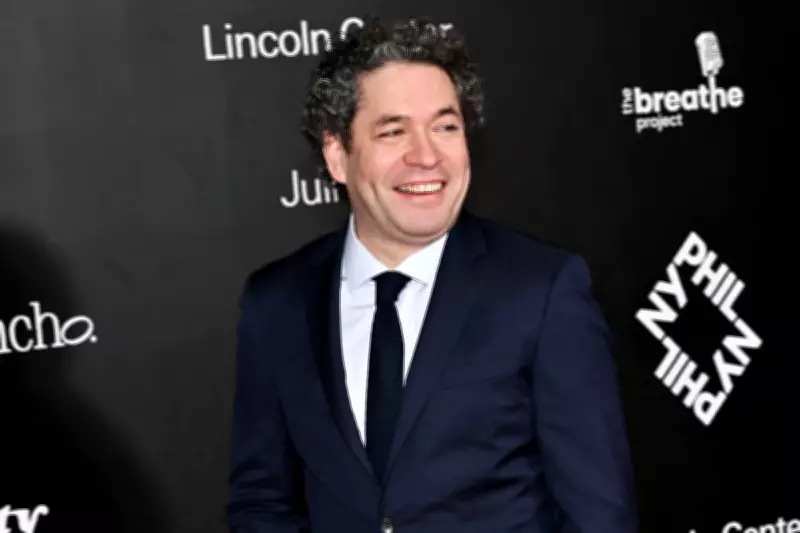
Gustavo Dudamel is poised to commence a transformative new chapter as music director of the New York Philharmonic this September, with aspirations to infuse the role with a bold and contemporary spirit. His tenure officially opens at the iconic Radio City Music Hall, marking the start of what promises to be a vibrant leadership period at one of the world's most prestigious orchestras.
A Colorful Start in a Historic Office
Upon entering the music director's office, Dudamel observed black-and-white photographs of legendary predecessors like Leonard Bernstein, Gustav Mahler, and Willem Mengelberg. In a symbolic gesture, he introduced the sole color image to the collection: a picture of himself alongside his mentor, José Antonio Abreu. This act underscores his intent to bring a fresh, dynamic perspective to the position, acknowledging the seismic shifts in culture since Bernstein's influential era.
"It's very fast," Dudamel remarked regarding modern culture in a January 23 interview with The Associated Press. "We have social media, it is a different world. Everything is very ephemeral." At 45 years old, the Venezuelan conductor is ready to navigate these changes while honoring the orchestra's rich legacy.

Triple Opening and Innovative Season Programming
The orchestra has announced that Dudamel's inaugural season will feature a triple opening, designed to captivate diverse audiences. It kicks off on September 10 with a performance at the 6,000-seat Radio City Music Hall, followed by a 9/11 25th anniversary concert the next day at the World Trade Center's Perelman Performing Arts Center. Subscription concerts at Lincoln Center's David Geffen Hall begin on September 16, featuring John Adams' Pulitzer-winning "On the Transmigration of Souls," a world premiere by Zosha Di Castri, and Prokofiev's Fifth Symphony—a piece Dudamel conducted during his New York Philharmonic debut in 2007.
Additional highlights include:
- The world premiere of Tania León's "of Imágenes mestizas" paired with Mahler's Fifth Symphony on September 25.
- Appointments of Serbian performer Marina Abramović and Argentine composer Gustavo Santaolalla as artists in residence.
- A 10-concert European tour from October 9-22.
- Puccini's "Tosca" with tenor Jonas Kaufmann on November 13, launching a five-year concert opera series at Carnegie Hall.
- The orchestra's first performances of Bernstein's "MASS" on June 9, 2027.
Dudamel emphasized New York's symbolic significance, calling it "the orchestra of the Americas," and plans to conduct in neighborhoods like Harlem and Brooklyn to make art more accessible. "Art institutions have to go to the people, not only expecting the people to come to you," he stated.
Navigating a Homogenized Musical Landscape
In discussions with 83-year-old conductor Daniel Barenboim, Dudamel explored the challenges facing 21st-century music directors. Barenboim noted that orchestras today often sound similar due to widespread access to recordings, leading to a uniform quality. "In the past you didn't have access to recordings. It was very difficult to listen to another orchestra," Dudamel quoted. "So we have to go back to build that culture—not only about making a sound, understanding why we make the sound."
This philosophy aligns with Dudamel's goal to cultivate a unique sonic identity for the New York Philharmonic, moving beyond the homogenized trends of the modern era. He succeeds Jaap van Zweden, whose six-season tenure concluded in 2023-24, and concludes his own 17-season role as Los Angeles Philharmonic music director this summer.
Educational Outreach and Media Adaptation
While Bernstein leveraged television with 53 Young People's Concerts on CBS from 1958-72, Dudamel confronts a fragmented media environment where classical music has diminished prominence. Matías Tarnopolsky, the New York Philharmonic's CEO, aims to harness "Gustavo's connection to education plus whatever it is in digital media" to develop a global music education platform. This initiative seeks to reconnect audiences with classical traditions in innovative ways.

Dudamel, a product of Venezuela's El Sistema music education system, remains committed to fostering hope and opportunity. Amid his nation's political turmoil, including the U.S. capture of President Nicolás Maduro, he expressed a desire to create connections with young people. "I have to say it's a sense of hope. We need that. My country needs that," he shared. Plans include collaborating with El Sistema to bring fellowship programs to New York, opening more avenues for aspiring conductors.
Looking ahead, Dudamel is eager to schedule the New York premiere of Messiaen's 1983 opera "Saint François d'Assise," though he insists it must be staged in a special venue beyond Geffen Hall. As Tarnopolsky summarized, "What's powerful is the vision and the inspiration that we're conveying, and everything else falls into place." With this forward-thinking approach, Dudamel's tenure promises to redefine the New York Philharmonic for a new generation.