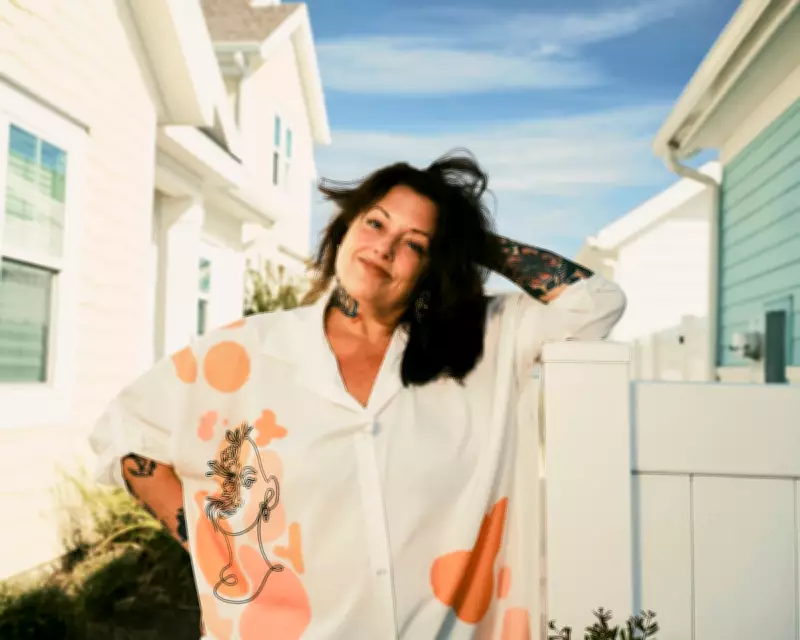
Deborah Wesoff-Lopez-Kowalski, known professionally as Debbie Deb, sits in her Florida home reflecting on a music career marked by both extraordinary highs and profound personal challenges. The freestyle pioneer, whose voice defined 1980s Miami club anthems, experienced the bizarre reality of having her identity and performances taken over by an imposter at the height of her early fame.
The Miami Beginnings and a Fateful Meeting
Growing up in North Miami Beach during the 1980s provided a vibrant, music-filled childhood. "We might not have had TikTok, but we weren't bored," she recalls. "We would ride our bikes around and blast music from our boomboxes all weekend." A teenage work placement at a local record store cultivated her expertise in R&B and rap, with artists like Grandmaster Flash and Run-DMC on constant rotation.
This musical foundation led to a pivotal moment in 1984 when record producer Tony Butler, known as "Pretty Tony," visited the store. Hearing her speak, he immediately asked if she wanted to create music. "I thought, 'Why not?!'" she remembers. Butler was instrumental in developing Miami's freestyle genre—an electronic fusion of disco, funk, and Latin rhythms that dominated roller discos.

Rapid Success and Sudden Replacement
Their collaboration produced two instant classics: "When I Hear Music" and "Lookout Weekend," released under the name Debbie Deb on Jam Packed Records. Wesoff-Lopez-Kowalski had signed an "artist for hire" contract, receiving modest compensation with little expectation of what would follow. "I was having fun in the studio, but I had no idea what was going to happen with the songs," she admits.
The tracks quickly gained momentum, with "Lookout Weekend" entering the Billboard dance chart. However, as demand grew for live performances, the record company made a controversial decision. "I wasn't a trained performer," she explains. "Besides, I was a big girl, at a time when skinny girls like Madonna were around. It wasn't the look the record company wanted."
Consequently, they hired another singer to perform as Debbie Deb at shows and appear on EP covers. In the pre-social media era, audiences remained unaware of the substitution. Even more disheartening was hearing another vocalist record under her name, despite their distinct sounds. "Seeing someone else use my name was really hard," she confesses. Effectively forced out of the industry, she abandoned radio for years, pursuing hairstyling and motherhood while undergoing extensive therapy to rebuild her confidence.
Career Revival and Artistic Resilience
The 1990s offered a path back to music when another producer approached her. She released an album under her rightful name and embarked on tours across Los Angeles, Arizona, and Texas. Radio interviews provided a platform to share her story publicly for the first time. "It was very satisfying to be able to talk about what had happened, and for people to finally see what I looked like," she notes.
Regular performance requests followed, initially daunting but ultimately empowering. "I was nervous about getting on stage, but the love from the crowds gave me the adrenaline I needed." She later toured with fellow freestyle artists from her era, fostering a supportive sisterhood within the genre.
Kendrick Lamar's Unexpected Tribute
Her music has been covered and sampled by numerous artists, including Janet Jackson and Pitbull. However, a remarkable moment arrived in November 2024 when her son alerted her to Kendrick Lamar's new track. "Mom—you're all over Kendrick Lamar's new song," he told her.
The song, "Squabble Up," samples her debut single "When I Hear Music," propelling it to No. 1 on the Billboard Hot 100. Lamar performed it at the 2025 Super Bowl, and its inclusion on his Grammy-winning album GNX added to the surreal experience. "It was very surreal and flattering," she says. "When he won the best rap album Grammy earlier this month, I was honoured to be a part of it."

She expresses a desire to speak with Lamar, curious whether he knows the complex history behind her song. "I'd like to know how he feels about the fact that I got such a raw deal from the original song, or if he even knows," she remarks. "And, of course, I want to congratulate him and ask him about music, too."
Moving Forward with Positivity
Today, Wesoff-Lopez-Kowalski balances performing with running a business alongside her husband, selling handmade jewellery and paintings. Reflecting on her songs finding new life in chart-topping tracks, she maintains an optimistic outlook. "Is it bittersweet to see my songs take on a new life in No. 1 tracks? I don't focus on bitterness these days—I try to keep things more on the sweet side."