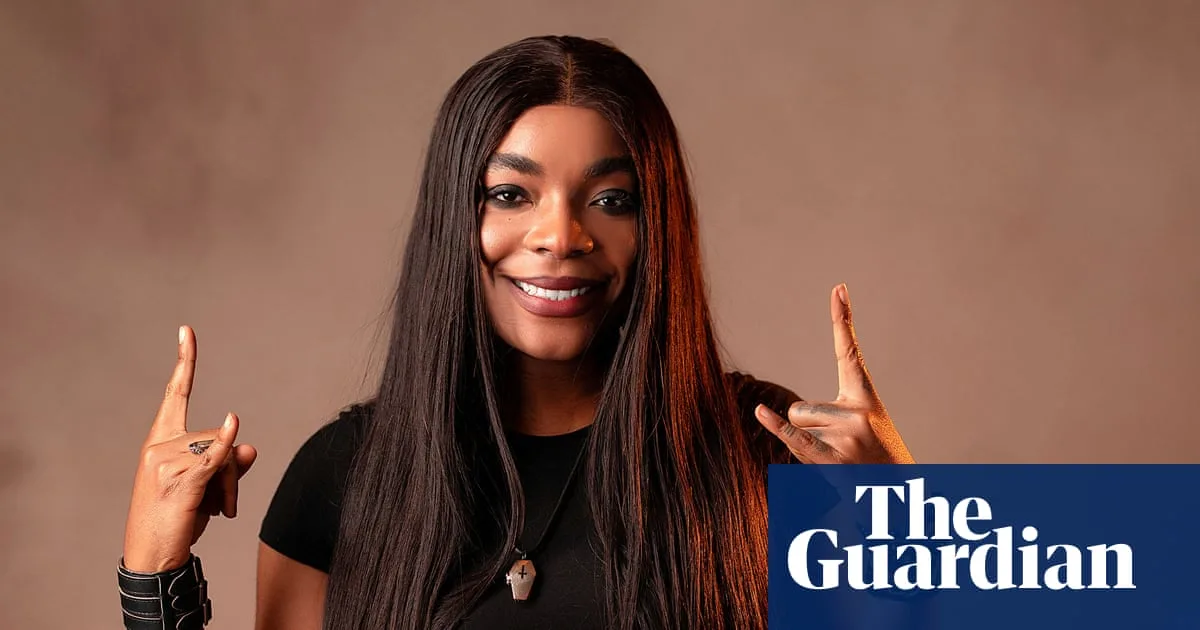
In a country that does not always reward difference, defiant Nigerian musicians are reawakening their country's rock and giving those on the margins the space to feel seen. From the violet hush of a late-night doom scroll, a woman clad in lacquered leather and glinting chains, legs laced in harnesses, emerged: Clayrocksu. She stood mid-growl, clutching the mic as if to throttle it, her silhouette framed by a red LED screen that read 'Rock Nights'. Beneath the stage at Pop Landmark in Lagos, a sparse crowd of silver-studded misfits thrashed around in a trance, provoking cries of 'demonic' and fears that Clayrocksu was 'slipping into darkness'.
The darkness Clayrocksu and others move through is not occult, but obscurity. In the west, goth and emo subcultures offer outsiders a name, a tribe, but in Nigeria they barely exist. Since the rise of Afrobeat, and later Afrobeats, rock has been sealed off or paved over. But it is kept alive by DIY shows such as Clayrocksu's Rock Nights series, WhatsApp chats, shared gear, and today's small scene – bands such as LoveSick, ASingerMustDie and the Recurrence – is raw and defiant.
Long before Clayrocksu ever screamed into a mic, Nigerians were shaping rock to their own rhythm. After the 1967-1970 civil war, bands like the Hygrades, the Funkees and the Doves – post-Biafran war kids with guitars – tried to turn trauma into sound. It was not until Fela Kuti that Afro-rock began to speak in a Nigerian voice. But more immediately palatable pop, dance and gospel came to fill the airwaves, while rock had no radio, no label push, no hype. Still, it lived on in the margins, kept alive by fan-led WhatsApp groups such as Rockaz World and Rock Republic.

Clayrocksu, now a member of the Recording Academy in the US, set up the collective Afrorockstars in 2024, a kind of Justice League for Lagos's indie rock scene. With her monthly Rock Nights series on hold due to a lack of funding, she has teamed up with Lagos venue Kevwe and Cam for a band showcase called Lagos Misfits Takeover. 'I don't remember a time when I wasn't into rock,' Clayrocksu says. Her dad was a rock head, and when she started covering his favourites, she finally understood. 'The music called to me, and I want others to feel that, too.' She is unfazed by the moral panic. 'I don't pay it any mind,' she says. 'Rock is just part of life, same as their faith.'
She introduces LoveSick's frontman Korny, a 31-year-old soft-spoken man with a Jason Voorhees-style hockey mask clipped to his pants, his lucky charm. 'I bought it the night we won Battle of the Bands,' he says, referring to a Lagos event late last year, which was LoveSick's first ever live performance. He looks every bit the nerdy IT solutions guy, but that changes when he takes the mic and growls through Guiding, a track whose lyrics – 'I've got 5k [Naira, about £2.50] left in my bank account' – are about surviving Nigeria as a broke youth. The sound at the venue is rough, but 'we can't wait for perfect sound like Afrobeats,' Korny shrugs. 'The show must go on.'