Paris Fashion Week 2026: Designers Embrace Armor and Imperfection for Anxious Times
The celebrities arrived first, as is tradition at the Paris runways. Oprah Winfrey captivated audiences during the opening stretch of the nine-day event, while Naomi Watts and Kai Schreiber graced the Balenciaga show. Rooney Mara, Diane Kruger, Alexa Chung, Elizabeth Olsen, and Yseult attended Givenchy, with Sarah Paulson and Tracee Ellis Ross observing Celine. Chappell Roan appeared at both Vivienne Westwood and McQueen, where Myha'la and Sophie Thatcher also gathered. Chanel remained scheduled for Monday, and Louis Vuitton would conclude the season on Tuesday.
However, this week transcended mere front-row glamour. Paris Fashion Week's premier houses are undergoing a significant reset, with designers grappling with a profound question: How does one dress individuals when the world appears dark, loud, and unstable? Three distinct trends emerged, reflecting this collective introspection.
Protective Clothing as Armor for Anxious Times
The first trend featured garments designed to shield the wearer, characterized by high collars, wrapped coats, and robust tailoring. Balenciaga spearheaded this movement under Pierpaolo Piccioli, who centered his second collection on themes of darkness and the pursuit of light. Collaborating with "Euphoria" creator Sam Levinson on a set linked to the series' return, the mood evoked unease. Runway pieces included balloon bombers, cocoon backs, portrait collars, and face-framing necklines that created a guarded appearance. Even softer draped dresses maintained this somber atmosphere, presenting attire suited for a challenging world.

Givenchy followed a similar trajectory, personalizing the approach. Sarah Burton's third show marked a defining moment where her vision coalesced, celebrating multiple forms of female strength rather than a singular ideal. Her collection showcased precise tailoring, sturdy coats, peplum hips, velvet, shearling, and evening wear rooted in reality. Burton focused on how women reconstruct themselves within their lived environments, imbuing the garments with potent significance.
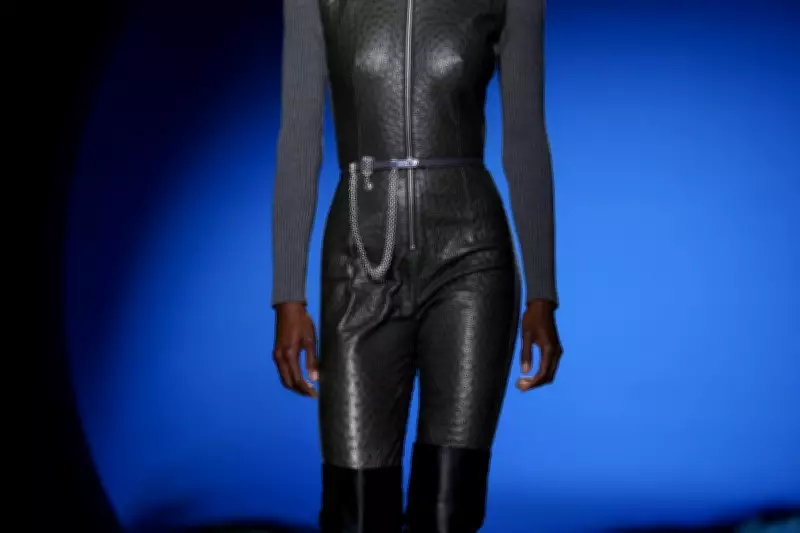
Junya Watanabe extended this concept further, transforming gloves, motorcycle gear, and emergency blankets into couture-inspired forms. McQueen echoed this sentiment, with Seán McGirr discussing themes of paranoia, perfection, and the pressure of constant visibility. His designs, featuring slashed leather trousers, low-slung miniskirts, and chainmail-like textures, conveyed both exposure and defense.
The Return of Sharper Silhouettes
The second major trend involved a shift toward defined silhouettes, moving away from years of oversized, voluminous dressing back toward the body. Celine exemplified this transition most distinctly during Michael Rider's third collection, which reflected a designer solidifying his aesthetic. Rider prioritized wearable clothing, with coats and suits fitting closer to the torso, trousers flaring in cropped styles, and menswear featuring long, narrow overcoats that appeared crisp rather than inflated.
Rider's approach to sharpness avoided stiffness or nostalgia, blending ease with character. Classic garments returned with subtle edges—smaller details, unconventional proportions, and more precise lines—establishing Celine as a key mood-setter. Paris runways now sought presence through refined shape rather than sheer size.
This shift manifested elsewhere: Burton relaxed the strict hourglass shapes she previously introduced at Givenchy while retaining structure; Piccioli utilized collars and cocoon backs to frame rather than obscure the figure; and McQueen's low-rise minis and neat boots pointed in the same direction. The season's line grew stronger, cleaner, and more intimate with the body, signaling a departure from volume toward greater exposure.
Unpolished Glamour with Visible Imperfections
The third trend embraced less refined glamour, where designers desired beauty alongside friction. At Westwood, Andreas Kronthaler simultaneously staged grief, eroticism, and disorder, openly addressing loss while championing pleasure and play. The runway displayed rough seams, smudged lipstick, lingerie-inspired elements, eccentric hats, and an unfinished bridal look, creating an aesthetic that felt messy, melancholic, sensual, and vibrant.

This appetite for imperfection permeated the week. Rider hinted at the chaotic inner lives beneath elegant attire; Piccioli employed shadows to keep darkness proximate; and Burton populated Givenchy with diverse female characters instead of a polished ideal. Paris consistently rejected sterile luxury, favoring authenticity.
Collectively, the most compelling shows indicated a week less focused on escapism and more on resilience. Leading designers did not attempt to make the world vanish; they aimed to equip women for its realities through fashion that acknowledges and responds to contemporary anxieties.