In a country where the wedding industry is worth nearly £100bn and the ultra-rich spend millions on a single celebration, a counter-trend is quietly gaining ground: young urban Indians are paying to attend “weddings” where no couple is tying the knot and the only promise is a night of music, dancing and spectacle.
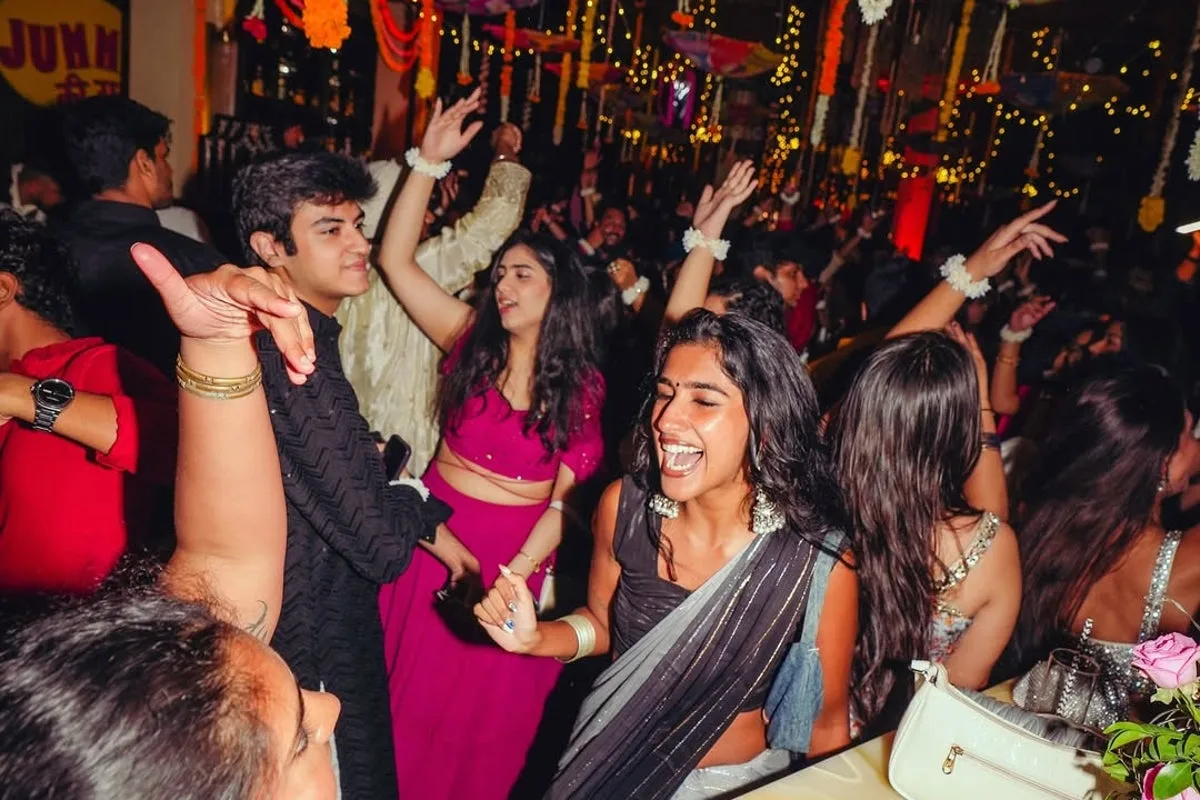
These fake wedding parties mimic the atmosphere of a traditional Indian one, complete with marigold garlands, shimmering sarees and lehengas, and Bollywood playlists – but without the rituals, family drama or financial burden. What started as a novelty in Delhi earlier this year quickly spread to Bengaluru, Hyderabad and beyond, transforming into one of the year’s most talked-about social phenomena.
Jummaa Ki Raat, an event organiser in Delhi, was among the first to launch what it labelled a “Fake Sangeet” in February. Co-founder Sahib Gujral says the idea began almost as a joke when they experimented with floral décor resembling a wedding stage. “You dress up like you’re going to a wedding, dance to the songs, decorate like a wedding, that’s about it,” he explains.
At one fake wedding in the capital, guests joked about whether they belonged to the “bride’s side” or the groom’s, even though neither existed. Strangers posed for family-style photos, others broke into choreographed moves, and by midnight the dance floor looked less like satire and more like pure celebration. Tickets range from £4 to £60.
The events are no longer a niche youth fad, bringing together young professionals, students, and older attendees who missed celebrating their own weddings during the pandemic. A 21-year-old attendee said the atmosphere was more inclusive than at a nightclub: “Usually I wouldn’t go to a club by myself but here people don’t just stick to their groups, they try to include everyone.”