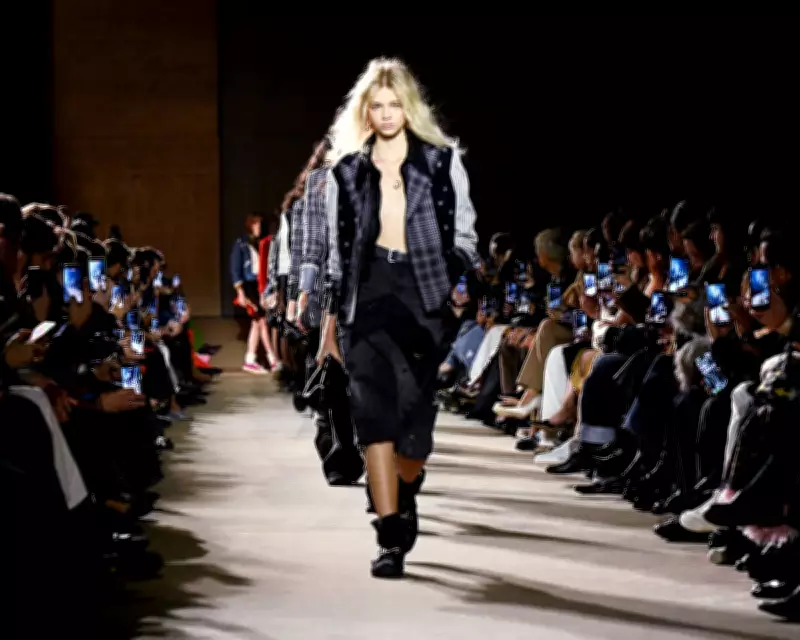
Coach's Creative Director Advocates for Sustainable Fashion at New York Fashion Week
Stuart Vevers, the British designer leading the American mass luxury brand Coach, is determined to keep sustainability at the forefront during New York Fashion Week. This commitment comes at a time when environmental issues are often sidelined on the global stage, and the fashion industry, typically a reflection of societal trends, has increasingly prioritized profitability over ecological concerns.
"I consider myself an optimist, but it's not a naive optimism. There's inherent tension in optimism because the world presents significant challenges, and I'm fully aware of that. My optimism stems from a belief that the younger generation will drive positive change and improve our world," Vevers explained ahead of Wednesday's show, which took place in the historic Cunard building in downtown New York.
From Guilt to Action: Vevers' Personal Journey
A decade ago, Vevers experienced feelings of guilt about his role in the fashion industry. "It began to weigh on me, and I found myself struggling with it. Eventually, I had a realization: instead of feeling guilty, I should take action. That shift in mindset was a gamechanger for me. I don't claim to have all the solutions, but I'm constantly thinking about and working on these issues, and we are making tangible progress," he shared.

This philosophy was evident in the recent fashion show. The ripped jeans featured on the gender-fluid catwalk were not artificially distressed but were entirely crafted from post-consumer denim. Similarly, leather handbags that resembled worn-out baseball gloves were actually made from vintage baseball gloves. "Interestingly, the older the baseball glove, the more aesthetically pleasing the resulting bag becomes," Vevers noted backstage.
Scaling Upcycled Materials in Retail
In Coach stores, upcycled denim has expanded from limited capsule collections to form a "meaningful" portion of the brand's product lineup, according to Vevers. "There are exceptional materials already existing in the world, and my team and I possess the creative vision to revitalize them and give them a fresh appeal," he stated. Recent additions include trench coats made from repurposed chinos. Last year, Coach collaborated with Bank & Vogue, the parent company of Beyond Retro, to create handbags from upcycled corduroy, part of an initiative to promote circular fashion and reduce landfill waste.
Inspiration from Family and Film
The show was dedicated to Vevers' nine-day-old daughter, Fawn, and drew inspiration from a Christmas afternoon he spent with his husband and their five-year-old twins, River and Vivienne, watching The Wizard of Oz. "Watching that film at Christmas was a tradition from my childhood, and experiencing it with my children, seeing their reaction when the movie transitions from black-and-white to color, truly sparked something within me," Vevers recounted.
This inspiration translated into the show's structure, which commenced with ten monochrome looks before exploding into color with a vibrant pillarbox red shirt. Coach, founded as a family-run workshop in New York in 1941, now blends influences from past decades of American youth culture with a distinct Generation Z sensibility. Midcentury varsity jackets were paired with baggy, 1990s-inspired skate shorts. The styling—gender-fluid and intentionally unpolished—combined punk and grunge elements. Models wore frayed sport socks with scuffed trainers, featuring laces replaced by the snaffle hardware that Coach's inaugural designer, Bonnie Cashin, established as a signature in the 1960s.
Recognition and Market Strategy
Vevers, originally from Yorkshire, was awarded an OBE last year for his contributions to fashion and transatlantic creative relations. His keen understanding of youth culture aligns with Coach's strategic pricing approach, which targets consumers priced out by luxury inflation, where high-end handbags can cost upwards of £5,000 at brands like Chanel. Coach reported a 25% sales increase to $2.1 billion in the final quarter of 2025, underscoring the brand's successful market positioning.