All publicity is good publicity, unless you are a rat. Earlier this year, rats were in the headlines following the shock news of Hollywood star Gene Hackman and his wife Betsy Arakawa found dead at their home after she contracted a strain of the rodent-borne disease, hantavirus. Now, the outbreak on board the stricken cruise ship MV Hondius, which has left three passengers dead and others in a serious condition, has also been traced to an Argentinian rat.
Specifically, the rat in question is believed to be a long-tailed pygmy rice rat, native to South America and a known carrier of the lethal Andes strain of the virus detected on the ship. It is one of more than 2,000 species of rodent which comprise the largest order of mammal species on earth. But that distinction will not be enough to stop all rats from now being tarred with the same, dirty brush.
There are echoes here in the Black Death, which killed more than 30 per cent of Europe’s population in the 14th century, and has long been blamed on black and brown rats. However, a recent reappraisal of the outbreak has discovered that giant gerbils in Asia may in fact have been responsible. Other research has found that human-to-human transmission (as has been detected with previous cases of the Andes virus) spread the plague far faster than rats possibly could. In the Peak District village of Eyam, for example – where a large rodent effigy is still torched each Bonfire Night to chants of “Burn the rat!” – a recent study found that rats were only responsible for a quarter of the plague infections which spread through the village in 1665, killing 257 people out of a population of around 700.

All this is not to say that rats do not pose a grave public health threat. A 2014 study at Columbia University found the average New York subway rat (the same species of brown rat commonly found in the UK) carried 18 novel viruses not yet detected in humans. Rats can also harbour of all manner of extremely unpleasant diseases including cholera, typhus, leptospirosis and cowpox. And yet for most of us (in the western world at least) there remains a mercifully small chance of contracting these diseases. Not least, from a rat. There were, for example, just 115 leptospirosis cases detected in England last year. By contrast, there were more than 30,000 dog attacks across England and Wales in 2024.
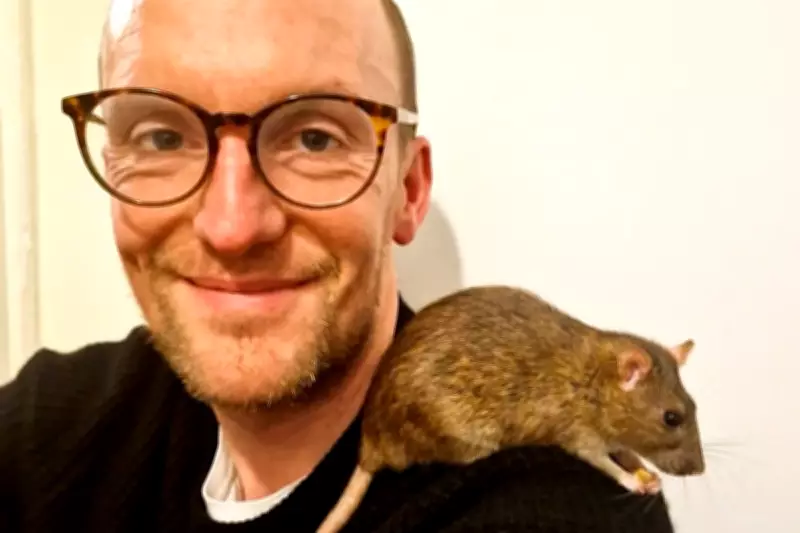
In writing my book, Stowaway: The Disreputable Exploits of the Rat, I have discovered another side to these maligned rodents. As well as travelling across the world to see how people and rats live together – including visiting the extraordinary Apopo charity in Tanzania which is training rats to detect land mines and work in laboratories sniffing out positive samples of tuberculosis – I also acquired a small colony of rats in my own home. It started with two “fancy rats”, the same species as brown rats but bred with a different coloured fur, and soon spread to two more. These rats (now sadly departed), were as playful as puppies, loved hide and seek and being tickled and stroked. They were gentle, irrepressibly curious, and enormously good fun. When the eldest of the colony, Molly, died, her sister grieved in a listless slump, refusing food for days until she was slowly roused by her comrades.
Numerous research has demonstrated their playfulness, altruism and extraordinary intelligence. In the US, rats have been taught to drive small pedal-controlled cars. A recent experiment in Tokyo, meanwhile, discovered rats love dancing – specifically to Lady Gaga and Mozart. Moving instinctively to music is a trait which was previously thought to be associated mostly with humans. We have far more in common than we might like to admit.
All this will be cold comfort, of course, to the poor souls aboard MV Hondius. But hopefully it might make the rest of us think twice before yet again pinning the blame exclusively on the rat. Joe Shute is the author of Stowaway: The Disreputable Exploits of the Rat, published by Bloomsbury.