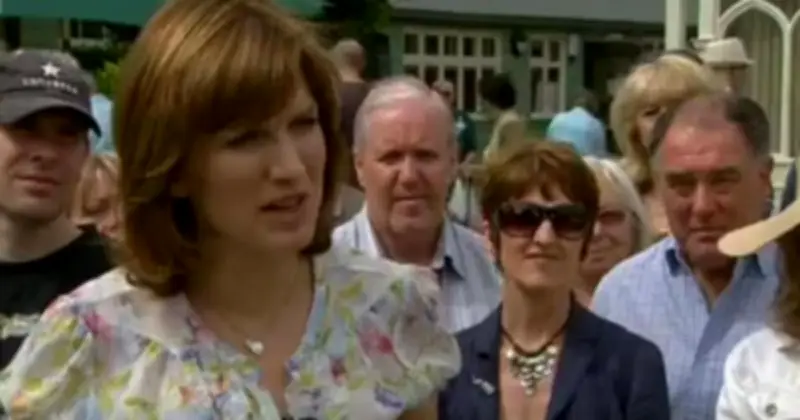
Fiona Bruce was left awestruck during an unearthed clip of Antiques Roadshow as she examined an Enigma machine at Bletchley Park, an item she declared 'changed the war' and helped end the Second World War.
The Historic Encounter at Bletchley Park
In 2010, the Antiques Roadshow visited Bletchley Park, the wartime home of British codebreakers who cracked the German Enigma cypher. Presenter Fiona Bruce spoke with Simon Greenish, then director of Bletchley Park, about an original Enigma machine. 'We have here, in a sense, the star of the show, one of the Enigma machines. Incredible to see the real thing! How did it work?' she asked.
Simon Greenish explained: 'It's a wonderfully complex machine, despite the small size. It looks like a typewriter and in fact in many ways, it works like a typewriter. When you press these keys, you get an encoded letter which will then send through the Morse code system.'
How the Enigma Machine Changed the War
The Enigma machine was an encryption device used by Nazi Germany's military and intelligence services to protect sensitive communications. Believed by its creators to be virtually impossible to decipher, its complex code was eventually broken by Allied cryptanalysts at Bletchley Park, including mathematician Alan Turing.
By successfully deciphering highly confidential German communications, known as Ultra intelligence, the codebreakers gained a unique insight into Nazi military thinking. This enabled Allied commanders to see how the Germans interpreted Allied plans and troop movements, allowing them to assess the effectiveness of Operation Fortitude, the elaborate deception campaign designed to mislead the enemy about the location of the D-Day landings.
Fiona Bruce stated that the device 'started the end of the war' and called it 'incredible'. The clip highlighted how the machine helped change the course of D-Day and ultimately the war.
Antiques Roadshow Legacy
Antiques Roadshow continues to air on Sunday evenings at 8:15pm on BBC One, uncovering historic treasures and their stories.