Emerald Fennell, the acclaimed filmmaker behind Saltburn, has openly credited her attendance at a prestigious £62,000-a-year boarding school as the pivotal factor that may have saved her career from derailing before it even began. The 40-year-old director, who grew up in London, was sent to Marlborough College in Wiltshire at the age of thirteen, an experience she believes fundamentally shaped her path.
A Lifeline from London's Temptations
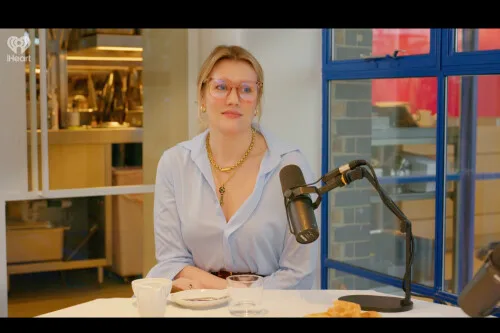
Speaking candidly on the Ruthie's Table 4 podcast, Fennell reflected on her formative years. "I went to boarding school at 13. It actually was, I think, probably a very good idea," she stated. "I think I would have gone quite quickly off the rails in London. Even I knew that even as a child." Despite grappling with homesickness and insomnia in the communal dormitories, she views the environment as a "more wholesome scenario" than remaining in the capital.
The Marlborough College Legacy
Marlborough College is not just any institution; it is globally recognised as one of the 150 best private schools worldwide and ranks among the top 30 senior schools in the United Kingdom. Its illustrious alumni network includes figures such as the Princess of Wales, comedian Jack Whitehall, and the renowned wartime poet Siegfried Sassoon, placing Fennell in distinguished company.
Fennell humorously recalled the school's culinary offerings, which contrasted sharply with her London upbringing. "It was a lot of toast, and I love toast," she said. "I'd been brought up on the ready meal, so I was just like delighted if there were chips for every meal. I mostly grew up on carbohydrates." It was only upon reaching adulthood that she realised such a diet was unsustainable, marking another lesson from her school days.
Navigating the Storm of 'Wuthering Heights'
Fennell's career now faces a new challenge with her upcoming film, stylised as 'Wuthering Heights' in quotation marks. This loose adaptation of Emily Brontë's 1847 gothic novel has already sparked significant controversy, drawing criticism for its casting choices, costumes, and overall tone.
A Personal Interpretation
The director has vigorously defended her creative vision, explaining that the film is based on her teenage interpretation of the classic text. "You can't adapt a book as dense and complicated and difficult as this book," Fennell argued in an interview with Fandango. "I can't say I'm making Wuthering Heights. It's not possible. What I can say is I'm making a version of it."
She emphasised her deep personal connection to the source material, collaborating with the Brontë Parsonage Museum to honour its legacy. "It's every important that everyone who loves it as much as I do feels almost a part of it," she added, acknowledging the passionate responses from literary purists.
Budgetary Battles and Artistic Integrity
Interestingly, Fennell did not secure a blockbuster budget for this high-profile project. Reports indicate she turned down a substantial $150 million offer from Netflix, opting instead for an $80 million deal with Warner Bros. This decision was driven by the studio's commitment to a theatrical release, prioritising cinematic experience over streaming platforms.
Amid the growing backlash, Fennell remains steadfast. She contends that any adaptation, particularly of a novel as complex as Wuthering Heights, inherently requires its own interpretive lens—hence the deliberate use of quotation marks in the title. This stance underscores her belief in artistic freedom, a principle perhaps nurtured during those formative years at Marlborough, far from the potential distractions of London life.