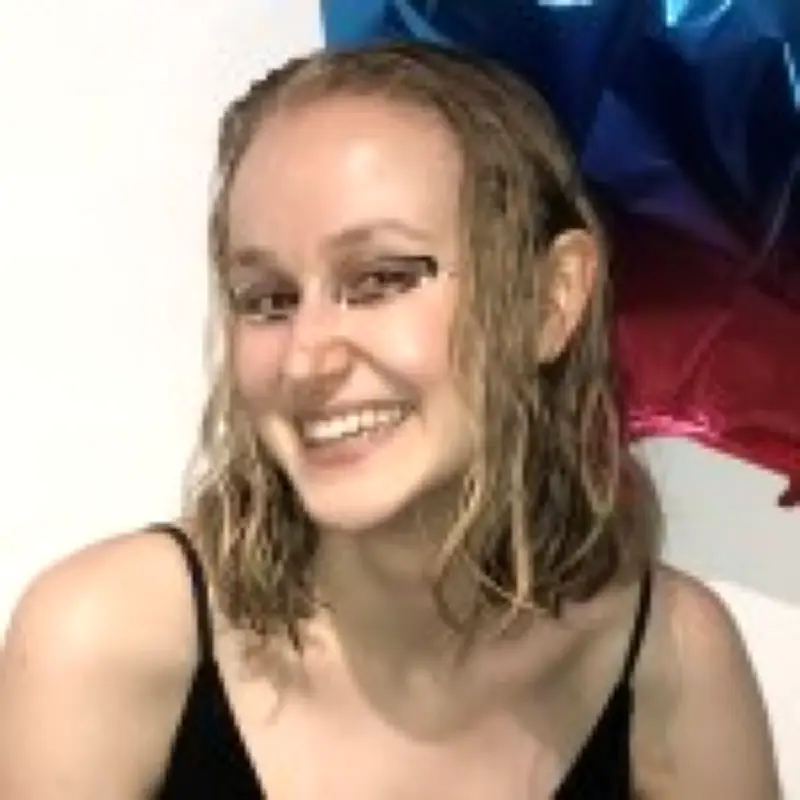
When I first saw Jules in HBO's Euphoria, which concluded last week after three seasons, my perspective shifted completely. Portrayed by trans icon Hunter Schafer, Jules' embodiment of femininity as a queer woman captivated me. She seemed free from societal constraints, unapologetically herself. At 20, I was enamored with her groundbreaking makeup looks as she moved through an American high school with a furry backpack and mesh tops. Amid the intense drama about relationships and addiction, Jules' vibrant eye makeup stood out uniquely. From white clouds perfectly framing her eyes to electric yellow eyeshadow highlighted by white eyeliner, I became obsessed with her style. These looks and her confidence inspired me to express my own identity as a creative queer woman. That's when I picked up my brushes again.
Early Fascination with Makeup
My love for makeup began in 2006 when I was seven, watching my mother prepare for parties. I would sit on the bathroom floor, observing her every move. Each brushstroke and eyeshadow dab drew me into a magical universe of colors and shimmer. I was enchanted by her beauty and eager to have my own collection of palettes and lipsticks. For the next three years, on special occasions, my mother allowed me to wear some of her lighter lipsticks or eyeshadows. When I turned 11, she permitted me to start my own collection. My first purchases were a sparkly pink lipstick, black mascara, and a small eyeshadow palette. For the first time, I felt like an artist with my own rules to break.
Unhealthy Obsession
Unfortunately, this playful exploration didn't last. It soon turned into an unhealthy obsession. I began waking up 10 minutes earlier each morning to apply mascara, until a friend commented that my eyebrows were too pale. Armed with a new eyebrow pencil, I became glued to the mirror, perfecting symmetry. By 16, what was once creative expression became an obsession with covering flaws and accentuating acceptable features. I was so self-conscious about my eyebrows that I once used a green pencil to fill them in when I ran out of brown. Everyone at school laughed, but it was a wake-up call. I promised to stop coloring my brows until I accepted them again. Now, I love my brows.

But in 2017, things worsened. At 18, I developed acne and used thick foundations to hide every blemish, fearing comments about my skin. A year later, I moved to London for university and found new friends who rarely wore makeup daily. I stopped wearing it too. Initially, I felt naked, but each day made it easier to go out bare-faced. It felt like unmasking myself, prompting deeper self-discovery. Around the same time, at 19, I fell in love for the first time, answering my long-buried question about being queer. Finally, I felt free from the male gaze and societal beauty standards, ready to carve my identity on my own terms. I realized my makeup style had been for others, not for me.
Rediscovery Through Euphoria
The following summer, Euphoria aired, and I discovered Jules' makeup looks. Her unapologetically playful style evoked childhood joy and a new hunger for expression. Like my 11-year-old self, I stocked up on colorful eyeshadows and eyeliners. Having spent years perfecting makeup skills, I easily crafted new looks. Makeup became fun again, opening a world of possibilities. But I couldn't have reached that point without embracing my identity first. As I traced my lids with an eyeliner brush dipped in rainbow colors, each stroke drew out something from within. Seeing my reflection smile back, I knew my masterpiece was complete. This time, I didn't care about conventional beauty standards. I allowed my true self to emerge, and makeup became a healthy part of that.
Sometimes people don't understand my looks, but I'd rather be rejected for who I am than a fake version created to appeal to others. Most of the time, people love it and ask where I got my makeup. Most importantly, I feel more like myself than ever before, and experimenting with makeup brings me immense queer joy. When I don't feel like wearing any, I don't — it's my choice. From crazy colors to graphic shapes, my looks reflect my identity as a queer woman and artist. Some wear their heart on their sleeve; I wear it on my face.