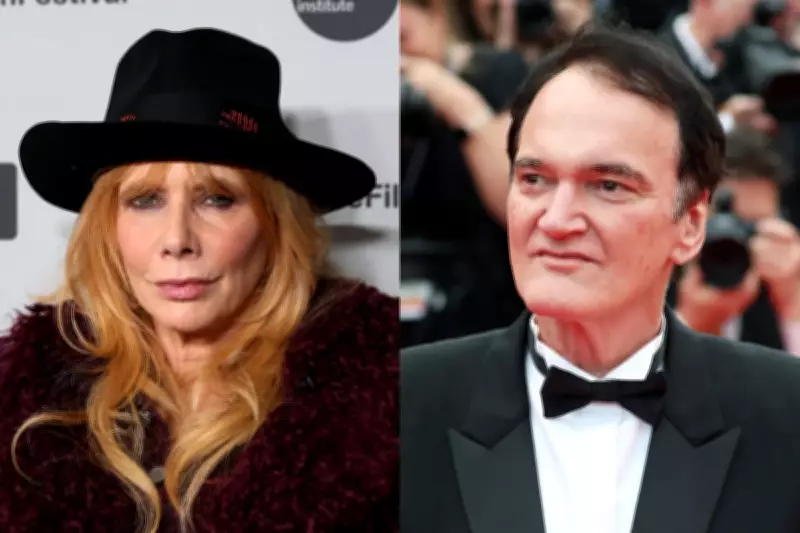
Rosanna Arquette, the acclaimed actress known for her role in Quentin Tarantino's cult classic Pulp Fiction, has launched a scathing critique against the director's prolific use of the N-word throughout his filmography. In a candid interview with The Times of London, Arquette labelled Tarantino's linguistic choices as 'racist and creepy' and challenged the notion that he has been granted an artistic 'hall pass' to deploy the racial slur.
Arquette's Personal Stance on Tarantino's Language
Reflecting on her participation in the 1994 Oscar-winning film Pulp Fiction, where she portrayed Jody, the girlfriend of drug dealer Lance, Arquette acknowledged the movie's iconic status. 'It's iconic, a great film on a lot of levels,' the 66-year-old actress remarked. However, she expressed profound discomfort with Tarantino's repeated inclusion of the N-word, which appears 20 times in Pulp Fiction alone. 'But personally I am over the use of the N-word — I hate it. I cannot stand that [Tarantino] has been given a hall pass. It's not art, it's just racist and creepy,' Arquette stated emphatically.
Historical Context of the Controversy
Tarantino's deployment of the N-word has sparked considerable debate for decades, with criticism intensifying around his 2012 film Django Unchained. That particular movie features the slur more than 110 times, utilised by both Black and white characters. Esteemed filmmaker Spike Lee has been a vocal opponent of Tarantino's approach, describing the language in Django Unchained as 'disrespectful to my ancestors' in a 2012 interview with Vibe magazine.

Following the release of Tarantino's 1997 film Jackie Brown, Lee elaborated on his concerns, stating, 'I have a definite problem with Quentin Tarantino's excessive use of the N-word. And let the record state that I never said that he cannot use that word — I've used that word in many of my films — but I think something is wrong with him.'
Defences and Counterarguments
Not all perspectives align with Arquette and Lee's criticisms. Samuel L. Jackson, a frequent collaborator with Tarantino who starred in both Pulp Fiction and Django Unchained, defended the director's artistic integrity. In the 2019 documentary QT8: The First Eight, Jackson argued that Tarantino's use of the N-word is not dishonest but rather a reflection of authentic dialogue within his cinematic worlds.
'You take 12 Years a Slave, which is supposedly made by an auteur. Steve McQueen is very different than Quentin,' Jackson noted. 'When you have a song that says [the N-word] in it 300 times, nobody says s***. So it's ok for Steve McQueen to use [the N-word] because he's artistically attacking the system and the way people think and feel, but Quentin is just doing it to just strike the blackboard with his nails? That's not true. There's no dishonesty in anything that [Quentin] writes or how people talk, feel, or speak [in his movies].'
Tarantino's Response to Critics
Quentin Tarantino has consistently rebuffed criticism regarding his use of offensive language. In 2022, when confronted about the backlash, the director offered a blunt retort, advising detractors to simply avoid his films. 'Then see something else,' Tarantino responded. 'If you have a problem with my movies, then they aren't the movies to go see. Apparently, I'm not making them for you.' This stance underscores his unwavering commitment to his artistic vision, irrespective of external censure.
The ongoing discourse surrounding Tarantino's linguistic choices highlights broader conversations about artistic freedom, racial sensitivity, and the responsibilities of filmmakers in portraying historical and contemporary social dynamics. As figures like Rosanna Arquette continue to voice their objections, the debate over where to draw the line between creative expression and potential harm remains as pertinent as ever in the entertainment industry.