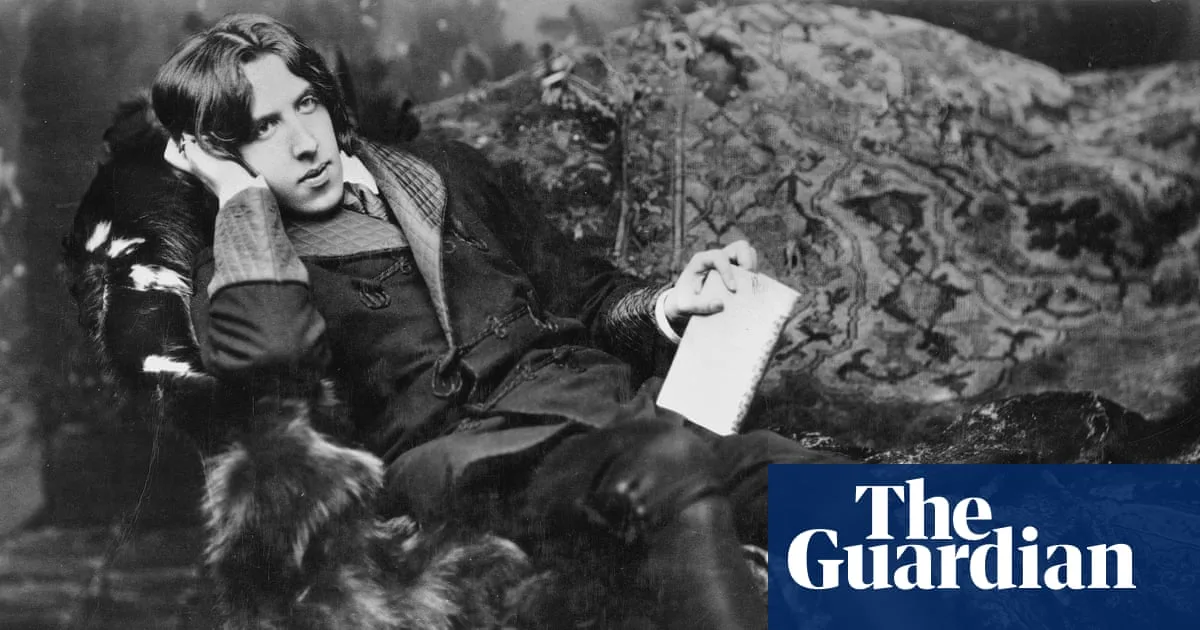
Oscar Wilde, now one of the most celebrated writers in English, was not always so revered. When he died in Paris in 1900 at age 46, obituaries were ungenerous, with the Pall Mall Gazette suggesting nothing he wrote had 'the strength to endure'. Just five years earlier, he had been the toast of London with two successful West End plays, but his arrest and conviction for gross indecency led to a spectacular fall: two years in prison, followed by disgrace, exile, poverty, and declining health.
His funeral was attended only by hotel staff and a handful of old friends. His wife Constance had predeceased him, and his two sons, Cyril and Vyvyan, aged 15 and 14, were at school in England under the assumed surname Holland, led to believe their father was already dead. The long shadow Wilde cast over his sons and his only grandchild is the subject of a new book by that grandchild, Merlin Holland.
Holland's book combines wit, personal candour, and scholarly rigour, tracing Wilde's posthumous rehabilitation. It eschews strict chronology for an episodic approach, covering the struggle to secure Wilde's legacy after his death. Key figure Robbie Ross, Wilde's devoted friend, saved the estate from bankruptcy, facilitated German productions of Salome, oversaw a multi-volume edition of Wilde's works, and coordinated the move of Wilde's grave to Père-Lachaise cemetery with a monument by Jacob Epstein.
The tomb, featuring a 'demon angel' figure, caused controversy: French authorities covered it due to nudity, its prominent 'member' later mysteriously disappeared, and Holland himself battled bureaucracy to protect it from lipstick kisses by admirers. Ross was hindered by Lord Alfred Douglas, Wilde's former lover, who renounced his past, converted to Catholicism, and married, engaging in spite and litigation against anyone writing about Wilde, including his own son Vyvyan.
The book also offers poignant descriptions of the lonely childhoods of Wilde's sons, kept apart and sent to different schools. Holland's narrative reveals the dramatic, tragic, and farcical elements of Wilde's legacy, providing a clearer sense of the unfolding drama surrounding one of literature's most enduring figures.